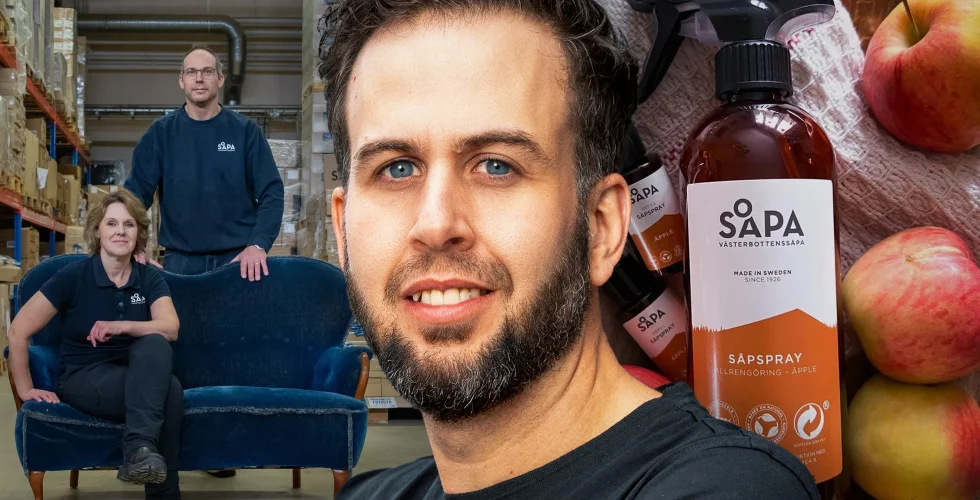
When Fedja Porobic joined Västerbottenssåpa nearly four years ago, the task was not merely to optimize an existing digital storefront but to re-engineer the company's fundamental DNA. The Swedish soap brand, founded by a local couple, possessed a loyal following and a heritage product, but it lacked the infrastructure required for modern scale. Porobic's arrival signaled a shift from artisanal charm to a rigorous, data-driven e-commerce model — the kind of structural overhaul that rarely makes headlines until the exit does.
The culmination of that effort arrived this week with a high-profile sale. The interest from venture capital firms was significant enough that the typical power dynamic of an acquisition shifted. Porobic described a "reversed" process in which the company took the lead in vetting potential suitors, asking more questions than it answered. In a market where most founders scramble to court investors, the inversion is notable — and instructive.
Rebuilding the machine, not just the storefront
The transformation Porobic undertook at Västerbottenssåpa followed a pattern familiar in Nordic direct-to-consumer businesses that have successfully scaled: strip the operation back to its core, then rebuild logistics, marketing, and data infrastructure as an integrated system rather than a set of bolt-on tools. Revenue and valuation moved in tandem toward the ceiling not because a single campaign went viral, but because the underlying business architecture could sustain compounding growth.
This approach stands in contrast to the growth-at-all-costs playbook that defined much of the 2020–2022 e-commerce boom, when brands routinely spent their way to topline numbers that collapsed the moment paid acquisition budgets tightened. The post-pandemic correction punished companies that had scaled marketing without scaling operations. Brands that survived — and attracted buyers — tended to be those that had invested in fulfillment reliability, unit economics, and customer retention infrastructure before chasing volume.
Västerbottenssåpa's category also matters. Household consumables — soap, cleaning products, personal care — occupy a segment where repeat purchase rates are structurally high and brand switching costs, while low in theory, are dampened by subscription models and habit. A soap brand with strong direct-to-consumer economics and a loyal base becomes, in effect, a recurring-revenue business. That profile is considerably more attractive to institutional capital than a one-time-purchase brand with equivalent topline revenue.
The leverage of being the asset, not the suitor
The reversed acquisition dynamic Porobic described — where the selling company interrogates potential buyers rather than the other way around — is rare but not unprecedented in Nordic e-commerce. It tends to emerge when a target company has clean financials, defensible margins, and a growth trajectory that multiple acquirers can model independently. In such cases, competitive tension among bidders shifts negotiating power to the seller.
For the broader Swedish e-commerce ecosystem, the signal is worth noting. The country has produced a disproportionate number of digital-native consumer brands relative to its population, but many have struggled to reach exits that reward founders and early operators meaningfully. The cases that do tend to share a common thread: years of unsexy operational work — warehouse automation, ERP integration, customer data unification — that precedes any liquidity event.
The Västerbottenssåpa sale also arrives at a moment when European venture capital and private equity firms are recalibrating what they consider attractive in consumer brands. After a cycle of chasing high-growth, high-burn direct-to-consumer startups, many funds have rotated toward profitable or near-profitable businesses with proven unit economics. A heritage brand rebuilt for digital scale fits that thesis neatly.
Whether this transaction becomes a template or remains an outlier depends on variables that extend beyond any single company: the depth of buyer appetite for Nordic consumer assets, the sustainability of direct-to-consumer margins as advertising costs continue to rise, and the willingness of founders to endure multi-year restructurings before seeking liquidity. The tension between building for durability and building for speed remains unresolved — and the market continues to price each differently.
With reporting from Breakit.
Source · Breakit