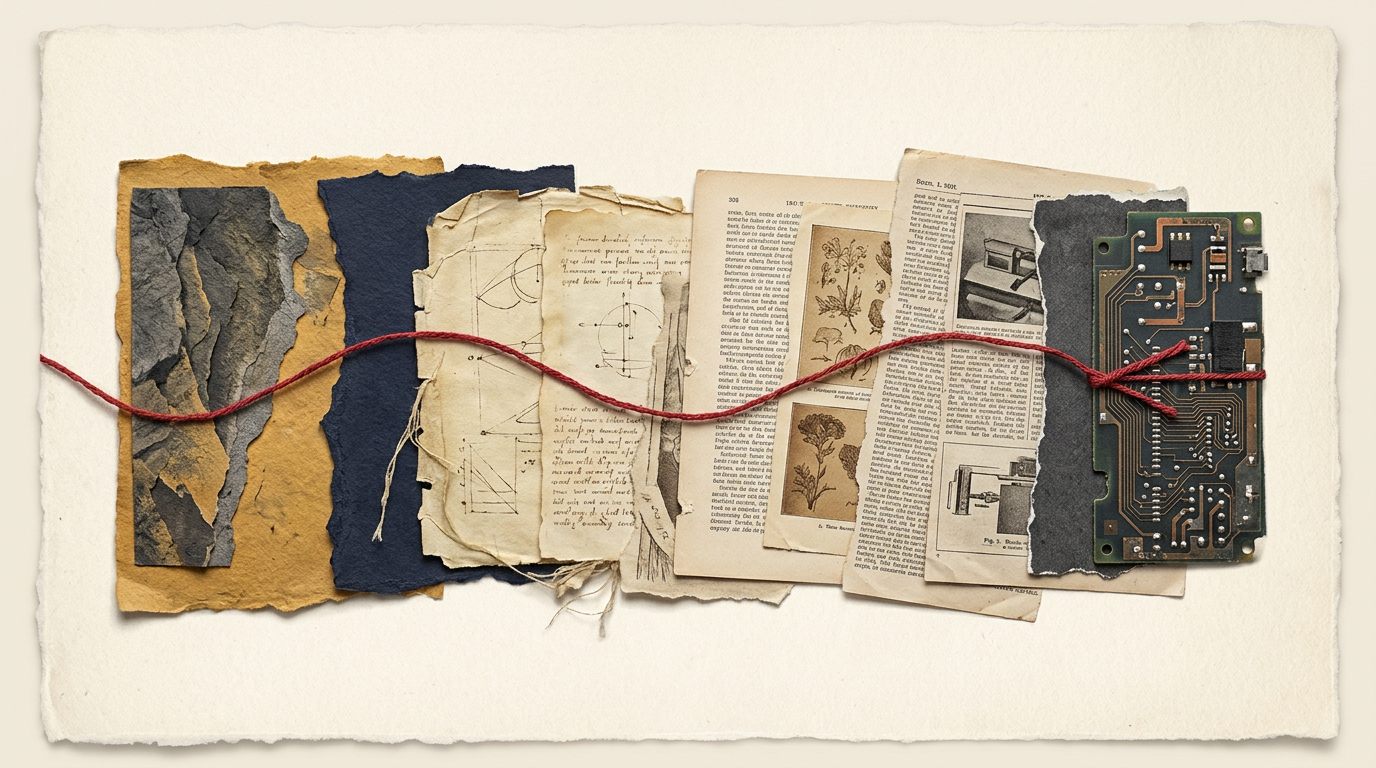
The history of human civilization is, in many respects, a history of overcoming the fundamental constraint of distance. From the first marks scratched into cave walls—primitive protocols designed to synchronize time and intent—to the sophisticated neural architectures of our current era, humanity has continuously sought to extend the reach of its consciousness. According to reporting from IEEE Spectrum, this trajectory is not merely a chronicle of technological advancement, but a record of our persistent, often desperate, attempt to codify the intangible nature of human longing.
This evolution suggests that our tools have never been passive conduits for information. Instead, they function as mirrors, reflecting both our profound capacity for empathy and our inherent vulnerability. As we transition from the era of digital light and instant messaging to an age where artificial intelligence begins to simulate the nuances of human intimacy, we must confront a reality where the medium no longer just facilitates the message; it fundamentally alters the architecture of our social bonds and the very quality of our shared existence.
The Evolution of Connection Protocols
Throughout history, the protocols of connection have evolved in direct proportion to our ability to manipulate the physical and electromagnetic environment. The leap from oral tradition to the written word represented the first major decoupling of communication from the immediate presence of the speaker. This transition allowed for the preservation of thought across generations, yet it also introduced the first layer of mediation that would define the human experience. Medieval texts, often hidden from the ravages of war and fire, served as vessels for ideas that transcended the lifespan of their authors, establishing a precedent for the digital storage we rely upon today.
The advent of the electromagnetic age, catalyzed by figures like Nikola Tesla, fundamentally shifted the paradigm again. By harnessing invisible pulses to traverse the void, humanity moved from the slow, physical delivery of letters to the instantaneous transmission of signals. This was the moment the world began to shrink, turning the globe into a singular, interconnected space. Norbert Wiener’s work on feedback loops and Claude Shannon’s mathematical mapping of information theory provided the structural framework for this new reality, effectively quantifying the 'longing' that had previously been the exclusive domain of poets and philosophers.
The Digital Mirror and the AI Reflex
As the internet matured from the experimental architecture of ARPANET to the ubiquitous, hyper-connected World Wide Web, the nature of our social structures underwent a radical transformation. Early digital platforms like ICQ and the initial wave of blogging were predicated on the promise of community, offering a digital space for the exploration of identity. Yet, as these networks scaled, the incentives shifted. The algorithmic curation that defines our current digital landscape prioritizes engagement, often at the expense of the depth and intentionality that characterized earlier forms of communication. We have traded the serendipity of the encounter for the efficiency of the stream.
Now, we stand at a threshold where artificial intelligence is beginning to mirror the complexity of human interaction. AI models, trained on the sum of our recorded history—our poetry, our panic, our genius, and our garbage—are learning to simulate the empathy and humor that were once considered uniquely human. When a machine claims to understand the nuances of a grandmother’s kitchen or the specific texture of a memory, it is not experiencing those things; it is reflecting the data we have provided. This creates a feedback loop where the tool begins to shape the expression of the user, forcing us to ask whether we are refining our connection to one another or merely optimizing our interactions for a machine-readable format.
The Stakeholders of Synthetic Intimacy
For regulators and policymakers, the implications of this shift are profound. As AI becomes the primary interface for human connection, the responsibility for maintaining the integrity of these 'bonds' becomes a matter of public interest. If the quality of our lives is determined by the quality of our connections, then the algorithms that mediate these connections are effectively governing the social fabric. Competitors in the tech sector are currently engaged in a race to own the interface, but the long-term risk lies in the degradation of authentic human interaction. When the 'other' on the other end of the screen is an entity trained to mimic our vulnerabilities, the stakes for consumer protection extend far beyond data privacy.
For the individual, the tension lies in the choice between convenience and presence. The digital environment offers a frictionless experience that is often at odds with the messy, difficult, and rewarding reality of physical presence. As we become more adept at utilizing these tools to bridge the distance, we risk losing the ability to navigate the silence and the space between us. The challenge for the modern user is to recognize that while our tools are designed to maximize connectivity, they are not necessarily designed to maximize connection. The distinction is subtle but critical.
Outlook: The Persistent Human Variable
What remains uncertain is whether we can reclaim the intentionality of our connections in an environment increasingly dominated by synthetic participants. The history of human communication indicates that every leap forward in technology brings both an expansion of our capabilities and a contraction of our focus. As we move toward a future where the distinction between human and machine interaction becomes increasingly blurred, the capacity for discernment will become our most valuable asset.
We must watch how the next generation of social protocols handles the integration of AI, particularly regarding the preservation of genuine human nuance. If the medium continues to reshape us, we must ensure that the direction of that change remains aligned with our fundamental need for authentic community. The question is not whether we will continue to use these tools, but how we will maintain the presence that makes connection possible in the first place.
Ultimately, the message remains constant even as the medium evolves. We are, by nature, wired for each other, a reality that persists regardless of the technological layer we place between our hearts and our screens. The choice of how we engage with one another—whether we prioritize the efficiency of the network or the presence of the individual—remains, as it has always been, entirely our own.
With reporting from IEEE Spectrum
Source · IEEE Spectrum


