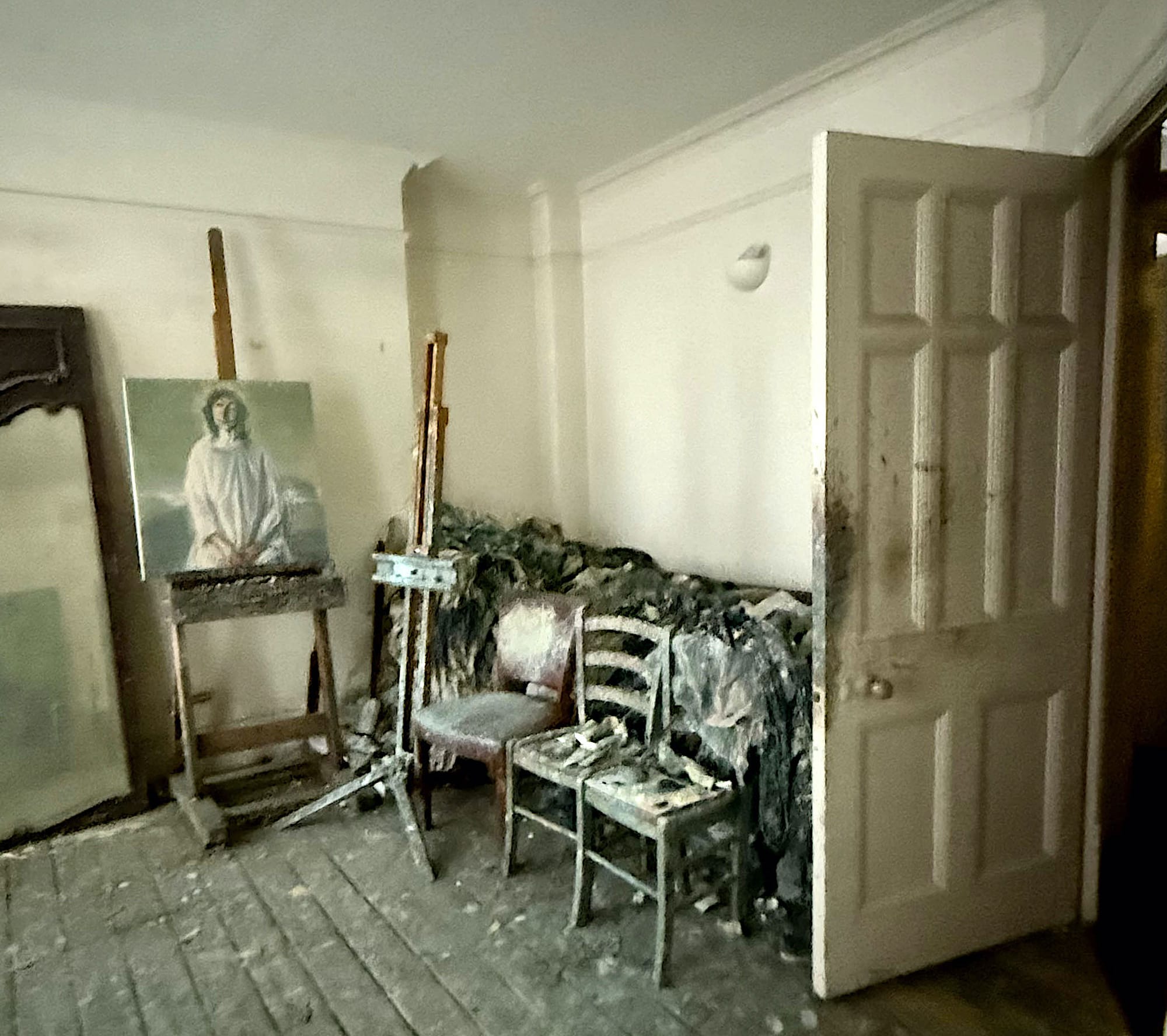
There is a specific kind of endurance in Celia Paul’s relationship with her workspace. The British painter moved into her Bloomsbury flat in 1982, at the age of 22, and has remained there for 44 years. In that time, the London neighborhood has shifted from a quiet, overlooked enclave into a bustling tourist destination, yet Paul’s interior world remains remarkably consistent. Her studio is spare and tidy, a physical manifestation of the introspective, muted aesthetic that defines her work.
Paul’s process is governed by the rhythm of early light. Her day often begins at 5 a.m., moving directly from a cup of tea to the easel. While her earlier career was defined by the presence of sitters—requiring a period of meditative stillness before their arrival to ensure she was "receptive"—her current practice is largely solitary. This shift toward isolation has allowed her to structure time entirely around her own creative impulses, often balancing the intense scrutiny of a self-portrait with the broader, fluid strokes of a seascape.
The longevity of her tenure in Bloomsbury suggests a rejection of the modern artist’s tendency toward nomadic studio-hopping. Instead, Paul has treated her home as a living archive of her development. By collapsing the distance between her domestic life and her professional output, she has created a space where the environment does not just house the art, but informs its very temperament.
With reporting from Hyperallergic.
Source · Hyperallergic