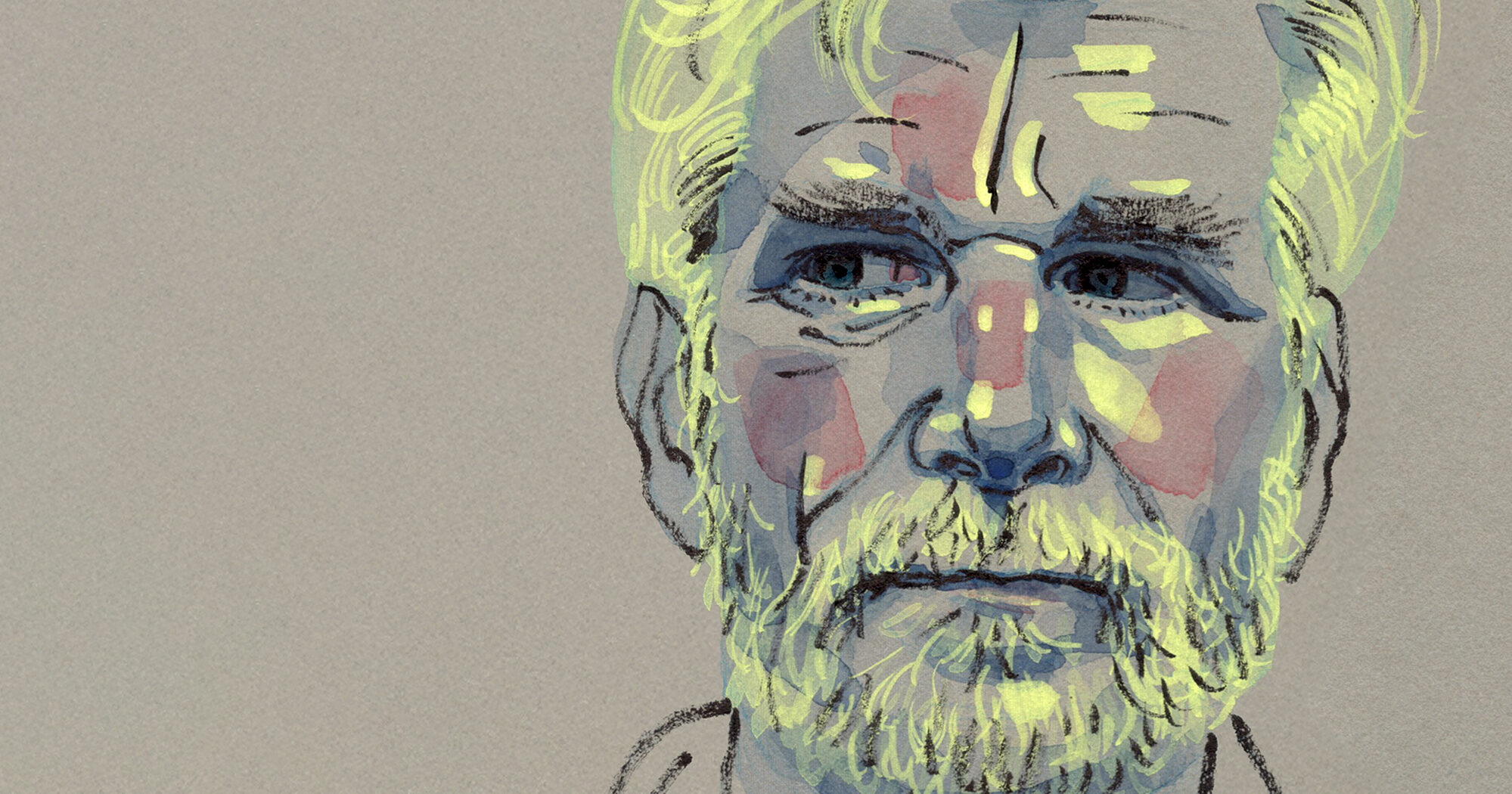
Karl Ove Knausgaard’s literary project has long been defined by its commitment to the granular. Across thousands of pages, the Norwegian author builds a world through the accumulation of the unremarkable, creating a narrative system where the trivial is afforded the same weight as the existential. This hyper-realistic approach does not merely describe a life; it catalogs the friction of living.
Certain motifs recur with the frequency of a programmed loop. There is the persistent presence of the veranda—a liminal space for brooding—and the ubiquitous consumption of Pepsi Max, a modern artifact that anchors the prose in the consumerist present. Even the most private physiological observations, such as the careful monitoring of the color of one’s urine, are rendered with clinical detachment. These are not mere quirks; they are the data points of a consciousness attempting to map its own boundaries.
Through this repetition, Knausgaard challenges the traditional hierarchy of storytelling. By elevating the mundane to the level of philosophy, he suggests that the truth of a human life is found not in its grand dramas, but in the recursive loops of habit and biology. It is a study in the persistence of the self within the domestic and the everyday, documented with an unblinking, almost algorithmic precision.
With reporting from Arts and Letters Daily.
Source · Arts and Letters Daily