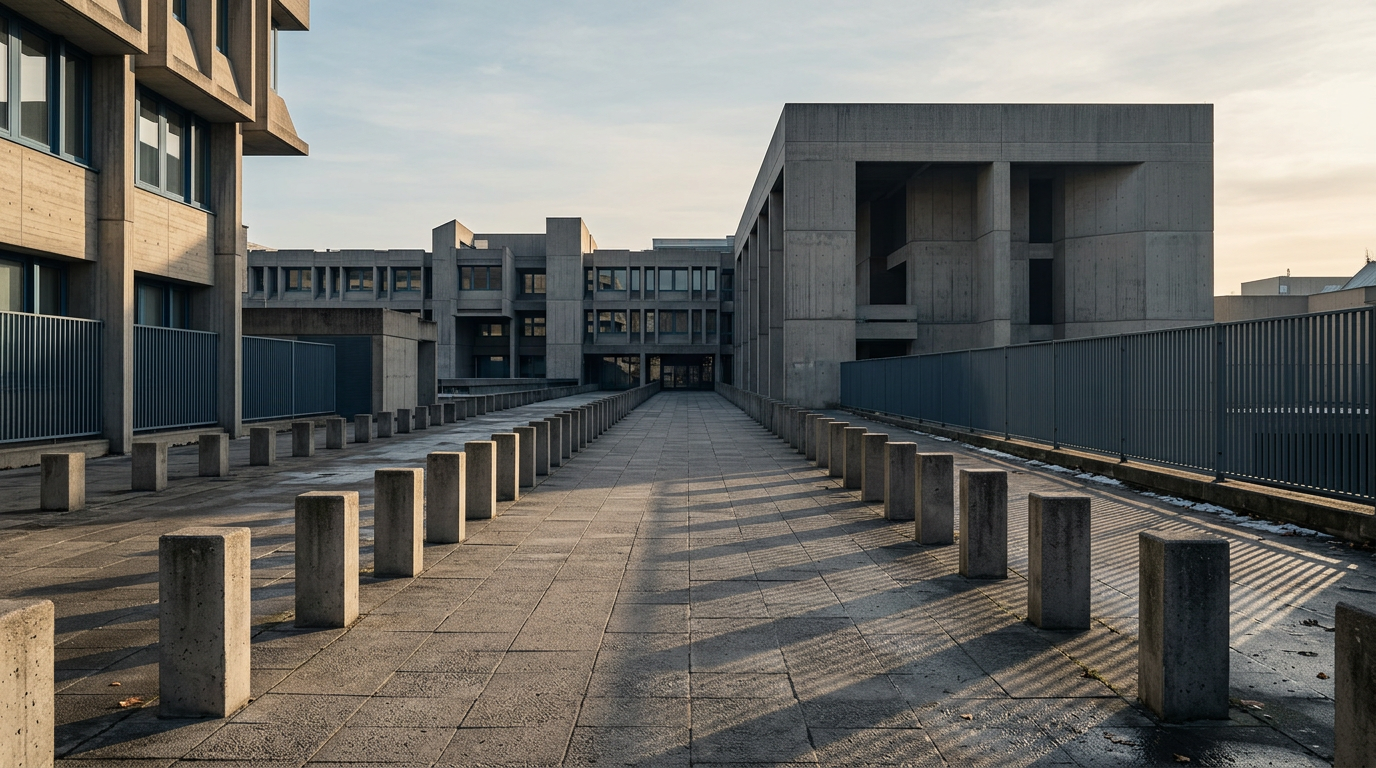
In the quiet streets of Stockholm and the diamond districts of Antwerp, a new and heavy architecture is taking root. What were once open intersections of urban life have increasingly become high-security perimeters, as European governments respond to a heightened threat landscape linked to Iranian state interests. The Israeli embassy in Stockholm is now described as the nation's primary terror target, a designation that carries the weight of constant surveillance and concrete barriers. In Antwerp, soldiers patrol synagogues and Jewish schools as a fixture of the cityscape. For residents living within these cordons, the reaction is often one of somber pragmatism: the military presence provides a necessary sense of security, even as it serves as a daily reminder of the volatility beyond the border.
The pattern is not entirely new. European Jewish institutions have operated under elevated security protocols for decades, a trajectory that accelerated after attacks on targets in Paris, Brussels, and Copenhagen in the mid-2010s. Belgium deployed soldiers to guard sensitive sites following the January 2015 disruption of an alleged terror cell in Verviers, and that military presence — originally framed as temporary — never fully receded. What has changed is the explicit framing of Iran as the principal source of threat, shifting the security calculus from diffuse jihadist networks toward a state actor with intelligence infrastructure embedded across the continent.
From Policing to Garrison Logic
The deployment of military personnel to protect civilian sites represents a qualitative shift in how European states manage domestic security. Traditional policing relies on community integration, intelligence-led intervention, and a deliberate effort to remain unobtrusive. Military cordons operate on a different logic: visible deterrence, fixed perimeters, and the projection of force. The distinction matters. When soldiers replace beat officers outside a school or house of worship, the implicit message to both potential attackers and local residents changes. The space is no longer merely monitored; it is defended.
This garrison approach carries trade-offs that extend beyond aesthetics. Urban planners and security scholars have long noted that fortified enclaves can erode the sense of shared public space that underpins civic life. Bollards, blast walls, and checkpoints create physical and psychological boundaries between protected populations and the broader city. In Antwerp's Jewish quarter, the military presence may reassure families, but it also marks the neighborhood as a zone apart — a territory defined by threat rather than by community. The longer such measures persist, the harder it becomes to reverse the spatial and social norms they establish.
Stockholm presents a somewhat different case. Sweden's security posture has shifted markedly in recent years, driven by NATO accession and a broader reassessment of external threats. The designation of the Israeli embassy as a primary terror target reflects intelligence assessments that Iranian operatives have expanded their reach into Scandinavian capitals. For a city that long prided itself on open urbanism and accessible public institutions, the fortification of diplomatic compounds introduces a visible tension between democratic openness and security imperatives.
The Normalization Dilemma
The deeper question is whether Europe's fortress urbanism is a temporary response to a specific geopolitical moment or the early stage of a permanent condition. History offers mixed guidance. France's Vigipirate plan, introduced in 1978 and repeatedly escalated since, has become a semi-permanent feature of French public life — soldiers at train stations and tourist sites are now unremarkable to Parisians. Belgium's Operation Vigilant Guardian followed a similar arc from emergency measure to background norm. Each escalation resets the baseline of what citizens consider ordinary.
For Jewish communities in particular, the calculus is layered. Security measures that reduce vulnerability also reinforce a sense of separateness, a reminder that full integration into the urban fabric remains conditional on a threat environment over which residents have no control. The presence of armed soldiers outside a synagogue simultaneously affirms the state's commitment to protection and underscores the precariousness of the community's position.
What remains unresolved is the tension between two competing imperatives: the duty of the state to protect identifiable targets and the broader commitment to cities as open, shared spaces. As Iranian geopolitical ambitions and European security anxieties evolve in tandem, the concrete barriers and military patrols reshaping Stockholm and Antwerp may tell us less about the nature of the threat than about the kind of public life European societies are willing to accept in exchange for safety.
With reporting from Dagens Nyheter.
Source · Dagens Nyheter