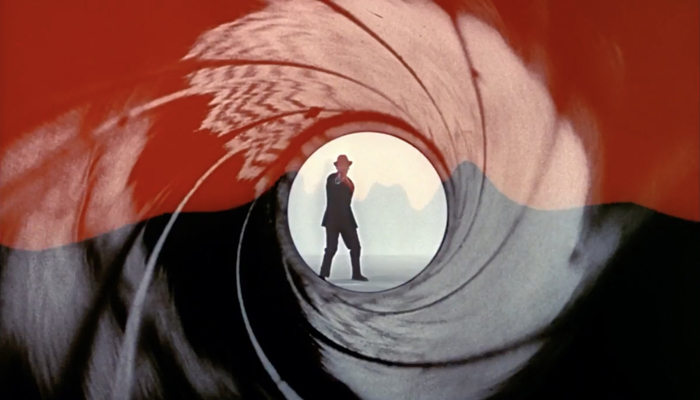
When Amazon closed its $8.45 billion acquisition of MGM in 2022, the tech giant secured one of the deepest libraries in Hollywood history — a catalog stretching from classic musicals to the Rocky saga. Yet the crown jewel of that collection, James Bond, remains an outlier in the era of total corporate consolidation. Unlike the Marvel or Star Wars universes, where Disney exerts absolute creative and commercial control, the 007 franchise is governed by a rare, decades-old power-sharing agreement. The Broccoli family, through Eon Productions, retains an ironclad veto over nearly every aspect of the character's life, from casting the next lead to the specifics of distribution and merchandising.
The arrangement dates back to the early 1960s, when Albert "Cubby" Broccoli and Harry Saltzman first brought Ian Fleming's spy novels to the screen. Over the decades, as the underlying rights changed hands — from United Artists to MGM and now, indirectly, to Amazon — Eon's contractual position endured. Barbara Broccoli and Michael G. Wilson, Cubby's heirs, have maintained a degree of creative authority that is virtually unheard of in contemporary franchise filmmaking. No Bond film moves forward without their approval. No spin-off series materializes without their consent.
A Franchise That Defies the Platform Playbook
This tension highlights a broader shift in how the entertainment industry understands the word "franchise." The dominant model of the past fifteen years — exemplified by Marvel's interconnected cinematic universe — treats intellectual property as raw material for an ever-expanding content pipeline. Characters are spun off into television series, animated shorts, theme park attractions, and video games, each feeding the others in a self-reinforcing cycle designed to maximize subscriber engagement. Amazon, which spent heavily on its Lord of the Rings adaptation for Prime Video, clearly grasps this logic and has every commercial incentive to apply it to Bond.
But the Eon stewards have historically resisted precisely this kind of dilution. Over six decades, the Bond franchise has averaged roughly one film every two to three years, each positioned as a standalone theatrical event rather than a chapter in a serialized narrative. There have been no Bond television series, no canonical spin-offs following secondary characters, no extended universe. The scarcity is deliberate. It preserves the cultural weight of each new installment and sustains the public fascination with the recurring question of who will next inhabit the role.
Film scholars and so-called "acafans" — those who bridge the gap between academic rigor and fan appreciation — have long observed that Bond functions less as a traditional property and more as a persistent cultural institution, one whose meaning shifts with each era while retaining a recognizable core. That institutional quality is precisely what makes it valuable, and precisely what makes it fragile if subjected to the relentless cadence of streaming content cycles.
The Gravity of the Streaming Business
The resilience of the Bond model raises a question that extends well beyond a single franchise. In an age of algorithmic programming, where platforms optimize for watch-time and monthly active users, can a legacy built on restraint and theatrical prestige survive intact? Amazon's business imperatives are structural, not personal: Prime Video exists to reduce subscriber churn and increase the lifetime value of Amazon Prime memberships. Every piece of exclusive content is, in some sense, a customer-acquisition tool. A Bond television series or a spinoff centered on a supporting character would fit neatly into that framework.
Yet the Broccoli family's leverage is contractual, not merely sentimental. As long as Eon's veto holds, the franchise cannot be folded into the standard content pipeline without consent. The result is a genuine bottleneck in the modern media landscape — a case where legal architecture from an earlier era of Hollywood dealmaking constrains the ambitions of one of the world's largest technology companies.
As the franchise approaches its next iteration — the first to be developed under the Amazon umbrella — the industry is watching closely. The outcome will signal something about the limits of platform power itself. If the Broccoli family maintains Bond's theatrical event status, it will stand as evidence that some cultural legacies are structurally resistant to the totalizing logic of the platform economy. If the gravity of the streaming business eventually pulls 007 into a more conventional, serialized orbit, it will confirm that no franchise, however storied, is truly exempt from the economics of scale. For now, the world's most famous spy occupies an uncomfortable and fascinating middle ground — a singular exception whose durability remains an open question.
With reporting from David Bordwell Blog.
Source · David Bordwell Blog