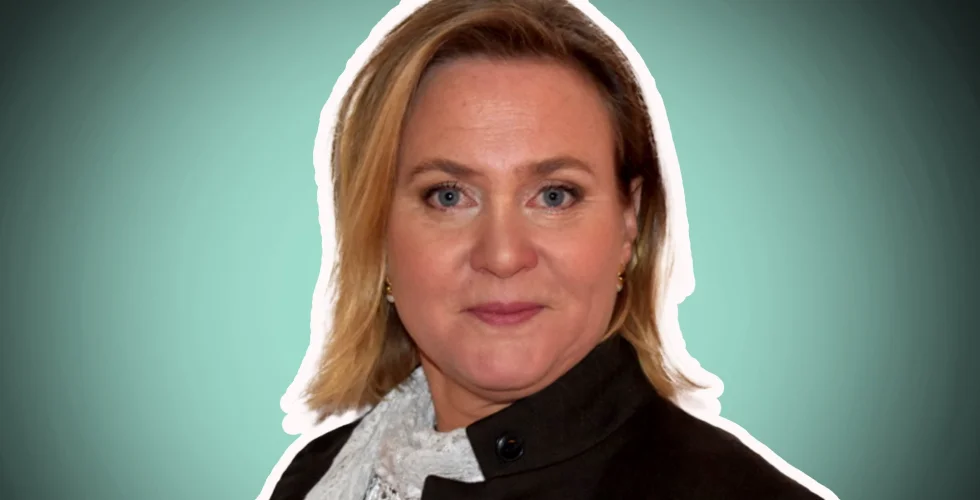
For most founders, a single successful exit represents the culmination of a career. For Hellen Wohlin Lidgard, it has become a recurring rhythm. The Swedish serial entrepreneur has navigated eight company sales — a track record that places her in a rare tier of operational expertise. Yet her primary advice to those following in her footsteps is surprisingly contrarian: don't do it.
In a recent conversation with the Swedish business publication Breakit, Wohlin Lidgard challenged the prevailing obsession with liquidity events. When approached by entrepreneurs eager to find a buyer, her response is often blunt. "Should you really sell?" she asks. "It seems stupid." The skepticism is striking coming from someone whose professional biography is defined by exits. It suggests a conviction that many founders leave the field just as their real influence is beginning to take root.
The psychology of premature exits
The pressure to sell typically emerges from a convergence of forces: investor fatigue, founder burnout, and the psychological allure of a clean "win." Venture capital timelines, in particular, impose their own gravitational pull. Funds operate on fixed lifecycles — typically ten years — and general partners face structural incentives to return capital within that window. For founders who have taken institutional money, the exit conversation often begins not when the business is ready, but when the fund is.
There is also the subtler force of narrative. Startup culture has long valorized the exit as the definitive marker of success. Acquisitions and IPOs generate headlines; steady, profitable growth rarely does. This creates a distortion in how founders evaluate their own progress. A company generating meaningful revenue and approaching genuine scale may still feel like a failure if no buyer has appeared.
Wohlin Lidgard's perspective cuts against this current. Her argument, distilled, is that the rush to monetize can sever a company's long-term trajectory. By exiting too early, founders trade the compounding value of their vision for a one-time payout, often handing over the reins just as the business has achieved the stability required for true scale. The acquirer, in many cases, captures the upside that the founder spent years building toward.
This pattern is well-documented in technology markets. Companies acquired at modest valuations have, in hindsight, sometimes proved to be worth multiples of their sale price within a few years. The founders who sold captured a fraction of the value they created. Those who held on — or who had the financial runway to do so — often fared better.
Building to keep, not to flip
Wohlin Lidgard's track record introduces an interesting tension. An entrepreneur who has sold eight companies is, by definition, someone who chose to exit — repeatedly. The advice to resist selling does not come from someone who has never done it, but from someone who has done it enough times to understand what is lost in the transaction. That distinction matters. It reframes the exit not as inherently wrong, but as a decision that deserves far more scrutiny than it typically receives.
The underlying philosophy points toward a different model of company-building: one oriented around durability rather than liquidity. In the Nordic startup ecosystem, where Wohlin Lidgard operates, this tension is particularly visible. Sweden has produced a disproportionate number of technology companies relative to its population, and the ecosystem's maturation has brought with it a growing debate about whether founders sell too quickly to international acquirers, forfeiting the chance to build enduring, independent businesses.
The question Wohlin Lidgard poses is not whether exits are bad. It is whether the timing and motivation behind most exits reflect genuine strategic thinking or simply the path of least resistance. A founder who sells because the business has reached a natural ceiling faces a different calculus than one who sells because the fundraising environment has tightened or because a term sheet appeared before a long-term plan did.
Her philosophy serves as a reminder that while an exit provides a definitive end to a chapter, it is rarely the most interesting part of the story. The value lies not in the transaction itself, but in the discipline of building something worth keeping — and in knowing the difference between an opportunity to sell and a reason to.
With reporting from Breakit.
Source · Breakit