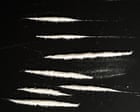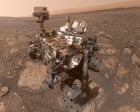
In the silence of a dried lakebed near the Martian equator, NASA’s Curiosity rover has uncovered a chemical record 3.5 billion years in the making. The rover recently identified seven organic molecules preserved within the sediment, five of which had never been observed on the Red Planet before. These compounds are often described as the "building blocks" of life—the complex, carbon-based architecture required for biology as we understand it.
The analysis, conducted by the rover’s onboard laboratory, serves as a testament to Mars’s long-lost habitability. While the presence of organic carbon does not confirm the existence of ancient microbial life, it proves that the necessary ingredients were present during the planet’s wetter, warmer youth. The discovery suggests that if Mars ever did host life, its chemical fingerprints have managed to survive the punishing radiation and desiccation of the intervening eons.
However, the origin of these molecules remains a subject of cautious debate. Scientists note that such compounds can be delivered by meteorites or forged through non-biological geological processes. For now, Curiosity’s find provides a map rather than a destination, confirming that the Martian surface is a far more complex chemical environment than previously imagined.
With reporting from *The Guardian Science*.
Source · The Guardian Science