The defense industry is increasingly pivoting toward a strategy of modularity and commercial integration for the Golden Dome missile-defense program. According to recent reporting from Payload, industry executives are prioritizing the use of commercial-off-the-shelf (COTS) components to ensure the system remains both affordable and capable of rapid scaling. This approach marks a departure from the bespoke, high-cost engineering models that have historically defined major government-led aerospace initiatives.
At a recent panel during the NYSE Space Summit, Apex Space CEO Ian Cinnamon emphasized that the primary goal for the Golden Dome satellite bus is to mirror existing commercial capabilities rather than reinventing them. By leveraging hardware already produced on established assembly lines, the industry aims to move away from the prohibitive cost structures that have previously hampered large-scale orbital defense projects. This strategy is not merely a matter of efficiency; it is a structural necessity for achieving the throughput required for a proliferated constellation.
The Shift Toward Industrial Maturity
The reliance on COTS technology reflects a maturing space industrial base that is no longer solely dependent on government-funded research and development. For decades, defense programs were characterized by custom-built subsystems designed to meet unique mission profiles, often resulting in long lead times and ballooning budgets. The current push for Golden Dome acknowledges that the commercial space sector has reached a level of reliability where its hardware can meet the rigorous demands of national security missions without the need for bespoke modifications.
This transition is supported by the increasing standardization of satellite buses and components across the industry. When companies like Apex Space, Impulse Space, and K2 Space advocate for COTS hardware, they are essentially arguing for the benefits of economies of scale. By utilizing components that are already in mass production, the program can bypass the inefficiencies of small-batch manufacturing. This, in turn, allows for a more predictable cost-per-kill metric, which is essential for maintaining long-term political support in Washington.
Furthermore, the move toward commercial hardware is a response to the skepticism surrounding early cost estimates for the program. As noted by industry leaders, the initial projections provided by the Congressional Budget Office were viewed by many in the private sector as disconnected from the realities of modern manufacturing. By proving that a missile-defense constellation can be built using existing industrial supply chains, the industry is attempting to demonstrate a path toward fiscal sustainability that traditional procurement models failed to provide.
Mechanisms of Cost Reduction and Scalability
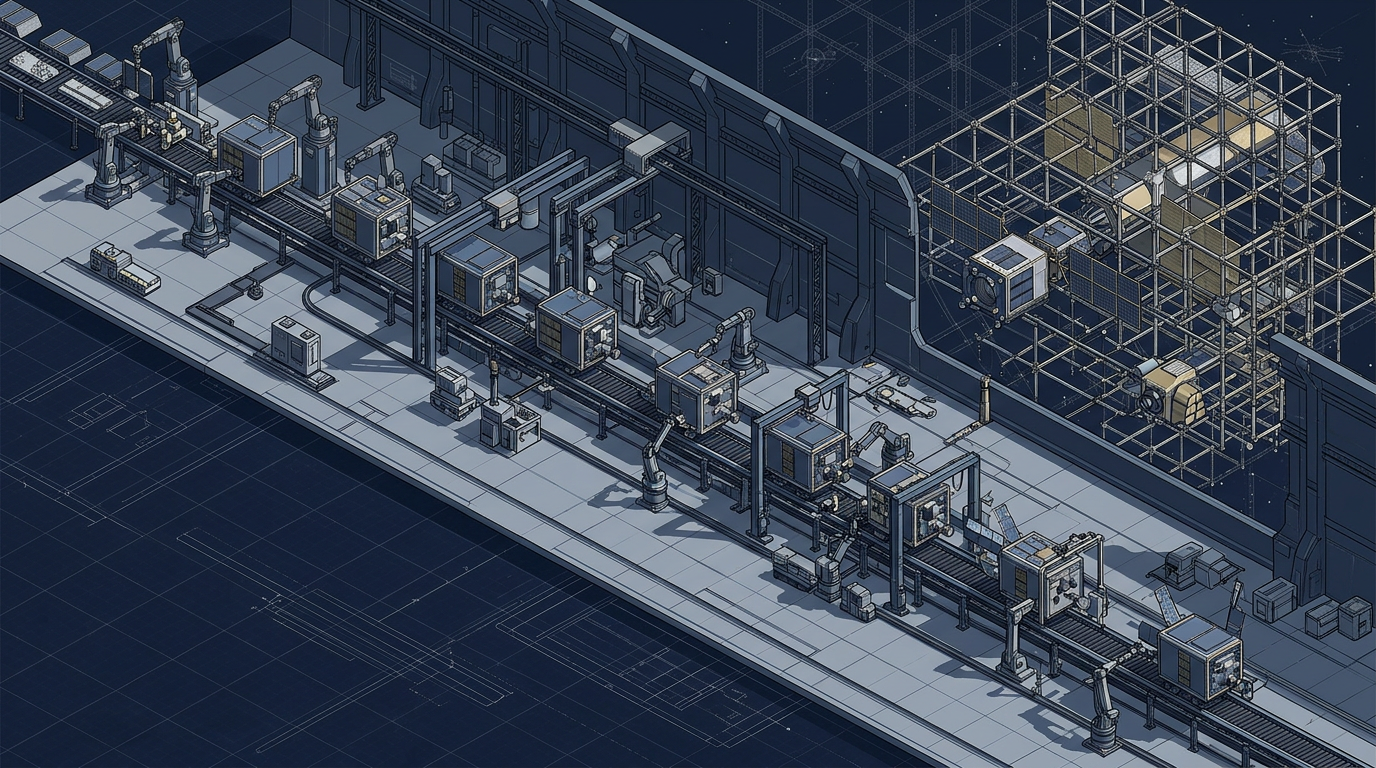
The mechanism driving this change is the decoupling of the mission from the hardware platform. In a traditional model, the satellite bus was inseparable from the payload, requiring a total redesign for every new capability. By contrast, the modern approach treats the satellite bus as a commodity that can be scaled as needed. This modularity allows for a faster iteration cycle, enabling the Department of Defense to update sensors or interceptors without having to overhaul the entire platform architecture.
Moreover, the use of commercial production lines introduces a level of rigor that is often lacking in custom defense manufacturing. Commercial companies are incentivized to optimize their processes for speed and volume, whereas traditional government contractors have historically been incentivized to prioritize performance over price. By integrating these commercial incentives into the Golden Dome program, the government is essentially outsourcing the optimization of its supply chain to companies that have already mastered the art of high-cadence production.
This dynamic also changes the risk profile for investors. When a program is built on proprietary, one-off technology, the risk of failure is concentrated on a single point of development. When it is built on COTS components, the risk is distributed across a broader ecosystem. If one supplier fails, another can theoretically fill the gap, provided the interfaces remain standardized. This creates a more resilient industrial base that is capable of sustaining the program even if individual components undergo rapid evolution.
Implications for Defense and Commercial Stakeholders
The adoption of COTS components has profound implications for the relationship between the government and the private sector. For the government, it offers a way to modernize its capabilities without being locked into a single-source supplier for the life of the program. For commercial companies, the Golden Dome represents a massive potential anchor customer that can validate their technology and provide a steady stream of revenue to fuel further innovation.
However, this shift also introduces new tensions regarding security and supply chain independence. While COTS hardware is efficient, it also forces the government to rely on a globalized supply chain that may be vulnerable to disruption or foreign influence. Regulators and defense planners must therefore balance the need for cost-effective, high-volume production with the absolute requirement for mission assurance. This necessitates a new framework for testing and certification that can keep pace with commercial iteration cycles without compromising the integrity of the defense system.
Open Questions and Future Outlook
Despite the enthusiasm for COTS integration, significant uncertainties remain. The primary hurdle for the Golden Dome is not merely the procurement of hardware, but the maturation of the underlying technology required for boost-phase interception. While the satellite bus may be commoditized, the interceptor technology remains a complex engineering challenge that has yet to be proven at the scale required for a full-scale constellation. The gap between a successful prototype and a functional, multi-layer defense system is substantial.
Furthermore, the political future of the program remains a variable that investors must carefully navigate. As industry executives have noted, even if a specific program is canceled, the underlying technological advancements often find new life in subsequent initiatives. The question for the market is whether the current investment in Golden Dome will yield a sustainable business model or if it will simply serve as a bridge to a different, future iteration of space-based defense. As the program enters its next phase, the ability of industry to deliver on its technical promises while navigating the complexities of Washington will define the trajectory of the entire sector.
As the defense sector continues to integrate commercial practices into its core operations, the boundary between national security requirements and commercial innovation will continue to blur. Whether this convergence leads to a more robust defense posture or merely shifts the nature of procurement risks remains an open question for policymakers and stakeholders alike.
With reporting from Payload Space
Source · Payload Space