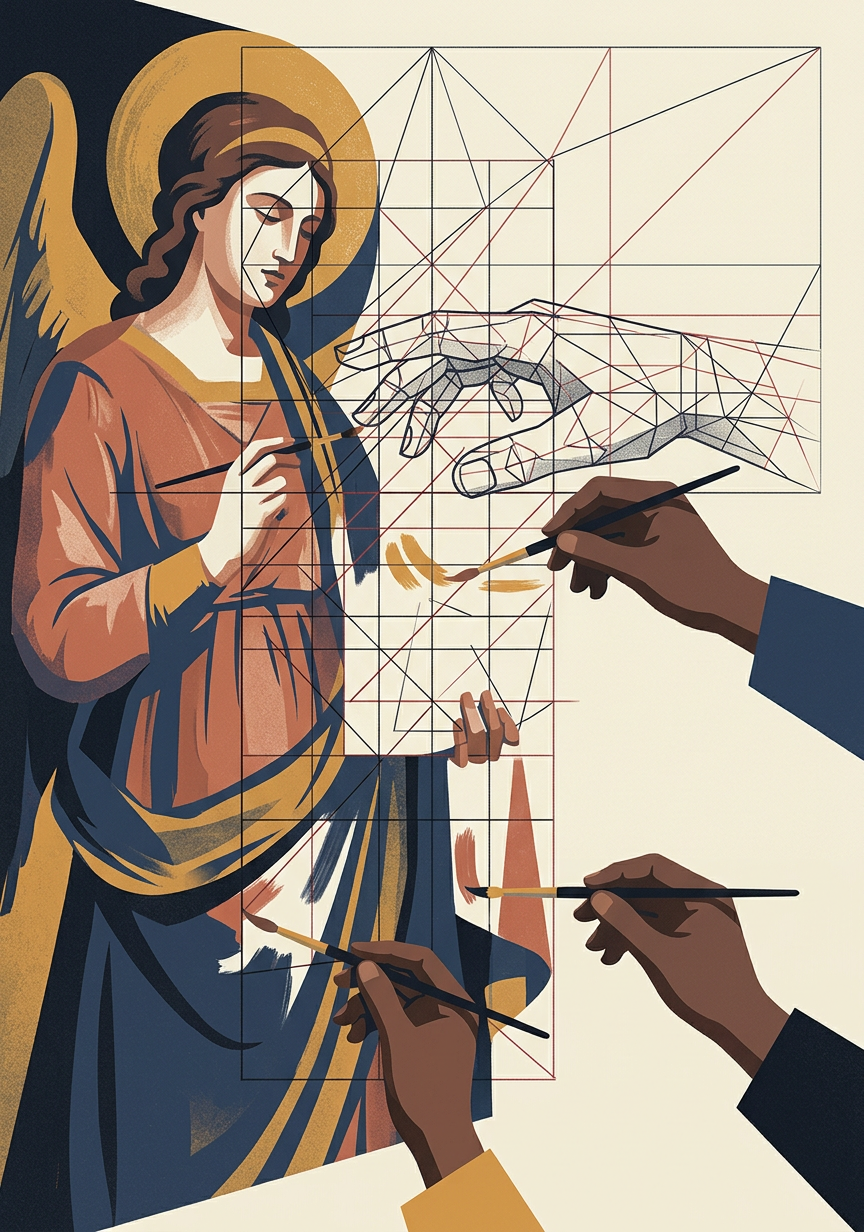
The workshop system of the Spanish Renaissance was a collaborative machine, often blurring the lines between the master's hand and those of his apprentices. For art historians, disentangling these contributions has long been a matter of connoisseurship—an intuitive, if rigorous, visual analysis. Now, a multi-disciplinary team at Case Western Reserve University is augmenting that intuition with a machine-learning model named PATCH.
PATCH, or "pairwise assignment training for classifying heterogeneity," operates at a microscopic scale. By analyzing one-centimeter-square segments of a canvas, the system identifies the subtle, almost subconscious signatures of brushwork and paint texture. The model is trained on works known to be the product of a single artist, creating a baseline of stylistic consistency that can then be used to interrogate pieces with more ambiguous origins.
The researchers, whose backgrounds span physics, anthropology, and art history, applied this digital lens to the oeuvre of El Greco. They compared the solo-attributed *Christ on the Cross* with the more contentious *The Baptism of Christ*. While the latter has long been suspected of being a posthumous collaboration involving El Greco’s son and workshop assistants, the AI provides a quantitative framework for these suspicions. It marks a shift in how we authenticate the past, where the idiosyncrasies of a stroke are no longer just seen, but calculated.
With reporting from ARTnews.
Source · ARTnews