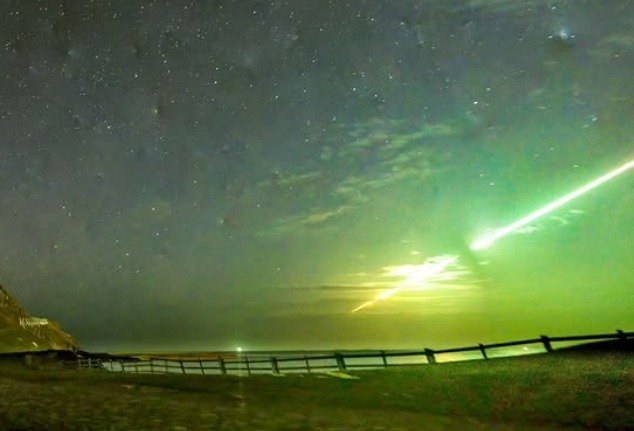
Early Sunday morning, the sky over the east coast of England and parts of Northern Europe was briefly reclaimed by a brilliant, emerald-hued incandescence. Just after midnight on October 13, a meteor—commonly referred to in astronomical circles as a fireball—streaked across the atmosphere, leaving a vivid trail that was captured by doorbell cameras and late-night observers alike.
The meteor’s distinct green glow is a byproduct of its chemical composition. When space debris enters the Earth’s atmosphere at high speeds, atmospheric friction generates intense heat, vaporizing the object. The resulting light often reflects the specific elements within the rock; in this case, the vibrant green suggests a high concentration of nickel or magnesium. Such events, while fleeting, offer a visceral reminder of the constant, invisible bombardment our planet faces from the solar system's ancient debris.
This sighting coincides with what is often termed "fireball season," a period in the autumn when the frequency of exceptionally bright meteors tends to increase. Unlike the more common meteor showers that produce faint, blink-and-you-miss-it streaks, these fireballs are substantial enough to burn longer and brighter in the upper atmosphere, providing a brief, cinematic disruption to the quiet of the rural coastline.
With reporting from Exame Inovação.
Source · Exame Inovação


