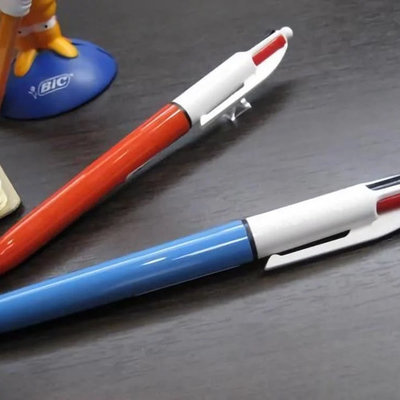
In 1970, the French firm Bic introduced a writing tool that would become a quiet fixture of the late 20th-century desk. Designed originally for French schoolchildren, the 4-Color Pen was a masterclass in mechanical density. Its slightly oversized, cylindrical barrel housed four spring-loaded cartridges—blue, black, red, and green—offering a chromatic versatility that previously required a handful of separate instruments.
The pen arrived in the United States in 1971, where its utility quickly transcended the classroom. For nurses charting vitals, clerks managing ledgers, and designers sketching rapid iterations, the pen represented a model of efficiency. It offered the ability to categorize and emphasize information in real-time through the tactile, satisfying click of a plastic slider.
Decades later, the pen remains an industrial design classic precisely because it has become so unremarkable. It is a tool that has achieved a rare level of ubiquity, fading into the background of daily life until the moment it is needed. While its blue-and-white plastic housing may lack the prestige of luxury stationery, its survival in an increasingly digital age speaks to the persistent value of simple, tactile multi-functionality.
With reporting from Core77.
Source · Core77