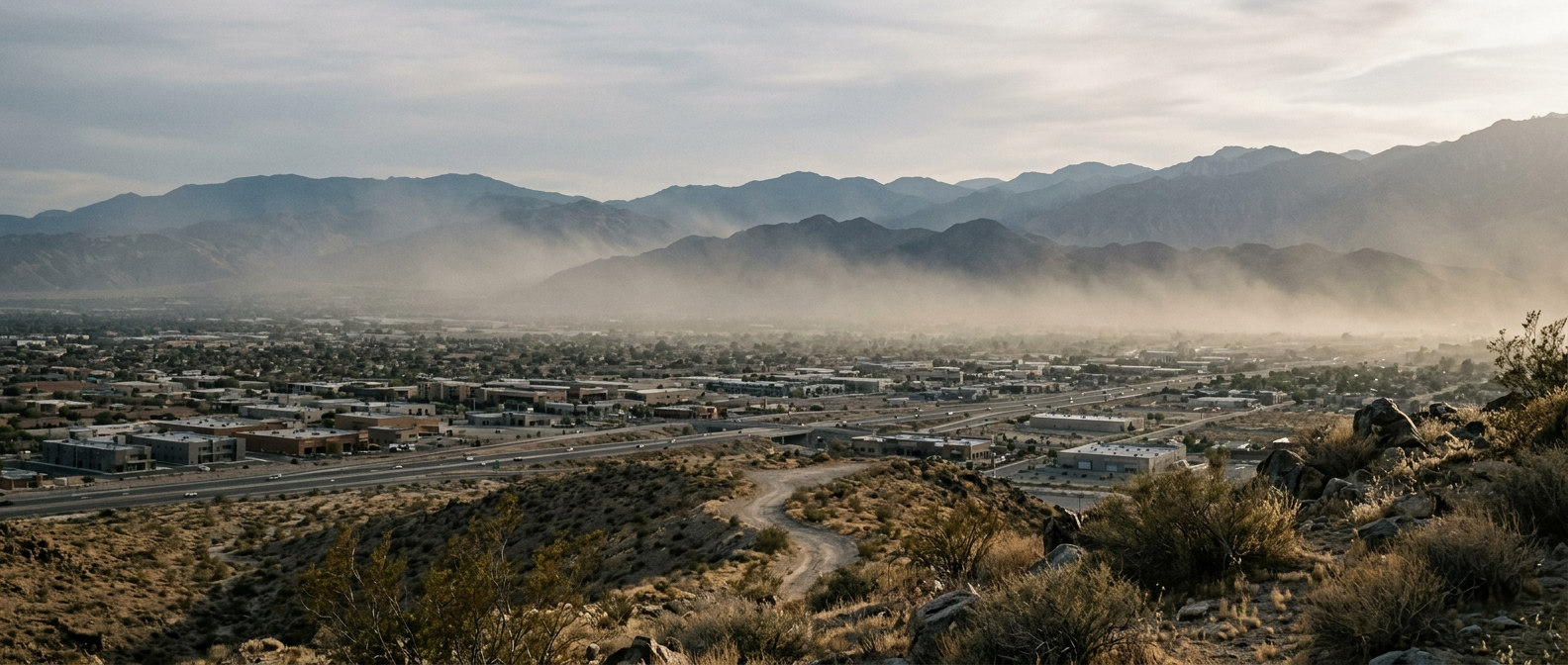
The Environmental Protection Agency has recently signaled a significant shift in its regulatory framework, effectively moving to shield Phoenix and Salt Lake City from federal penalties for failing to meet national air quality standards. According to reporting from The New York Times, the agency is attributing the persistent levels of ground-level ozone and particulate matter in these metropolitan areas to pollution originating in Asia, which travels across the Pacific Ocean to settle in the American Southwest. This policy pivot suggests that the agency is seeking to redefine what constitutes a 'local' violation of the Clean Air Act, moving away from the traditional model that holds regional authorities accountable for the industrial and vehicular emissions within their own jurisdictions.
This decision marks a notable departure from the agency’s long-standing mandate to enforce strict air quality benchmarks regardless of the source, provided those pollutants are present in the ambient air. By framing these urban centers as victims of international atmospheric transport rather than contributors to local smog, the EPA is essentially insulating municipal governments from the political and economic costs of stricter environmental regulation. This move raises profound questions about the future of domestic environmental policy, as it introduces a convenient variable—transboundary pollution—that could be leveraged to justify regulatory inaction across a variety of climate-related domains.
The Structural Limits of Environmental Accountability
The fundamental tension here lies in the definition of 'attainment' under the Clean Air Act. For decades, the EPA has operated under the assumption that local air quality is a function of local economic activity, industrial output, and urban planning. When a city exceeds the maximum allowable concentration of ozone, the regulatory mechanism is designed to trigger a series of corrective actions, such as stricter emissions testing or limitations on industrial permits. By introducing the 'international transport' defense, the EPA is effectively creating a loophole that decouples local air quality from local responsibility. This approach challenges the very premise of regional environmental management, which has historically relied on the assumption that local authorities possess the agency to mitigate their own pollution levels.
Historically, the EPA has occasionally accounted for 'exceptional events,' such as wildfires or dust storms, when assessing compliance. However, the current strategy represents a significant expansion of this concept. By targeting trans-Pacific pollution, the agency is moving beyond unpredictable natural phenomena and into the realm of global industrial externalities. This shift is not merely technical; it is a structural change in how the federal government views the relationship between local municipalities and the global climate system. If the baseline for clean air is constantly being adjusted for external factors that are beyond the control of local officials, the incentive to invest in cleaner energy or more efficient public transit systems is significantly diminished.
Mechanisms of Regulatory Avoidance
To understand why this shift is occurring now, one must look at the incentives facing municipal governments in the American West. Phoenix and Salt Lake City have struggled for years to maintain compliance with federal ozone standards, a challenge exacerbated by rapid population growth and the unique topographical features of these regions, which trap pollutants near the ground. For these cities, a federal designation of 'nonattainment' carries significant economic weight, including the potential loss of federal highway funding and the imposition of costly industrial regulations that could stifle development. The EPA’s new stance provides these cities with a regulatory lifeline, allowing them to bypass the rigorous oversight that usually accompanies persistent air quality failures.
This mechanism relies on the complex modeling of atmospheric transport, an area of science that, while sophisticated, remains subject to significant uncertainty. By prioritizing these models over empirical measurements of local air quality, the EPA is effectively privileging theoretical projections over the lived reality of residents breathing the air. This creates a dangerous precedent where regulatory outcomes are determined by the ability to build a plausible narrative about atmospheric currents rather than by the actual reduction of harmful emissions. The incentive structure here is clear: it is far cheaper and politically safer for the EPA to refine its dispersion models to blame international sources than it is to enforce the politically unpopular measures required to reduce local pollution.
Implications for Global Environmental Governance
The implications of this policy extend far beyond the borders of Phoenix and Salt Lake City. If the United States adopts a policy of blaming international sources for domestic environmental failures, it undermines its own position in international climate negotiations. The global climate regime is built on the principle of common but differentiated responsibilities; if the world's largest economy begins to externalize its pollution problems, it provides a convenient justification for other nations to adopt similar strategies. This could lead to a 'race to the bottom' in environmental regulation, where countries prioritize the appearance of compliance over the actual reduction of carbon and particulate emissions.
Furthermore, this strategy sets up a conflict between the EPA and environmental advocacy groups that have long relied on the Clean Air Act as a tool for public health protection. By shielding cities from the consequences of poor air quality, the agency is potentially exposing vulnerable populations to long-term health risks without the necessary regulatory intervention. The tension between local economic growth and public health is a perennial theme in American politics, but by shifting the blame to an external, unreachable actor, the EPA is effectively removing the debate from the public sphere, making it a matter of administrative modeling rather than democratic accountability.
The Uncertain Outlook for Air Quality Policy
The reliance on trans-Pacific pollution as a regulatory defense remains a subject of intense scientific and legal debate. While it is true that atmospheric currents can transport particles across the ocean, the extent to which this contributes to local ozone levels in the American interior is a matter of ongoing research. The EPA’s current reliance on this theory may face significant legal challenges, as critics argue that it violates the spirit, if not the letter, of the Clean Air Act. Whether the courts will permit the agency to bypass its core mandate based on these models remains the most critical question for the coming years.
Looking ahead, the long-term impact on air quality in the American Southwest will depend on whether this policy is treated as a temporary relief measure or a permanent shift in regulatory philosophy. If the former, it may provide a necessary breathing room for cities to transition to cleaner energy systems; if the latter, it risks institutionalizing a form of regulatory neglect that could have lasting public health consequences. As the science of atmospheric transport continues to evolve, the challenge for policymakers will be to balance the need for accurate modeling with the imperative of maintaining clear, enforceable standards for the air we breathe.
As the debate over the origins of smog in the American West intensifies, the fundamental question of who bears responsibility for the quality of the air remains unresolved. Whether this policy represents a pragmatic adaptation to a globalized climate or a retreat from environmental stewardship is a question that will continue to shape the discourse long after the current administration’s tenure concludes.
With reporting from The New York Times
Source · The New York Times — Science