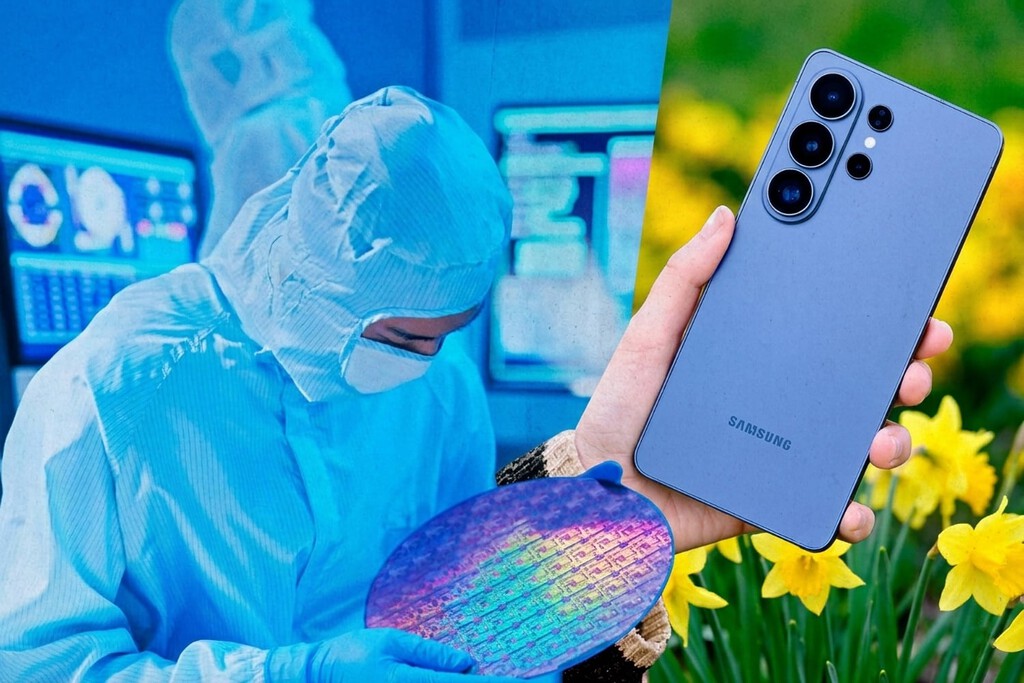
The semiconductor industry is navigating a period of profound restructuring, driven less by the organic needs of consumers and more by the voracious appetite of hyperscalers. As the largest technology companies redirect manufacturing capacity toward artificial intelligence infrastructure and massive data centers, the ripple effects are reaching the most mundane components of the personal computing world: RAM and SSDs. The latest casualty in this shift appears to be LPDDR4, the reliable, low-power memory standard that has anchored mid-range smartphones and ultrabooks for years. According to reports from The Elec, Samsung is beginning to wind down its commitment to LPDDR4 in favor of the newer, more expensive LPDDR5 and LPDDR5X standards.
The move is not without precedent. Memory transitions have historically followed a predictable arc: a new standard launches at a premium, coexists with its predecessor for several years, and gradually displaces it as yields improve and costs fall. The shift from DDR3 to DDR4 in the mid-2010s followed roughly this pattern, with overlap long enough for budget segments to adjust. What distinguishes the current transition is the pace and the force behind it. Rather than waiting for natural cost curves to make LPDDR5 economical across all tiers, the industry appears to be accelerating the timeline to serve its most lucrative customers first.
The Hyperscaler Effect on Consumer Hardware
The dynamics at play are structural. Hyperscale data center operators—companies running AI training clusters, large language model inference farms, and cloud computing infrastructure at enormous scale—consume memory in quantities that dwarf the smartphone or laptop market on a per-unit margin basis. When these buyers signal demand for next-generation memory, chipmakers have strong financial incentive to reallocate fabrication capacity accordingly. Samsung, SK Hynix, and Micron collectively control the vast majority of global DRAM production, and their capital expenditure decisions ripple through every device category.
By phasing out LPDDR4 production, Samsung can consolidate its fabrication around fewer process nodes, simplifying logistics and concentrating output on higher-margin products. The calculus is straightforward: every wafer dedicated to LPDDR4 is a wafer not producing LPDDR5X destined for an AI accelerator card or a flagship smartphone. In a market where fabrication capacity remains constrained, opportunity cost governs allocation.
The consequence for the broader hardware ecosystem is a supply-side squeeze on affordable components. LPDDR4 has served as the backbone of budget and mid-range devices precisely because it is mature, well-understood, and inexpensive to produce. Its disappearance from the supply chain does not automatically make LPDDR5 cheaper; it simply removes the alternative.
The Non-Upgradeable Problem
The transition carries an additional complication rooted in hardware design. LPDDR memory—unlike standard DDR modules used in desktop PCs—is soldered directly to the motherboard. This architecture delivers the compact form factor and power efficiency that mobile devices require, but it eliminates the possibility of aftermarket upgrades. A laptop shipped with LPDDR5 cannot later be retrofitted with more or different memory; the configuration chosen at the factory is permanent.
This design reality means that rising component costs translate directly into higher device prices at the point of sale, with no downstream workaround available to cost-conscious buyers. Manufacturers of entry-level tablets, Chromebooks, and compact PCs—categories that have historically relied on affordable LPDDR4—face a narrowing set of options. They can absorb the higher bill of materials, pass costs to consumers, or reduce memory capacity to hold price points, each choice carrying its own trade-offs in competitiveness and user experience.
The broader pattern is worth watching beyond memory alone. As AI workloads reshape semiconductor demand hierarchies, similar dynamics may emerge in NAND flash, power management ICs, and other components where hyperscaler purchasing power can redirect production priorities. The memory market is offering an early case study in what happens when the most capital-intensive customers in technology set the pace for an entire supply chain—and the rest of the ecosystem is left to adapt on terms it did not choose.
With reporting from Xataka.
Source · Xataka