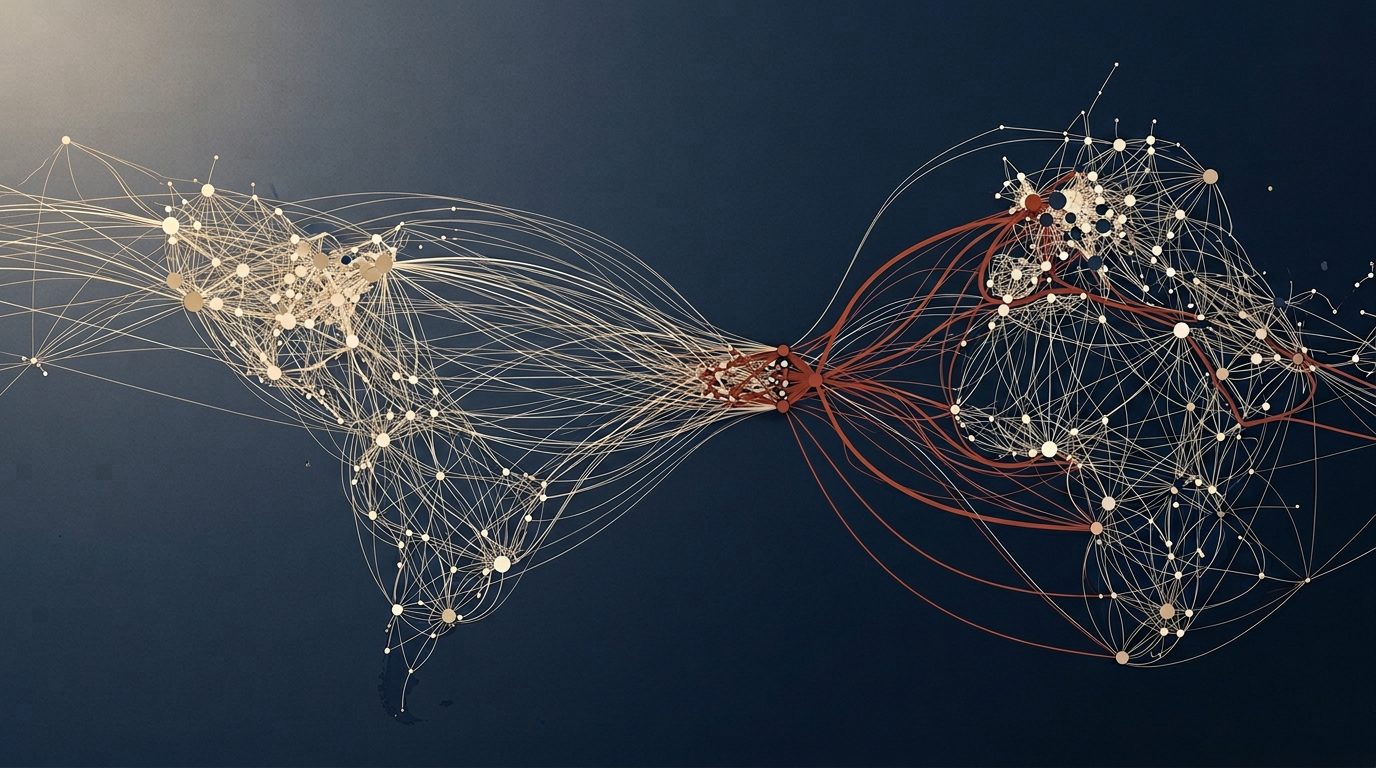
The recent closure of the Strait of Hormuz has once again brought the precarious nature of global trade routes into sharp focus, serving as a stark reminder of how concentrated supply chains can trigger cascading crises across the global economy. As maritime traffic is diverted or halted, the immediate impact on energy markets and industrial logistics has reignited concerns regarding the lack of preparedness among major economies. According to Project Syndicate reporting, these recurring disruptions underscore a critical oversight in how modern states manage their economic security, revealing that the infrastructure supporting global commerce is far more fragile than policymakers previously acknowledged.
This latest incident is not an isolated event but rather a symptom of a deeper, structural failure to account for geographic and logistical bottlenecks in a hyper-connected world. While the global economy has long prioritized efficiency and just-in-time delivery systems, these strategies have inadvertently created a series of hidden chokepoints where a single point of failure can paralyze international trade. The editorial thesis here is that the current model of economic interdependence, while beneficial for cost optimization, has systematically ignored the risk of systemic collapse, leaving the global order dangerously exposed to localized geopolitical volatility.
The Architecture of Fragility
The fundamental issue lies in the tension between the efficiency-driven logic of global trade and the reality of physical geography. For decades, the prevailing economic doctrine favored the concentration of production and the streamlining of transit routes to minimize costs and maximize throughput. This approach worked exceptionally well during periods of relative geopolitical stability, where the assumption of open seas and uninterrupted access was rarely challenged. However, this focus on optimization came at the expense of redundancy, creating a world where a handful of maritime passages—such as the Strait of Hormuz, the Suez Canal, or the Strait of Malacca—act as systemic single points of failure.
The lack of progress in mapping these vulnerabilities is particularly concerning given the frequency of recent shocks. Governments and private sector stakeholders have often treated these disruptions as temporary anomalies, focusing on short-term mitigation rather than long-term structural resilience. This reactive posture is rooted in a historical oversight: the belief that market mechanisms would naturally incentivize the development of alternative routes or diversified supply chains. In reality, the high capital costs associated with building such alternatives, combined with the lack of international coordination, have kept the status quo largely intact, leaving the global economy tethered to a handful of vulnerable transit points.
Furthermore, the complexity of modern supply chains makes it difficult to even visualize where these vulnerabilities truly lie. Many companies have deep, multi-tiered supplier networks that are often invisible to the lead firm, let alone to national regulators. When a chokepoint is blocked, the ripple effects are not always linear; they move through secondary and tertiary suppliers, often causing delays that are not immediately apparent until they manifest as shortages or price spikes. This lack of transparency is a systemic flaw that prevents both firms and states from accurately assessing their exposure to geopolitical risk.
Mechanisms of Cascading Risk
To understand how these chokepoints function as catalysts for crisis, one must examine the incentive structures that govern global logistics. The modern supply chain is designed for speed and cost-efficiency, not for robustness. Logistics providers are incentivized to utilize the most direct and well-established routes to keep prices competitive. When a disruption occurs, the immediate response is often a scramble for existing, limited alternatives, which quickly become saturated, leading to massive delays and cost escalations. This dynamic creates a feedback loop where the cost of disruption is amplified by the inability of the system to absorb the sudden shift in demand.
This mechanism is exacerbated by the reliance on just-in-time inventory management. By minimizing stock levels to reduce holding costs, firms have eliminated the buffer capacity that would normally allow them to weather temporary outages. When a major chokepoint closes, there is no "slack" in the system to accommodate the delay. Consequently, a week-long closure can result in months of downstream disruption, as manufacturing schedules are upended and the delicate balance of global production is thrown into disarray. This is not merely a logistical challenge; it is an economic phenomenon where the absence of inventory buffers turns a localized event into a global inflationary pressure.
Moreover, the geopolitical dimension of these chokepoints adds a layer of complexity that market forces cannot solve on their own. When a transit point falls under the control or influence of a single state, it becomes a tool of geopolitical leverage. This transforms the logistical bottleneck into a strategic asset, creating a situation where the stability of the global economy is contingent upon the political calculations of a few key actors. The incentive for those actors to maintain the status quo is often outweighed by the potential for diplomatic or economic gain, creating a permanent state of tension that keeps global markets in a perpetual state of uncertainty.
Implications for Stakeholders
The implications of these vulnerabilities extend far beyond the immediate economic impact, affecting regulators, corporate boards, and national security apparatuses alike. For regulators, the challenge is to move from a philosophy of laissez-faire trade to one of strategic resilience. This may involve incentivizing the diversification of supply chains, even at the cost of higher prices, or mandating transparency in supplier networks. For corporations, the shift requires a fundamental reassessment of risk management. The era of prioritizing cost-minimization above all else is likely coming to an end, as the hidden costs of supply chain fragility become increasingly apparent to shareholders and consumers.
Furthermore, the geopolitical landscape is shifting as countries realize that economic security is synonymous with national security. We are seeing a trend toward "friend-shoring" or regionalization, where nations attempt to shorten supply chains and reduce reliance on transit routes that are subject to geopolitical influence. However, this transition is fraught with difficulty. Building new infrastructure or relocating production is a multi-year, multi-billion dollar undertaking that cannot be achieved overnight. The tension between the desire for security and the reality of existing global dependencies will likely define the economic policy landscape for the coming decade.
Outlook and Open Questions
As we look toward the future, several critical questions remain unanswered. Can international institutions effectively coordinate to protect these vital arteries, or will the trend toward fragmentation continue to undermine global cooperation? Is it possible to build sufficient redundancy into the system without causing the very inflation that policymakers are trying to avoid? The answers to these questions are not yet clear, and the path forward is likely to be characterized by ongoing volatility as the global economy attempts to reconcile its reliance on vulnerable infrastructure with the realities of a changing geopolitical order.
What remains to be seen is how quickly the private sector will adapt to this new environment of heightened risk. Will firms voluntarily invest in resilience, or will they require government mandates to move away from the current model of extreme efficiency? As these structural tensions continue to evolve, the fragility of the global supply chain will remain a central concern for policymakers, demanding a more sophisticated approach to managing the hidden chokepoints that hold the modern world together.
With reporting from Project Syndicate
Source · Project Syndicate