The transition from a controlled laboratory to a chaotic loading dock represents one of the most persistent challenges in commercial robotics. A machine may demonstrate fluid motion and precise gripping under the steady conditions of a research facility, but the environment of a working warehouse — defined by dust, variable lighting, damaged packaging, and unpredictable cargo arrangements — imposes stresses that few lab-developed systems are prepared to handle. The gap between demonstration and deployment has quietly ended more robotics ventures than any technical limitation.
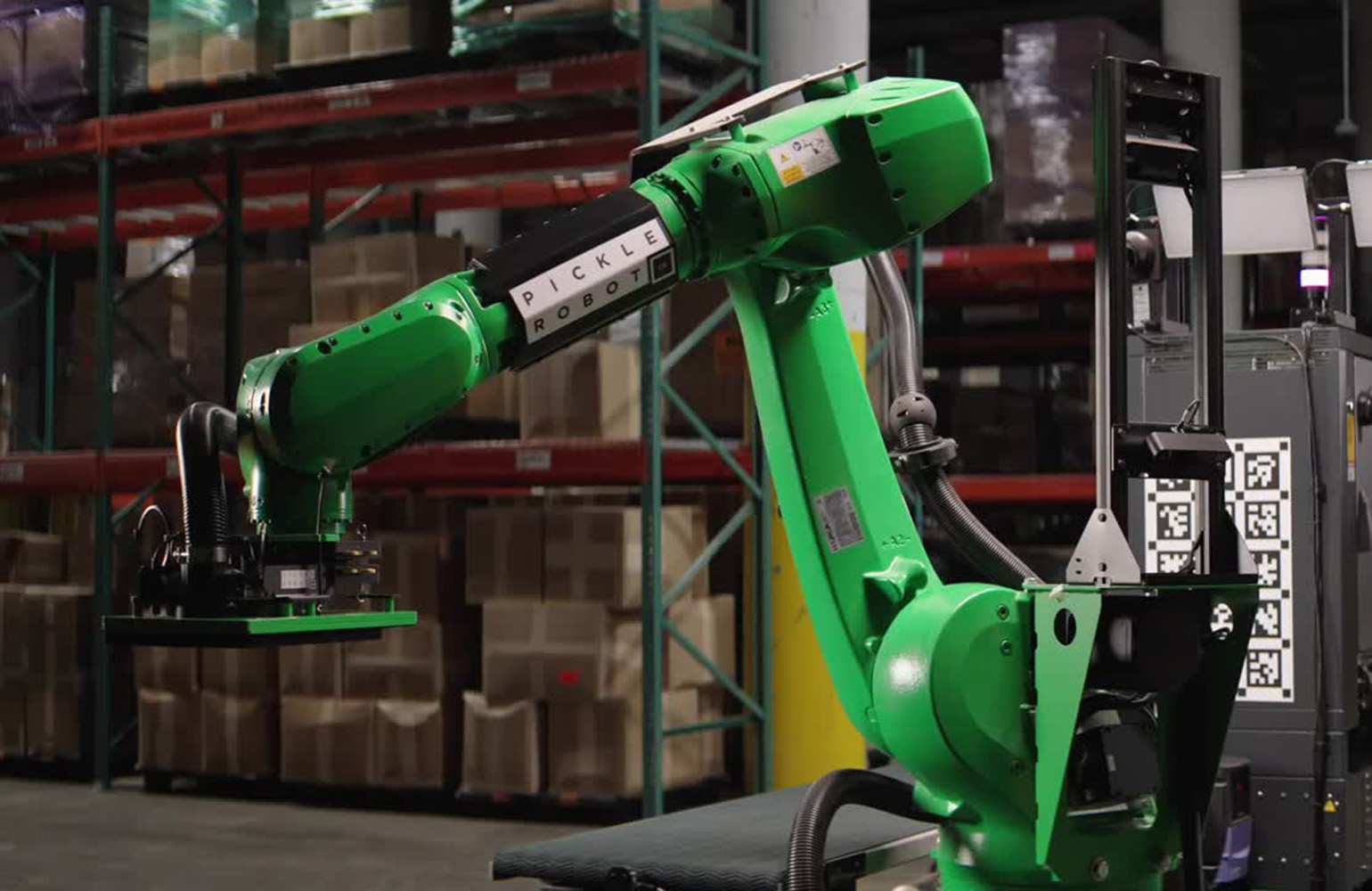
Pickle Robot Co., a company focused on autonomous truck-unloading systems, is confronting this gap directly. At the upcoming Robotics Summit & Expo in Boston, CTO and founder Ariana Eisenstein will present lessons drawn from moving the company's technology out of controlled settings and into active customer environments. The talk centers on what Pickle calls "physical AI" — autonomous systems designed to unload trucks at speeds that match or exceed human performance — and the engineering discipline required to make such systems commercially viable rather than merely technically impressive.
From prototype to shift work
The distinction between a working prototype and a commercially reliable product is often underestimated outside the robotics industry. A system that performs well during a supervised demonstration may fail when asked to operate across consecutive eight-hour shifts, handling thousands of packages of varying size, weight, and condition. Edge cases — the unusual configurations, damaged boxes, or unexpected obstacles that fall outside a system's training data — are rare individually but frequent in aggregate across a full day of warehouse operations.
Truck unloading is a particularly demanding application. Unlike pick-and-place tasks on a structured conveyor line, the interior of a loaded trailer presents a semi-structured environment where cargo may have shifted during transit, boxes may be crushed or wet, and the arrangement bears little resemblance to any standardized layout. The robot must make real-time decisions about grasp strategy, path planning, and sequencing — all while operating at a pace that justifies its cost relative to manual labor. Hardware durability compounds the challenge. Dust, heat, vibration, and occasional physical contact with cargo impose a toll that accelerates wear on sensors, actuators, and mechanical joints far beyond what laboratory testing can simulate.
This is the domain where many robotics companies have struggled. The history of warehouse automation includes several high-profile efforts that demonstrated strong technical capabilities in controlled environments but faltered when confronted with the full variability of real-world logistics operations.
The economics of reliability
Eisenstein's focus on the lab-to-field transition reflects a broader maturation in the robotics industry. The conversation has shifted from what robots can do in principle to what they can do repeatedly, at cost, without constant human intervention. For warehouse operators evaluating automation, the relevant metric is not peak performance during a demonstration but sustained throughput across weeks and months of operation — including the frequency and duration of downtime events.
This shift carries implications beyond any single company. The logistics sector faces well-documented labor constraints, particularly for physically demanding roles like truck unloading, which involves repetitive heavy lifting in confined, often poorly ventilated spaces. Automation that reliably addresses these roles could reshape labor allocation in distribution centers. But reliability is the operative word. A system that requires frequent human intervention or generates unpredictable stoppages may impose costs — in supervision, workflow disruption, and operator frustration — that offset its theoretical throughput advantage.
The challenge Pickle and its competitors face is therefore not purely technical. It is an engineering-economics problem: building systems robust enough to deliver consistent value in environments that resist consistency. Path planning algorithms must account for disorder. Sensors must function through dust and glare. Mechanical components must endure thousands of cycles per day without degradation that compromises performance.
Whether the current generation of truck-unloading robots can meet this standard at scale remains an open question. The technology has advanced considerably, but the gap between laboratory capability and field reliability continues to define the boundary between promising venture and viable business. The forces in tension — rising labor costs pulling demand for automation forward, and the unforgiving physics of real-world deployment pushing back — will determine which companies survive the transition and which remain impressive but impractical.
With reporting from The Robot Report.
Source · The Robot Report