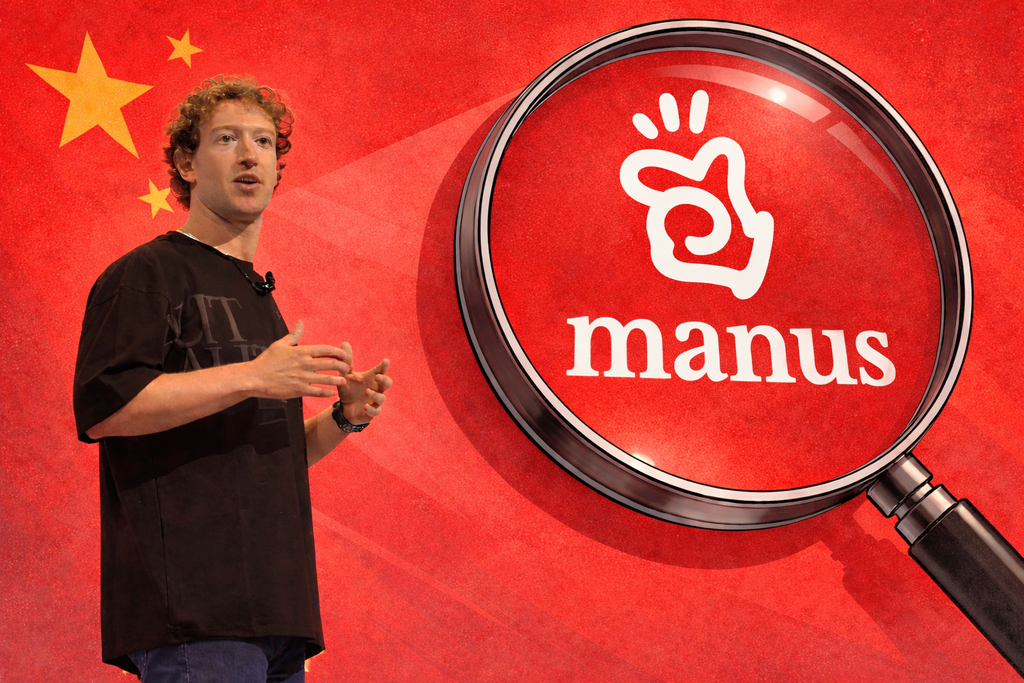
The global race for artificial intelligence dominance is increasingly defined by border-crossing capital and the friction of national interests. Meta’s $2 billion acquisition of Manus, a Chinese startup specializing in AI agents, represents a strategic move by Mark Zuckerberg’s company to shore up its standing against rivals like OpenAI and Google. While Meta has invested heavily in its own Llama models, the purchase of Manus was seen as a tactical bypass to acquire specialized "agentic" capabilities that had begun to gain significant traction.
Manus initially rose to prominence alongside DeepSeek, another Chinese AI heavyweight, by offering a "deep research" mode that promised to bridge the gap between simple chatbots and autonomous digital workers. Although critics argued that the platform functioned more as an advanced assistant than a fully autonomous agent, the startup’s commercial momentum—with estimated revenues exceeding $100 million—made it an irresistible target for a Silicon Valley giant looking to accelerate its roadmap.
However, the deal has quickly become a flashpoint for geopolitical tension. The Chinese government, viewing the loss of a domestic AI leader to a major American firm as a strategic setback, launched a formal investigation into the acquisition. Beijing’s eventual conclusion—labeling the transaction a "conspiracy"—underscores the reality that in the current technological climate, there is no such thing as a purely private corporate acquisition. As AI becomes the central pillar of national competitiveness, the movement of talent and code is being scrutinized with the same intensity as the movement of arms.
With reporting from Xataka.
Source · Xataka