Recent statistical data indicates that the cost of an average working hour in Germany has climbed to 45 euros, cementing the nation’s status as one of the most expensive labor markets within the European Union. This development, while reflective of high living standards and robust social protections, arrives at a moment of profound uncertainty for the German economic engine, which has historically relied on a delicate balance between high-skill productivity and cost-efficient output.
According to WirtschaftsWoche reporting, the steady upward trajectory of these costs necessitates a rigorous re-evaluation of Germany's industrial strategy. As the country navigates a period of stagnant growth and shifting global supply chains, the persistent escalation of labor-related expenses functions as a structural headwind, potentially eroding the comparative advantage that has long defined the German manufacturing sector in international trade.
The Anatomy of Rising Labor Expenses
The composition of German labor costs is distinct, characterized by a significant portion of non-wage components, including mandatory social security contributions and pension provisions. This structural framework is often cited as a cornerstone of the German social market economy, providing a high level of stability and collective bargaining leverage for the workforce. However, when these costs rise in isolation from equivalent gains in labor productivity, they create a widening gap that firms must navigate through either margin compression or price increases.
Historically, the German model flourished by offsetting these high costs through superior engineering, high-value exports, and a deep integration into global value chains. The current environment, however, differs significantly from the industrial expansion phases of the early 2000s. With energy prices remaining volatile and digital transformation lagging behind regional competitors, the burden of high labor costs is no longer being buffered by the same abundance of cheap energy and burgeoning global demand for traditional capital goods.
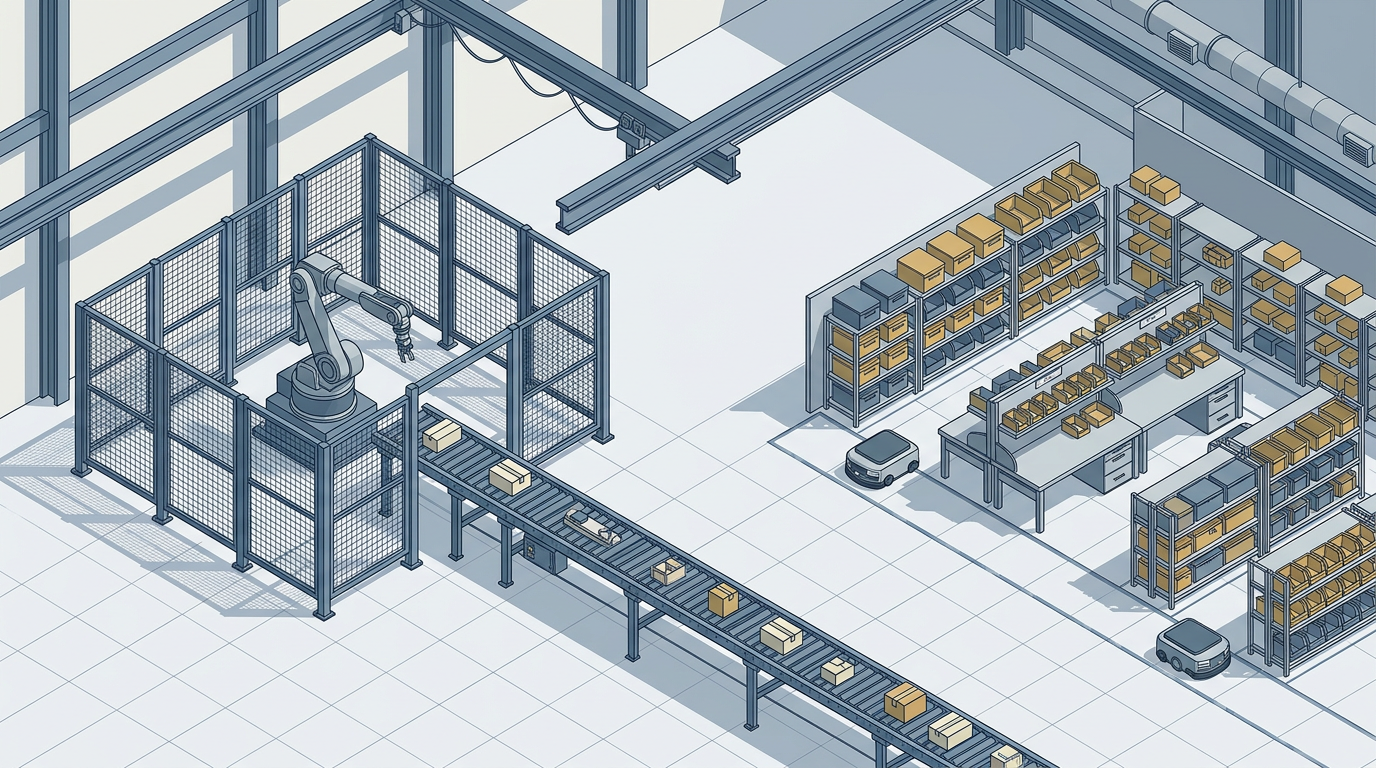
This creates a feedback loop where businesses are increasingly incentivized to shift investment toward lower-cost jurisdictions or accelerate automation. The challenge is that both paths carry long-term risks: capital flight can hollow out domestic industrial clusters, while rapid automation requires a level of capital expenditure that many mid-sized firms, or Mittelstand, find increasingly difficult to justify in a high-interest-rate environment.
Competitive Dynamics and Regional Divergence
Within the European single market, Germany’s labor cost profile stands in stark contrast to its neighbors in Central and Eastern Europe, which have historically served as the manufacturing backyard for German industry. The arbitrage opportunity that once allowed German firms to integrate these markets into their value chains is shifting. As wages in these neighboring countries rise, the competitive pressure on Germany is no longer coming from low-cost labor, but from a broader regional realignment where other nations are successfully scaling their own high-value manufacturing capabilities.
Furthermore, the German labor market is currently contending with a demographic shift that places upward pressure on wages even in the absence of productivity gains. An aging workforce and a shrinking pool of skilled labor mean that companies are forced to pay a premium to attract and retain talent. This is not merely a cyclical phenomenon but a long-term structural shift that forces a rethink of the 'Made in Germany' value proposition. If the cost of production continues to outpace the value-added component, the traditional export-oriented model faces a crisis of sustainability.
This dynamic is further complicated by the regulatory burden that accompanies labor in the EU. Compliance with evolving environmental, social, and governance (ESG) standards adds a layer of indirect costs that, while socially desirable, further inflates the operational expenditure of German enterprises. For a firm operating in a globalized market, these costs must be absorbed or passed on to the consumer, both of which are becoming increasingly difficult as global competition intensifies.
Implications for Stakeholders and Policy
The implications of these rising costs ripple across the entire economic ecosystem, affecting everyone from the individual worker to the federal regulator. For the German government, the tension lies in maintaining the social contract—which relies on high employment and high wages—without triggering a broader industrial exodus. Policymakers are faced with the difficult task of incentivizing innovation and investment in high-productivity sectors while simultaneously managing the fiscal pressure of a social security system that is inherently tied to labor costs.
For competitors, particularly those in Asia and North America, Germany's rising cost base is an opening. Firms in these regions are increasingly positioning themselves to capture market share in sectors where Germany has traditionally held a monopoly, such as advanced automotive components and specialized machinery. The risk for Germany is that it becomes a high-cost island in a global market that is increasingly prioritizing agility and cost-efficiency, potentially leading to a gradual erosion of the country’s industrial base.
The Outlook for Industrial Resilience
What remains uncertain is whether the current rise in labor costs will serve as a catalyst for a necessary structural transformation or simply as a precursor to a long-term decline in manufacturing dominance. The resilience of the German economy has often been underestimated, and its ability to reinvent its industrial base in response to external shocks is a matter of historical record. However, the current convergence of high labor costs, energy insecurity, and a slowing global economy presents a unique set of challenges that may not be solved by traditional policy levers.
Watching the evolution of these costs in the coming quarters will be essential to understanding whether German industry is adapting or merely reacting. The focus will likely shift toward whether productivity can be decoupled from labor cost increases through significant investment in AI-driven efficiency and workforce reskilling. The outcome of this process will determine the trajectory of the German economy for the next decade.
As the interplay between social welfare standards and the realities of global trade continues to evolve, the question of how Germany will redefine its competitive edge remains open for debate. The path forward necessitates a careful navigation between maintaining the high standard of living that defines the nation and ensuring that its industrial sector remains a viable and attractive destination for global capital. With reporting from WirtschaftsWoche
Source · WirtschaftsWoche