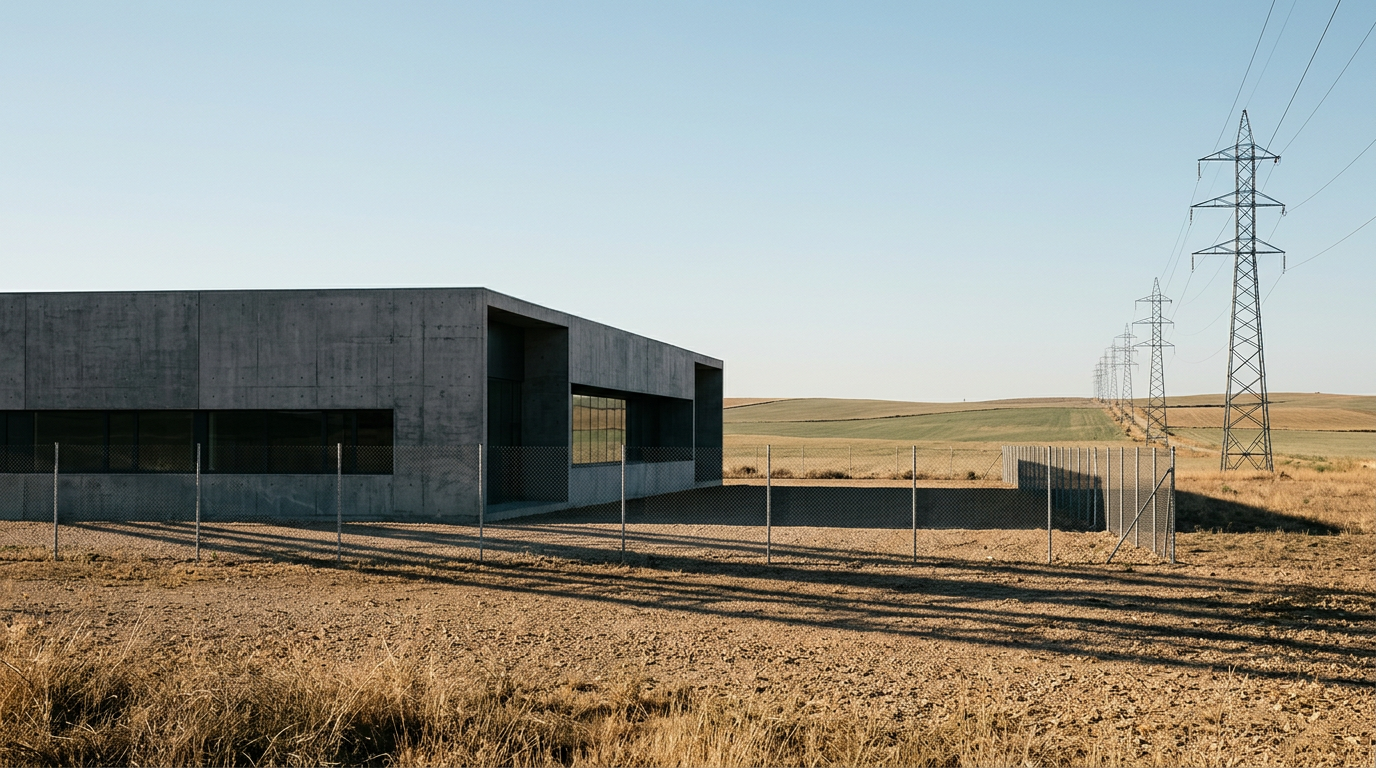
The rapid proliferation of artificial intelligence infrastructure across the United States has moved beyond the confines of Silicon Valley and into the heart of rural America. As tech giants scramble to secure massive tracts of land and access to power grids for hyperscale data centers, they are increasingly encountering organized resistance from local residents. According to reporting from the Financial Times, these communities are raising alarms over the immense water and electricity demands of AI facilities, which threaten to strain local infrastructure and alter the character of the regions they occupy.
This friction represents a critical juncture for the Biden administration’s national AI strategy, which views domestic infrastructure dominance as a prerequisite for geopolitical and economic security. While federal policymakers prioritize the acceleration of high-performance computing to maintain a competitive edge against global rivals, local stakeholders are grappling with the tangible, immediate costs of hosting these industrial-scale operations. The resulting standoff underscores a fundamental disconnect between the abstract promise of AI-driven innovation and the concrete realities of the physical resources required to sustain it.
The Geography of Digital Industrialization
Historically, the digital economy was viewed as an ephemeral, decentralized force that could exist anywhere, detached from the traditional constraints of heavy industry. This perception has been dismantled by the rise of generative AI, which requires massive, centralized compute clusters. Unlike the software startups of the previous decade, the current AI wave is deeply tethered to the physical world, necessitating reliable access to high-voltage power lines, fiber-optic connectivity, and vast quantities of water for cooling purposes. This shift has turned rural areas into the new frontier for digital expansion, as urban centers face land scarcity and regulatory hurdles.
However, the arrival of these facilities is rarely met with the enthusiasm that once accompanied traditional industrial development. In many rural communities, the promise of job creation is viewed with skepticism, as modern data centers are notoriously automated and require minimal permanent staff once construction concludes. Instead of revitalizing local economies, residents often perceive these projects as extractive, fearing that they will consume precious natural resources and drive up energy costs for local households and businesses without providing a commensurate return on investment.
This structural tension is compounded by the speed at which these projects are often pushed through local planning commissions. When large technology firms leverage their influence to fast-track zoning changes or secure tax incentives, the democratic process can feel sidelined. For rural residents, the loss of local autonomy in the face of corporate and federal pressure creates a sense of disenfranchisement that transcends the specific issue of data centers, reflecting broader anxieties about the erosion of local control in a globalized, tech-centric economy.
The Mechanics of Resource Competition
At the core of the conflict is the competition for critical resources, specifically energy and water. Hyperscale data centers are essentially industrial heat-exchangers, consuming electricity at a scale that often rivals small cities. In regions where the power grid is already aging or operating near capacity, the addition of a massive data center can destabilize local supply, leading to concerns about price volatility and reliability. The integration of these facilities into the grid requires significant investment in transmission infrastructure, the costs of which are often socialized across the broader ratepayer base, further fueling local resentment.
Water consumption presents an even more visceral challenge, particularly in arid regions or areas where water rights are already a point of contention. The cooling systems required to keep AI servers operational during peak usage periods require millions of gallons of water, a demand that can conflict with agricultural needs and residential consumption. When local farmers or municipalities see their water security threatened by the needs of a remote server farm, the narrative of "innovation" loses its appeal. The clash is not merely ideological; it is a direct competition for the essential building blocks of life and economic stability in rural environments.
Furthermore, the environmental footprint of these facilities extends beyond their immediate resource consumption. The carbon intensity of the power used to fuel these centers remains a significant point of concern for community activists. Even as companies commit to renewable energy procurement, the reality of grid-level power generation means that data centers often rely on fossil-fuel-backed baseload power to maintain the uptime required for AI training and inference. This creates a disconnect between the corporate sustainability messaging favored by tech leadership and the local environmental realities faced by those living in the shadow of these massive structures.
Implications for Stakeholders and Policy
For regulators and policymakers, the growing rural resistance presents a complex governance challenge. The federal government has a clear interest in fostering a robust AI ecosystem, yet it lacks the direct authority to override local zoning decisions or ignore the valid concerns of constituents. If the current trajectory of friction continues, it could lead to a fragmented regulatory landscape where some jurisdictions become "digital sanctuaries" for infrastructure while others implement moratoriums, potentially creating inefficiencies in the national rollout of AI capacity.
For the technology companies themselves, the current approach of top-down deployment carries significant reputational and operational risks. As local opposition becomes more organized, the likelihood of litigation, permit delays, and public relations crises increases. Companies that fail to engage in meaningful, transparent dialogue with local communities may find themselves facing a hostile regulatory environment that could impede their ability to scale. The shift toward a more collaborative model, where tech firms invest directly in regional infrastructure improvements or community-led energy initiatives, may become a necessity rather than a choice for those seeking to maintain their social license to operate.
The Uncertain Path Forward
As the demand for AI compute continues to grow, the question of how to reconcile this with local community needs remains unresolved. The current model of rapid, resource-intensive expansion appears increasingly unsustainable in its present form, yet the geopolitical imperative to maintain AI leadership remains a powerful driver of federal policy. Whether this tension will lead to a more sustainable, decentralized approach to AI infrastructure or a protracted period of local-federal conflict remains to be seen.
Looking ahead, the role of state-level intervention will likely become more prominent as they attempt to balance the competing interests of tech developers and their own residents. Observers should watch for new legislative efforts aimed at standardizing the permitting process for data centers, as well as potential mandates for increased transparency in energy and water usage. The path forward will require a fundamental rethinking of how the digital and physical worlds intersect, ensuring that the benefits of the AI revolution are not built on the backs of communities that have been left behind by the transition to a high-compute economy.
As the national debate over industrial policy continues to evolve, the tension between the desire for technological dominance and the preservation of local community interests remains an open question, inviting a deeper examination of who truly benefits from the infrastructure of the future.
With reporting from Financial Times
Source · Financial Times — Technology


