The entertainment industry's long-anticipated wave of consolidation has reached a decisive moment. Paramount Skydance is moving to acquire Warner Bros., a transaction that would unite two of Hollywood's oldest studios under a single corporate umbrella. The deal gained momentum after Netflix, the primary rival bidder for the legacy studio, withdrew from the process. Netflix co-CEOs Ted Sarandos and Greg Peters characterized the acquisition as a "nice to have" rather than a necessity, signaling a disciplined refusal to overextend for the sake of scale. The withdrawal also carried a regulatory side effect: Utah Senator Mike Lee canceled a planned hearing that would have targeted the streaming giant over antitrust concerns.
The merger, if completed, would represent one of the largest media combinations since the AT&T–Time Warner deal of 2018 — a transaction that itself proved difficult to integrate and was ultimately unwound. The history of mega-mergers in entertainment is littered with cautionary tales, from the AOL–Time Warner debacle of 2000 to Viacom's repeated splits and recombinations. Each promised synergies and scale; few delivered on both.
A Theatrical Bet in a Streaming Era
Under the leadership of David Ellison, the combined entity appears to be charting a course that resists the industry's full pivot toward streaming-first distribution. Ellison has committed to a slate of 30 films per year, each guaranteed a 45-day theatrical window before migrating to a combined HBO Max and Paramount+ platform. That 45-day window is notable. During the pandemic, several studios experimented with simultaneous theatrical and streaming releases — a strategy that alienated exhibitors and, in Warner Bros.' own case under its previous ownership, triggered significant talent disputes. The commitment to a defined theatrical window suggests an attempt to rebuild relationships with cinema chains while still feeding the platform's content pipeline.
Perhaps more striking is the decision to maintain linear cable assets, including CNN. At a time when legacy media companies have been shedding cable properties or spinning them off as declining businesses, the retention of a major news network signals either long-term strategic patience or a belief that bundled content — news, entertainment, sports — still holds value as a package. Ellison has promised to uphold CNN's editorial independence amid the restructuring, though the practical mechanics of that independence within a conglomerate primarily oriented toward entertainment remain an open question.
The Margins Recalibrate
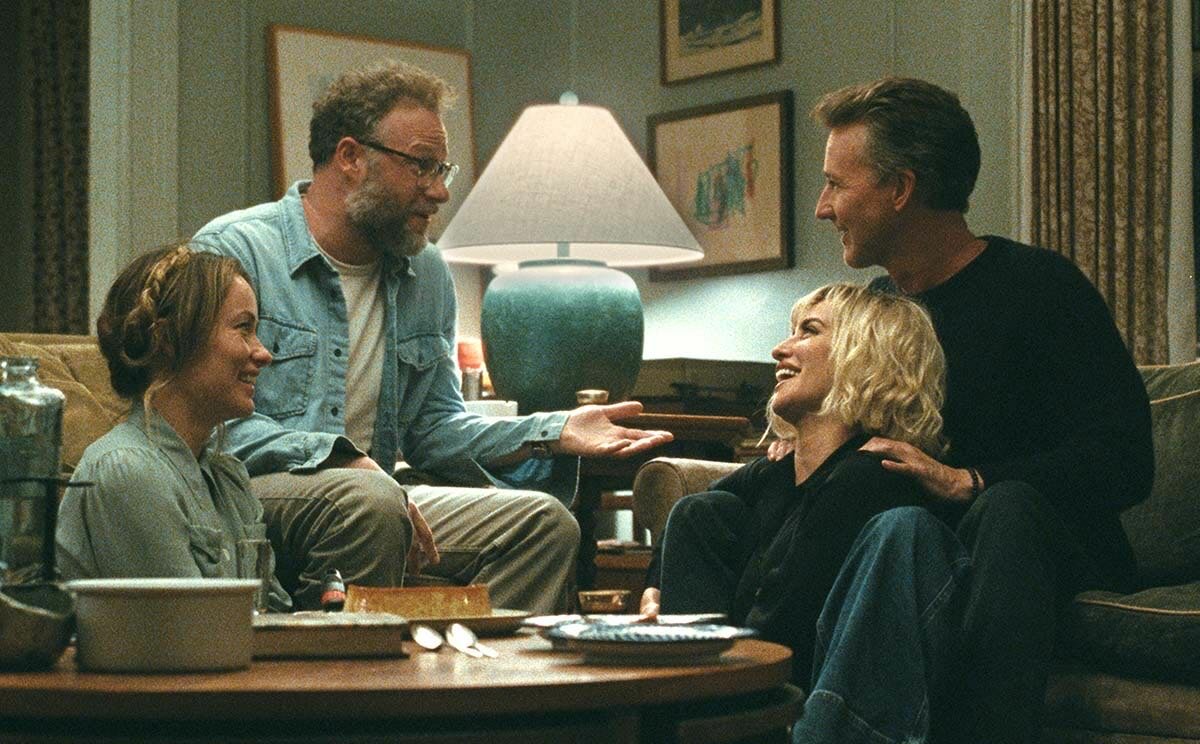
While the major studios consolidate, the independent sector is adjusting to the shifting landscape. Megan Ellison — David Ellison's sister — is orchestrating a revival of Annapurna Pictures, the indie production company that suffered from over-expansion in recent years. Annapurna had built a reputation for backing ambitious, director-driven projects, but financial strain pushed it to the brink. By rehiring key former executives and acquiring Olivia Wilde's upcoming film The Invite, Ellison appears to be steering the company back toward its roots in high-profile prestige cinema. The timing is deliberate: as major studios absorb each other and prioritize franchise-scale output, a gap opens for well-capitalized independents willing to take creative risks on mid-budget films — a category that has been steadily squeezed out of the theatrical ecosystem.
Elsewhere, the festival world offers a counterpoint of institutional stability. Tricia Tuttle will remain at the helm of the Berlinale, providing continuity in a season defined by corporate upheaval. Festivals have historically served as a counterweight to studio consolidation, offering distribution pathways and visibility for films that fall outside the blockbuster logic. Whether that role becomes more important or more marginal in a landscape dominated by fewer, larger entities is one of the quieter tensions worth watching.
The broader question hanging over the Paramount–Warner Bros. combination is whether scale alone constitutes a strategy. Netflix withdrew not because it lacked the resources to compete, but because its leadership judged the acquisition unnecessary — a revealing signal about how the streaming giant views its competitive position. The merged Paramount-Warner entity will command a vast library, significant production infrastructure, and a dual-platform streaming presence. What it will need to prove is that owning more translates into something audiences and investors actually value, rather than simply creating a larger organization burdened by the integration costs that have undone similar ambitions before.
With reporting from MUBI Notebook.
Source · MUBI Notebook