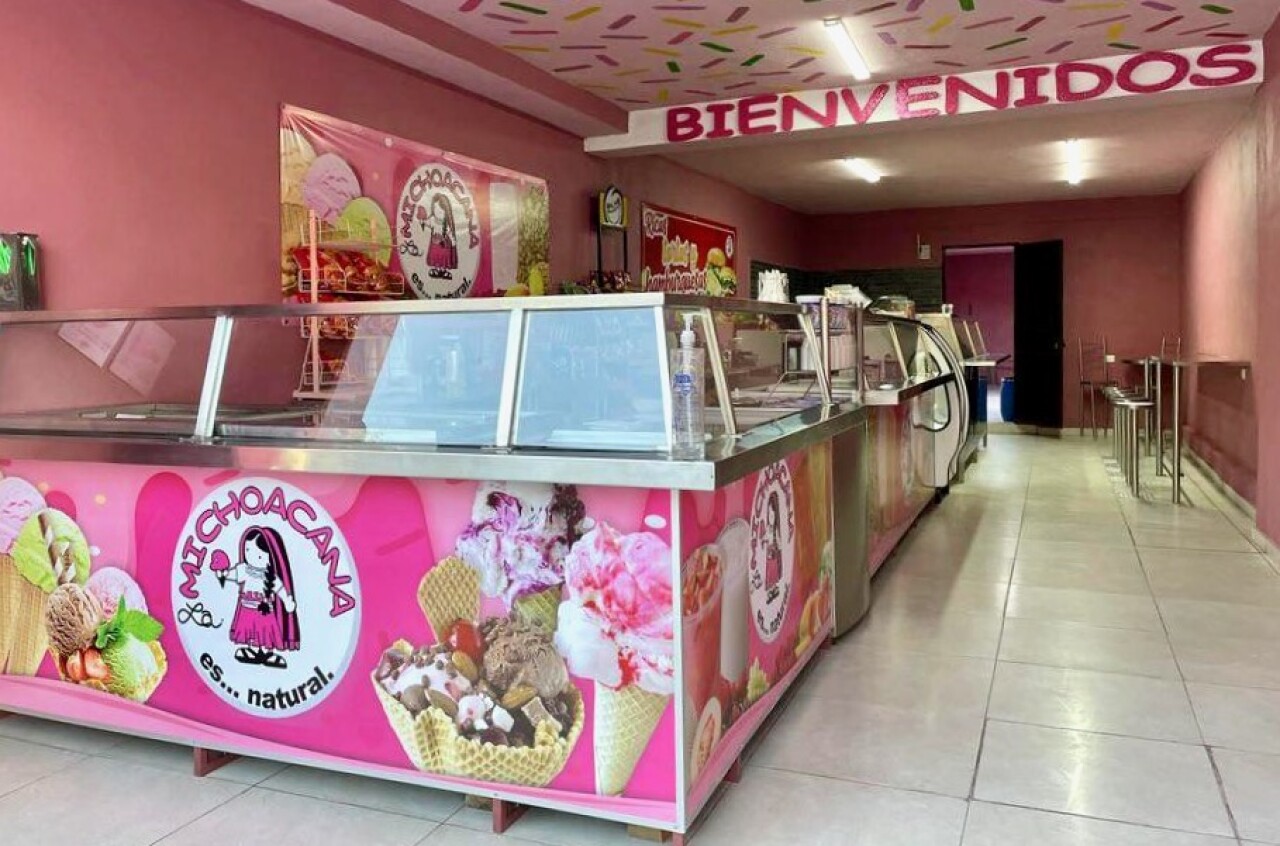
In the landscape of Mexican retail, La Michoacana is a singular anomaly: a ubiquitous brand that functions without a central headquarters, a CEO, or a single proprietor. Its pink-and-white storefronts are a staple of the national geography, yet the "company" is less a corporation than it is a collective identity. In a world of rigid franchise agreements and intellectual property litigation, La Michoacana persists as a "headless" business model, where thousands of independent shops operate under the same name and aesthetic without a unifying owner.
The roots of this decentralized empire trace back to the 1940s in Tocumbo, Michoacán. Following the land reforms of President Lázaro Cárdenas, the region saw a significant increase in livestock and, consequently, a surplus of milk. This excess forced local residents to innovate, leading to the creation of a dairy-based popsicle and ice cream tradition that would eventually migrate from the village to the capital and beyond. The expansion was organic; as families from Tocumbo moved, they took the recipes and the name with them, establishing a network based on kinship and regional pride rather than legal contracts.
Because the name "La Michoacana" refers to a person from the state of Michoacán, it has historically been difficult to trademark as a singular commercial entity in Mexico. This has allowed the brand to proliferate as a shared cultural asset. While the brand has seen more formal trademarking and corporate structuring in the United States and Central America, in its home country, it remains a fascinating case study in informal scaling. It is a brand that belongs to everyone and no one, sustained by a common visual language and a decentralized history of migration and surplus.
With reporting from Expansión MX.
Source · Expansión MX