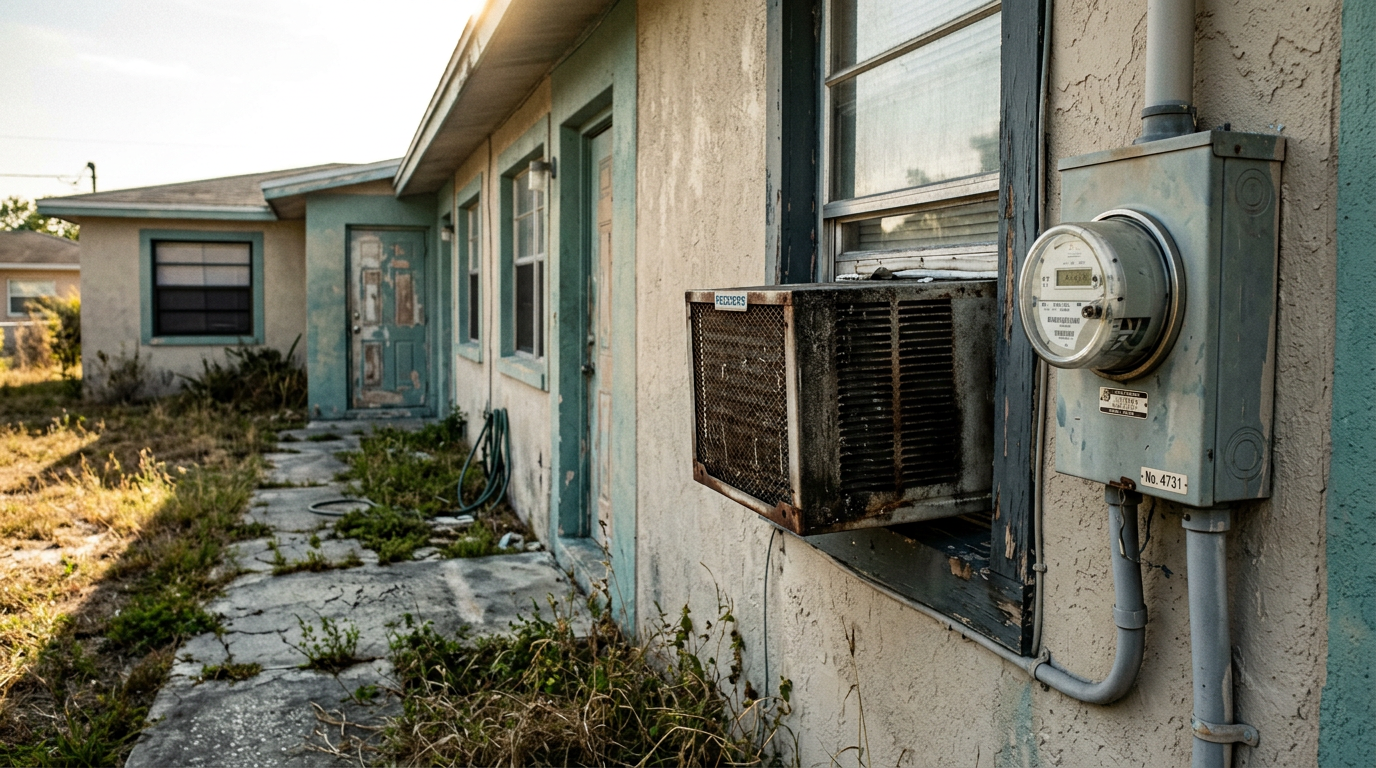
In Florida, the integrity of the electrical grid is traditionally judged by its ability to withstand the blunt force of a hurricane. But a more subtle, systemic erosion is occurring at the meter. In 2024, Florida households saw their power cut off 2.1 million times due to non-payment — a figure that places the state at the center of a growing national crisis of energy insecurity. With a looming $7 billion rate hike from the state's dominant utility, the gap between the cost of keeping the lights on and the capacity of residents to pay for it is set to widen further.
The scale of disconnections is striking even in a state long accustomed to high utility bills. Florida's climate makes electricity not a convenience but a survival necessity. Air conditioning is the primary defense against heat-related illness during summers that have grown longer and more punishing. A shutoff in July carries different stakes than one in a temperate northern state in October. The 2.1 million figure, then, is not merely a billing statistic — it is a proxy for public health risk distributed unevenly across income lines.
A structural affordability gap
The roots of Florida's energy affordability problem are both national and particular to the state. Across the United States, utility costs have risen faster than wages for lower-income households over the past decade, a trend driven by infrastructure investment, fuel cost volatility, and the capital demands of grid modernization. Florida compounds these pressures with a regulatory environment that has historically favored utility cost recovery over consumer protection. The state's Public Service Commission, which oversees rate approvals, has faced criticism from advocacy groups for granting rate increases without proportional expansion of assistance programs for low-income customers.
Florida Power & Light, a subsidiary of NextEra Energy and the largest electric utility in the state by customer count, is at the center of this dynamic. The company's $7 billion rate hike — intended to cover infrastructure upgrades, storm hardening, and grid expansion — will translate into higher monthly bills for millions of households already struggling to keep current on payments. The logic from the utility side is familiar: aging infrastructure requires investment, and that investment must be funded. The logic from the consumer side is equally straightforward: a bill that cannot be paid results in a disconnection, regardless of the reason behind the increase.
What makes Florida's situation particularly acute is the absence of a robust statewide safety net for energy costs. The federal Low Income Home Energy Assistance Program, known as LIHEAP, provides some relief, but funding has not kept pace with demand. Florida's own assistance mechanisms remain limited relative to the scale of need that 2.1 million annual shutoffs implies.
The tension between grid investment and access
Utility companies and regulators face a genuine dilemma. Deferring infrastructure spending creates vulnerability to storms and system failures — risks that Florida knows well. But passing those costs to consumers without adequate affordability mechanisms creates a different kind of failure, one measured in darkened homes and emergency room visits during heat waves rather than in downed power lines after a hurricane.
Other states have experimented with percentage-of-income payment plans, where utility bills are capped at a fixed share of household income, and with moratoriums on shutoffs during extreme weather. Whether Florida moves toward such models depends on regulatory and political choices that remain contested. Utility shareholders, consumer advocates, and state regulators each operate under different incentive structures, and the current trajectory suggests those structures are not aligned.
The 2.1 million disconnections recorded in 2024 represent a system producing a measurable output: exclusion from a service that the state's own climate renders essential. The $7 billion rate increase will test whether that number stabilizes, climbs, or forces a policy response. The answer depends less on engineering than on who bears the cost of keeping Florida's grid both resilient and accessible — and whether those two goals can coexist under the current regulatory framework.
With reporting from Inside Climate News.
Source · Inside Climate News