For decades, robotics research has pursued a deceptively simple goal: build a machine that moves like a living thing. The challenge has never been purely mechanical. Biological organisms do not consist of discrete components bolted together; they are integrated systems in which bone, tendon, ligament, and skin develop in concert, each material influencing the function of the others. Replicating that interdependence with traditional manufacturing — assembling rigid parts, attaching actuators, wiring sensors — has imposed hard limits on what robotic hands and limbs can do. A new generation of biomimetic printing techniques is beginning to dissolve those limits.
A robotic hand produced through a single-print process now integrates a rigid skeleton with soft joint capsules and functional tendons, all fabricated in one continuous build. Rather than treating the hand as a collection of parts to be assembled after the fact, the approach treats it as a unified structure whose materials grade from hard to soft in ways that mirror the structural interdependence found in natural anatomy. The result is a hand that can flex and grip with a fluidity that bolt-and-bracket designs struggle to match.
From Assembly to Integration
The significance of single-print fabrication extends beyond convenience. When a robotic hand is assembled from separately manufactured components, each interface — every joint, every tendon attachment point — introduces a potential source of friction, misalignment, or failure. Multi-material additive manufacturing eliminates many of those interfaces by depositing rigid and compliant materials in a single pass. The technique draws on advances in multi-material 3D printing that have matured over the past several years, enabling researchers to specify material properties at near-voxel resolution. Bone-like rigidity in the phalanges can transition seamlessly into elastomeric flexibility at the joints, producing structures that behave less like machines and more like anatomical specimens.
This shift from assembly to integration represents a broader philosophical change in how robotic systems are designed. The traditional paradigm treats hardware as modular: a motor here, a linkage there, a sensor bolted on at the end. The biomimetic paradigm treats the entire structure as a system whose performance emerges from the interplay of its materials. It is a distinction with practical consequences. Hands built this way can be lighter, more compliant, and better suited to tasks that demand delicate manipulation — handling fragile objects, conforming to irregular surfaces, or interacting safely with human tissue in medical settings.
Universal Motion in Diverse Environments
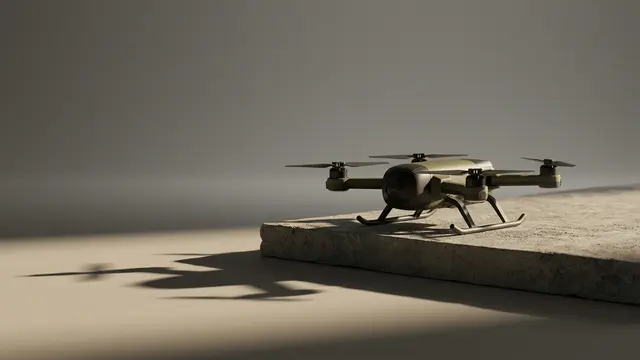
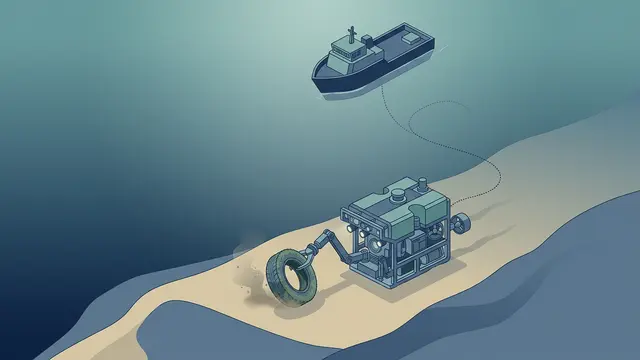
While hardware grows more biological, the software that governs robotic movement is trending toward universality. Systems like OmniPlanner are demonstrating the capacity to manage path planning across fundamentally different environments — aerial, terrestrial, and subaquatic — using a single algorithmic framework. Path planning, the computational process by which a robot determines a collision-free trajectory from one point to another, has historically been tailored to specific domains. A drone navigating a warehouse and a submersible mapping a coral reef have operated under different planning assumptions. A unified approach suggests that the specific medium of operation may matter less than the underlying logic guiding a robot through cluttered or dynamic spaces.
The convergence of integrated hardware and generalizable software marks a notable inflection point. Early research platforms illustrate the distance traveled. Boston Dynamics' LittleDog, a quadruped that helped pioneer legged locomotion research nearly two decades ago, was a landmark in demonstrating that machines could maintain stability on uneven terrain. But LittleDog was a platform for studying one problem — balance — in one domain. The current trajectory points toward machines whose bodies are fabricated as continuous, biomimetic wholes and whose control systems operate fluidly across environmental boundaries.
What remains unresolved is whether these two threads — material integration and algorithmic generality — will converge in practice or continue to advance along parallel tracks. A hand that mimics human anatomy still requires control software sophisticated enough to exploit its compliance. A universal planner still needs hardware capable of executing its trajectories with precision. The gap between what can be printed and what can be controlled defines much of the work ahead. Whether that gap narrows faster through advances in materials, in learning-based control, or in some yet-unarticulated synthesis is a question the field has not yet settled.
With reporting from IEEE Spectrum Robotics.
Source · IEEE Spectrum Robotics