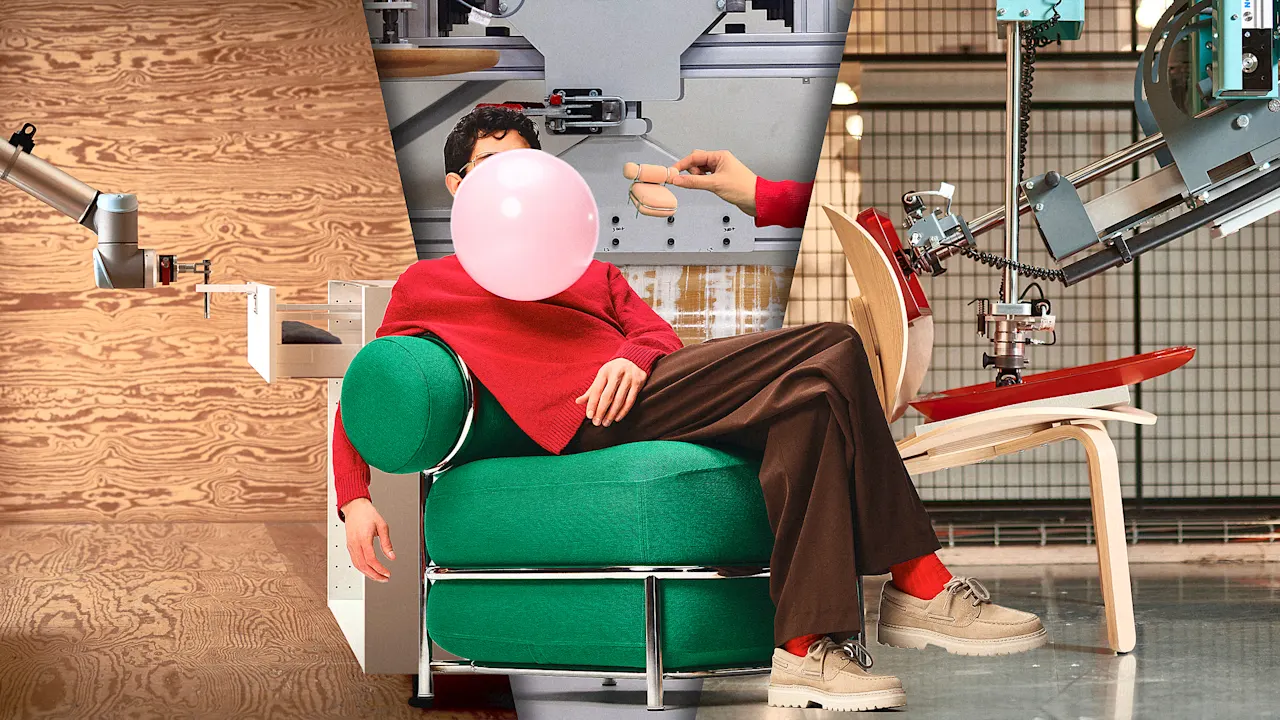
In the quiet town of Älmhult, Sweden, at the headquarters of Ikea of Sweden, designer Mikael Axelsson has spent a decade haunted by a miniature model. The object — a dollhouse-sized chair made of bent wire and hand-carved foam — represented a design challenge that has eluded the global retailer since the late 1990s: how to make inflatable furniture that feels like a legitimate home furnishing rather than a novelty exercise ball.
The concept first took shape in 2014, born from a desire to reinvent the kitschy, translucent blow-up aesthetics of the nineties into something sophisticated and structural. However, the transition from a Barbie-sized prototype to a full-scale piece of furniture proved difficult. Axelsson faced two primary hurdles: the physics of air-filled cushions, which tend to lack the ergonomic support of traditional upholstery, and the corporate memory of IKEA's previous commercial failure with the medium decades ago. The project found new life during a recent experimental design sprint, in which Axelsson and a small cohort of designers were tasked with developing boundary-pushing concepts for the upcoming IKEA PS collection — a recurring, design-forward series known for its more adventurous Scandinavian spirit.
Why inflatable furniture keeps coming back
Inflatable seating occupies a peculiar niche in the history of industrial design. Its most visible moment arrived in the late 1960s, when Italian designers Donato D'Urbino, Paolo Lomazzi, and Jonathan De Pas introduced the Blow Chair — widely considered the first mass-produced inflatable seat. The piece was a provocation as much as a product, challenging assumptions about permanence and material in domestic life. By the late 1990s, inflatable furniture had migrated from avant-garde galleries to discount retailers, repackaged as cheap, brightly colored PVC chairs marketed largely to teenagers. The association stuck. For most consumers, air-filled seating became synonymous with impermanence, discomfort, and a vaguely juvenile aesthetic.
IKEA's own history with the category reflects this trajectory. The company experimented with inflatable products in that same late-nineties wave and found the results commercially disappointing. The material science of the era imposed hard constraints: PVC welding techniques limited form, puncture resistance was unreliable, and the fundamental problem of ergonomic support — air distributes pressure evenly, which sounds comfortable in theory but in practice creates an unstable sitting surface — remained unsolved. The result was furniture that looked interesting in a catalog but frustrated users within weeks.
What makes Axelsson's renewed attempt notable is the changed context. Advances in thermoplastic polyurethane films, drop-stitch fabric construction — a technique borrowed from inflatable paddleboard manufacturing that allows air chambers to hold rigid, flat shapes under pressure — and computational modeling of pressure distribution have collectively reopened a design space that was effectively closed two decades ago. The question is no longer whether air-filled structures can achieve rigidity, but whether they can do so at a price point and durability standard consistent with IKEA's mass-market positioning.
The prototyping lab as institutional permission
Älmhult's prototyping facility serves a function beyond fabrication. It operates as a kind of institutional safe harbor where designers can revisit ideas that failed under previous constraints without the immediate pressure of production timelines. The IKEA PS collection, which has historically served as the company's proving ground for unconventional materials and forms, provides the commercial framework for such experiments. Past PS releases have introduced flat-pack concepts and material combinations that later filtered into IKEA's mainline catalog — or, just as often, remained one-off curiosities.
Axelsson's decade-long attachment to the inflatable chair concept illustrates a tension common in large-scale design organizations: the gap between what a designer believes is possible and what a corporation's supply chain, pricing model, and brand memory will tolerate. IKEA's previous failure with inflatables created an institutional skepticism that no amount of miniature modeling could overcome. The design sprint format — time-boxed, team-based, explicitly framed as experimental — appears to have provided the permission structure needed to reopen the file.
Whether the chair moves from Axelsson's shelf to a production line depends on variables that extend well beyond the prototyping lab. Material cost at scale, consumer willingness to reconsider a category they associate with dorm rooms, and the durability expectations embedded in IKEA's warranty structure all represent filters the concept must pass through. The more interesting question may be structural: whether IKEA's sprint-based approach to revisiting shelved ideas represents a repeatable model for extracting value from a company's archive of near-misses, or whether it works only when a single designer's persistence keeps a concept alive long enough for the technology to catch up.
With reporting from Fast Company Design.
Source · Fast Company Design