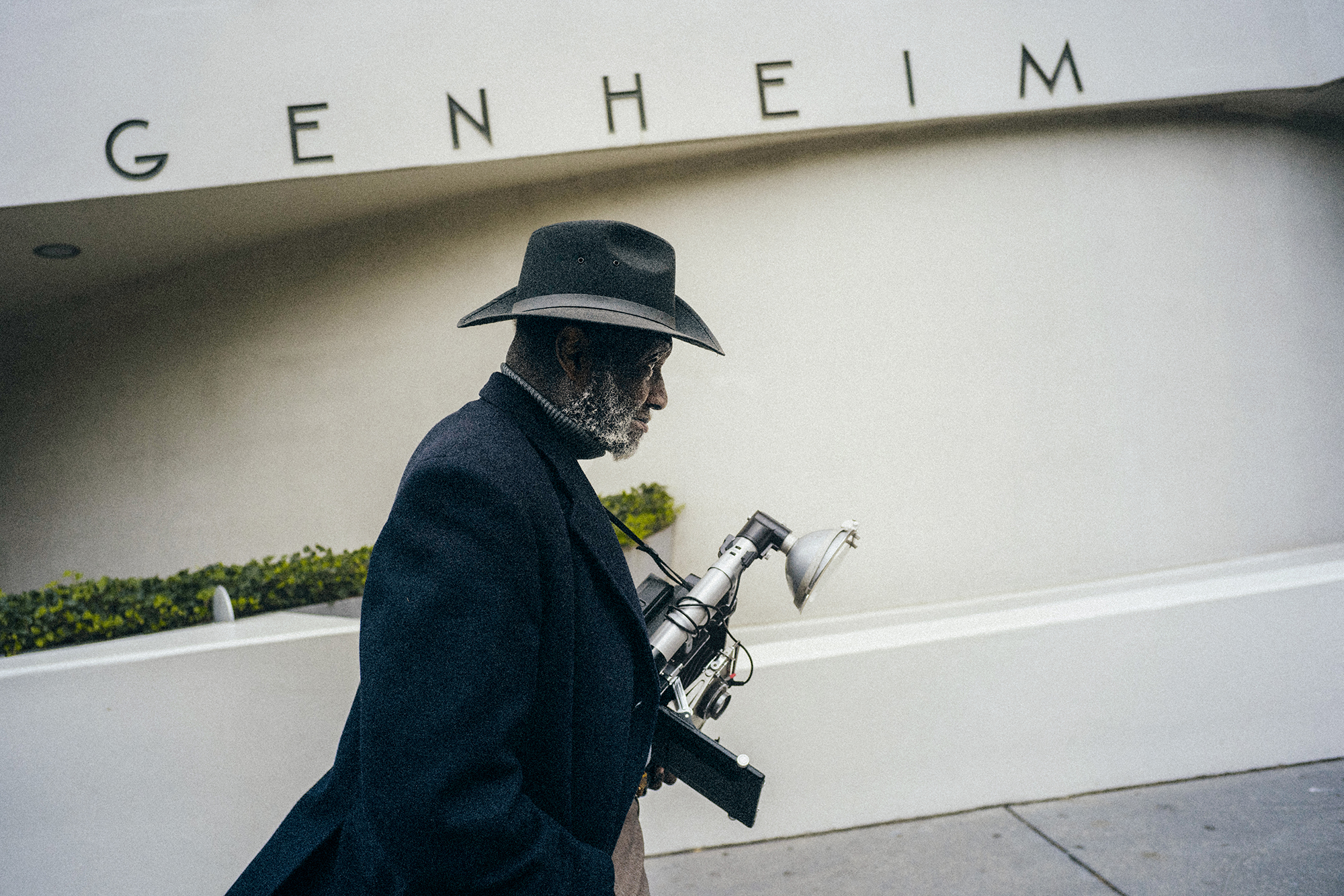
On the steps of the Metropolitan Museum of Art, the chaos of New York City usually follows a predictable, modern script: influencers stage impromptu shoots, protesters chant into the wind, and tourists capture everything through the flat glass of a smartphone. Into this digital hum walks Louis Mendes. At eighty-five, Mendes is anachronistic by design, dressed in a sharp beige suit and an oxblood turtleneck, carrying a massive vintage Speed Graphic press camera. Complete with old-style flash bulbs, the device is a heavy, tactile reminder of a period when photography was a physical labor of chemistry and light.
Mendes has been a fixture of the city’s sidewalks since 1959, occupying a niche he describes as the place “where commerce meets art.” In his early years, he was a hustler in the classic sense, calling out to passersby with the promise of an instant portrait. Today, the sales pitch has evolved into a quiet presence. He no longer needs to hawk his services; the sheer gravity of his equipment and his impeccable styling act as a magnet for the curious. He is less a street vendor and more a living monument to the analog era.
The interaction between Mendes and the public reflects a modern irony: many who stop to admire his mid-century technology immediately reach for their own devices to verify his legacy. “Google me,” he tells those who inquire about the Speed Graphic. When they do, the realization that they are standing before a local legend transforms the transaction from a simple souvenir into a brush with history. In a city defined by constant flux, Mendes remains a rare constant, capturing the fleeting rhythms of the street one flashbulb at a time.
With reporting from Aperture.
Source · Aperture