In recent years, the internal structure of American higher education has undergone a profound shift, moving away from the model of a self-governing community toward a corporate entity defined by market metrics. According to reporting from Hyperallergic, this transformation is perhaps most visible in the increasing tendency of university administrators to categorize students as "consumers" rather than participants in the production of knowledge. This shift in nomenclature is not merely semantic; it signals a fundamental restructuring of the relationship between the institution, the faculty, and the student body.
As the university adopts the logic of the marketplace, the traditional purpose of the institution—to foster critical thinking and civic engagement—is being systematically subordinated to managerial efficiency and capital expansion. This editorial analysis examines how the financialization of higher education, particularly within art schools, is dismantling the very conditions required for artistic and political imagination to flourish, ultimately threatening the long-term viability of the university as a public good.
The Rise of the Managerial Apparatus
The phenomenon of "administrification" has redefined the modern campus, creating a stark imbalance between the growth of institutional bureaucracy and the support provided to core academic functions. Data from the American Association of University Professors highlights a striking disparity: between 1976 and 2011, non-faculty professional positions grew by nearly 370%, while the number of full-time tenured and tenure-track faculty saw only marginal growth. This trend has not slowed; it has intensified as institutions grapple with perceived demographic pressures and budgetary constraints.
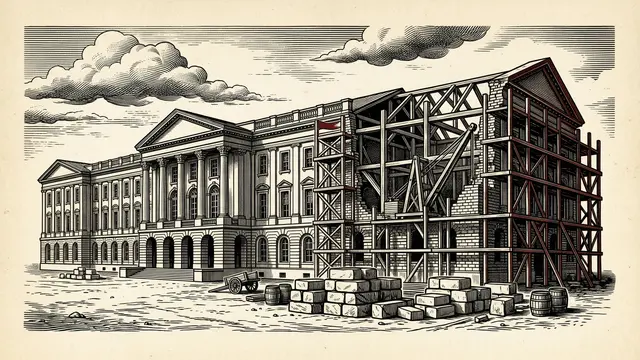
At many institutions, the resulting hierarchy prioritizes the managerial and policing apparatus over the intellectual labor that actually sustains the school. When salary growth for administrators consistently outpaces that of faculty, and when capital projects like new buildings are prioritized over the retention of teaching staff, the institution’s stated commitments to "excellence" and "critical thinking" begin to ring hollow. This is not just a matter of resource allocation; it is a signal of a shift in values where the university is run like a business, and success is measured by enrollment strategies and architectural statements rather than the depth of intellectual inquiry.
The Transactional Turn in Intellectual Life
When the relationship between the institution and the student is framed as a transaction, the nature of knowledge itself is compromised. By treating tuition as a payment for a product rather than a contribution to a shared public endeavor, universities invite a culture of satisfaction over inquiry. This dynamic forces faculty into the role of service providers, tasked with managing student expectations rather than challenging them. In the context of art schools, where the primary output is cultural and artistic imagination, this commodification is particularly destructive.
Artistic practice requires a level of friction, trust, and proximity that cannot be replicated in a transactional environment. When an institution relies on external consultancy firms to redesign curricula or dictate enrollment strategies, it abdicates its responsibility to the community it serves. These firms, often staffed by individuals with no stake in the intellectual life of the school, impose obsolete metrics that prioritize short-term stability over long-term pedagogical health. The resulting alienation among faculty and staff is not merely an unfortunate side effect; it is a structural outcome of a system that views intellectual discord as a problem to be managed rather than a vital part of the creative process.
Implications for Dissent and Democracy
The recent, often heavy-handed responses to student activism on campuses across the United States have made the consequences of this corporatization abundantly clear. When universities prioritize institutional reputation and public order over the protection of free expression, they cease to function as spaces for dissent. The swift deployment of police and the administrative discipline of students reveal that the university’s commitment to "decolonization" or "civic engagement" is often conditional, easily discarded when it becomes inconvenient for the administrative class.
For students, the irony is acute. They are told they are entering a space of intellectual freedom, yet they are increasingly subjected to a managerial culture that controls speech and restricts the boundaries of acceptable inquiry. This disconnect leaves students feeling isolated and skeptical of institutions that speak the language of care while delivering precarity. As these schools continue to consolidate, the burden of this failure falls on the most vulnerable members of the academic community, particularly faculty of color and contingent staff who are frequently the first to be sacrificed during budgetary crises.
The External and Internal Assault
There is a growing external threat to higher education, characterized by political attacks on humanities departments and the systematic targeting of professors by state actors. While these external pressures are real and consequential, they are not the only, or perhaps even the most significant, danger to the university. The internal hollowing out of the institution—the quiet, steady erosion of intellectual substance from within—is arguably more complete and harder to reverse.
If the university is allowed to become a purely administrative and policing entity, it will lose the very source of its authority: the production of secular, independent knowledge. The challenge for the future is not just to defend the university from political interference, but to reclaim it from the internal logic of financialization. Whether institutions can return to being self-governing communities of scholars and students, or if they will continue their descent into corporate service providers, remains the central question facing higher education today.
As these dynamics continue to evolve, the distinction between a true academic community and a managed institution becomes increasingly vital to recognize. The question is not whether the university will survive, but what kind of institution will remain once the current cycle of administrative expansion and deintellectualization runs its course. The path forward requires a fundamental reassessment of what we value in education and who the university is ultimately intended to serve.
With reporting from Hyperallergic
Source · Hyperallergic