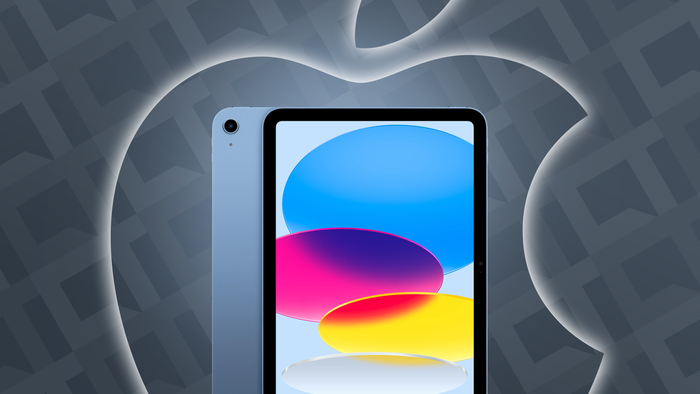
When Steve Jobs introduced the iPad in January 2010, the reception was far from unanimous. Critics questioned the purpose of a device that appeared to occupy an awkward middle ground — too large to replace a smartphone, too limited to rival a laptop. Sixteen years later, the iPad line generates one of the most consistent revenue streams in consumer electronics and has spawned an entire tablet market segment that competitors have struggled to replicate with comparable success.
The trajectory from skepticism to ubiquity did not happen in a single leap. It unfolded through a series of deliberate architectural choices — in hardware, software, and ecosystem strategy — that collectively redefined what portable computing means.
From consumption device to creative instrument
The earliest iPads were, by most practical measures, media consumption terminals. Web browsing, email, video playback, and e-books constituted the core use cases, and the app ecosystem reflected that orientation. The inflection point arrived when Apple began investing in peripherals and silicon that repositioned the tablet as a production tool rather than a passive screen.
The introduction of the Apple Pencil marked a pivotal shift. By offering pressure sensitivity and low-latency input on the tablet's display, Apple gave illustrators, architects, and designers a reason to treat the iPad as a primary workspace. The creative software market responded: applications for vector illustration, photo retouching, and video editing migrated to the platform with increasing feature parity to their desktop counterparts. The effect was cumulative — each new professional application attracted users who, in turn, demanded more capable hardware, creating a reinforcing cycle of adoption.
Hardware evolution kept pace. Successive generations shed weight and thickness while gaining processing power. Apple's decision to design its own system-on-chip silicon — beginning with the A-series and culminating in the M-series processors shared with Mac laptops — erased the traditional performance gap between tablets and notebooks. A device that once ran simplified apps now handles multi-track audio production and 4K video timelines without thermal throttling, a feat that would have seemed implausible in the product's early years.
Software emancipation and the laptop question
Hardware alone, however, would not have been sufficient. For years, the iPad ran a variant of iOS that imposed smartphone-era constraints: no visible file system, no windowed multitasking, limited external display support. The launch of iPadOS as a distinct operating system represented Apple's acknowledgment that the tablet had outgrown its phone-derived software roots.
With iPadOS came drag-and-drop file management, split-view multitasking, trackpad and mouse support, and eventually Stage Manager — a windowing paradigm designed specifically for larger screens. Each update narrowed the functional distance between the iPad and a MacBook, raising a question that Apple itself has been careful not to answer definitively: whether the tablet is meant to replace the laptop or merely complement it.
That ambiguity appears strategic. By keeping the iPad close enough to laptop capability to attract professional users, yet distinct enough in form factor and interaction model to avoid cannibalizing Mac sales, Apple maintains two thriving product lines where most competitors have been forced to choose one. Microsoft pursued convergence with the Surface; Google largely retreated from tablets before re-entering the category. Apple's approach — parallel ecosystems with selective overlap — has proven commercially durable.
The broader implication extends beyond Apple's balance sheet. The iPad's evolution illustrates a pattern in computing history: new form factors rarely succeed by imitating existing ones. They succeed by defining workflows that feel native to their constraints. The tablet did not win by becoming a laptop. It won by making touch-first interaction feel like a legitimate mode of professional work — and then quietly absorbing enough laptop-class capability to make the distinction matter less.
Whether that convergence eventually collapses the two categories into one, or whether the tablet and the laptop stabilize as permanently distinct tools, remains an open question — one whose answer depends as much on user behavior as on engineering roadmaps.
With reporting from Canaltech.
Source · Canaltech