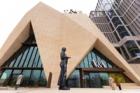
The museum as a static repository is giving way to something more fluid. In London, the V&A East project represents a significant pivot for the Victoria and Albert Museum, moving beyond its traditional South Kensington roots. Part of the broader East Bank development in Queen Elizabeth Olympic Park, the new site is designed to be more than a gallery; it is an experiment in how cultural institutions can integrate into the fabric of a rapidly evolving urban landscape.
Across the Atlantic, the Los Angeles County Museum of Art (LACMA) is nearing the completion of its own radical transformation. The David Geffen Galleries, designed by architect Peter Zumthor, have sparked intense debate for their horizontal, bridge-like structure that spans Wilshire Boulevard. By eschewing the traditional vertical hierarchy of museum wings, the project aims to create a more egalitarian experience, though it remains a high-stakes bet on the future of the encyclopedic museum in the 21st century.
While these institutions focus on the future of their physical envelopes, the art within continues to offer a bridge to the past. At the National Gallery of Ireland, a focused look at the work of William Blake serves as a reminder that the visionary power of the individual artist remains the core around which these massive architectural projects are built. Whether in a new concrete pavilion in California or a revitalized corner of East London, the objective remains the same: to provide a sanctuary for the human imagination.
With reporting from The Art Newspaper.
Source · The Art Newspaper