In the frantic ecosystem of modern film criticism, the "best of" list is usually a creature of the moment — a reactionary catalog compiled before the year's credits have even finished rolling. Film historians Kristin Thompson and the late David Bordwell proposed a more patient alternative: the 90-year rule. The premise is straightforward. True excellence requires nearly a century to settle, allowing what Bordwell once called the "sirocco" of shifting tastes to blow over and leaving only the essential works behind. The latest installment of this long-running project focuses on the cinema of 1934, arriving as the eighteenth entry in a series that began in 2007 with a retrospective look at 1917 — the year widely regarded as a turning point in the formation of Classical Hollywood narrative technique.
The entry also marks a poignant transition. It is the first list Thompson has completed since Bordwell's passing, making it both a continuation of shared intellectual labor and a quiet act of scholarly devotion. That the project persists at all speaks to the durability of its central argument: that the passage of time is not merely useful but necessary for serious evaluation of artistic achievement.
Why Ninety Years, and Why 1934
The 90-year interval is not arbitrary decoration. It reflects a specific historiographic conviction: that a work's significance cannot be separated from its long-term influence, and that influence takes decades to become legible. Reputations rise and collapse. Prints are lost and rediscovered. National cinemas once invisible to Western critics enter the scholarly record through archival restoration and retrospective programming. A list compiled in 1935 would inevitably reflect the commercial pressures and cultural blind spots of its moment. A list compiled in 2025 can draw on ninety years of restoration work, critical reassessment, and cross-cultural comparison.
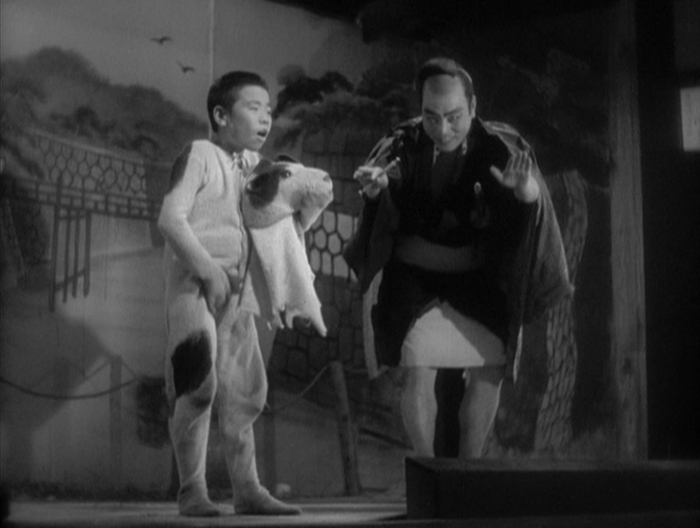
1934 itself occupies a distinctive position in film history. In the United States, it was the first full year under the enforcement of the Motion Picture Production Code — the set of moral guidelines that would govern Hollywood content for three decades. The Code's constraints pushed studios toward greater sophistication in implication and visual storytelling, accelerating the refinement of what scholars call the "classical style." Meanwhile, outside Hollywood, filmmakers in Japan, France, and elsewhere were developing parallel but distinct narrative grammars. The inclusion of Yasujirō Ozu's A Story of Floating Weeds on the list underscores this global dimension. Ozu's restrained compositions and elliptical editing were forging a cinematic language that would not receive wide Western recognition for another generation.
The coexistence of these traditions within a single year's list illustrates the project's implicit argument: that film history is not a single lineage running through Los Angeles, but a network of simultaneous experiments conducted across continents, often in mutual ignorance of one another.
The List as Historiographic Method
What distinguishes the Thompson-Bordwell project from conventional retrospective rankings is its methodological self-awareness. Most "best of" lists, even historical ones, function as expressions of taste. The 90-year rule reframes the exercise as something closer to archival curation — an attempt to identify which works proved structurally important to the medium, which ones survived the erosion of fashion, and which ones reward sustained formal analysis regardless of their original commercial reception.
This approach carries its own risks. Any canon, however carefully assembled, reflects the availability of surviving prints and the biases embedded in preservation decisions. Films from well-funded national archives are more likely to endure than those from countries with fewer resources for conservation. The 90-year rule corrects for the hype of the present but cannot fully correct for the archival inequities of the past.
Still, the project's longevity — eighteen installments and counting — gives it a cumulative authority that no single list could achieve. Each year's entry becomes a cross-section of global cinema at a specific moment, and the series as a whole begins to map the medium's evolution with a patience that mirrors its own methodology.
With Thompson now carrying the project forward alone, the question is whether the 90-year rule will itself prove durable — whether the series will reach 1935, 1940, and beyond, or whether it will stand as a finite monument to a particular style of film scholarship. The tension between the project's ambition and its human fragility is, in a sense, the same tension it applies to the films it evaluates: what endures, and what does not, is never fully knowable in the present.
With reporting from David Bordwell Blog.
Source · David Bordwell Blog