Boris Cherny, the engineer behind Anthropic's Claude Code, recently shared a detailed look at his personal terminal setup, triggering a wave of analysis across the developer community. What began as a technical disclosure — a screen recording of multiple AI agents running in parallel from a single command line — has been received as something closer to a manifesto for a new mode of software development. Some industry observers have gone so far as to frame the revelation as a potential inflection point for Anthropic, marking a visible transition from AI as an autocomplete assistant to AI as an autonomous agent capable of executing complex tasks with minimal human intervention.
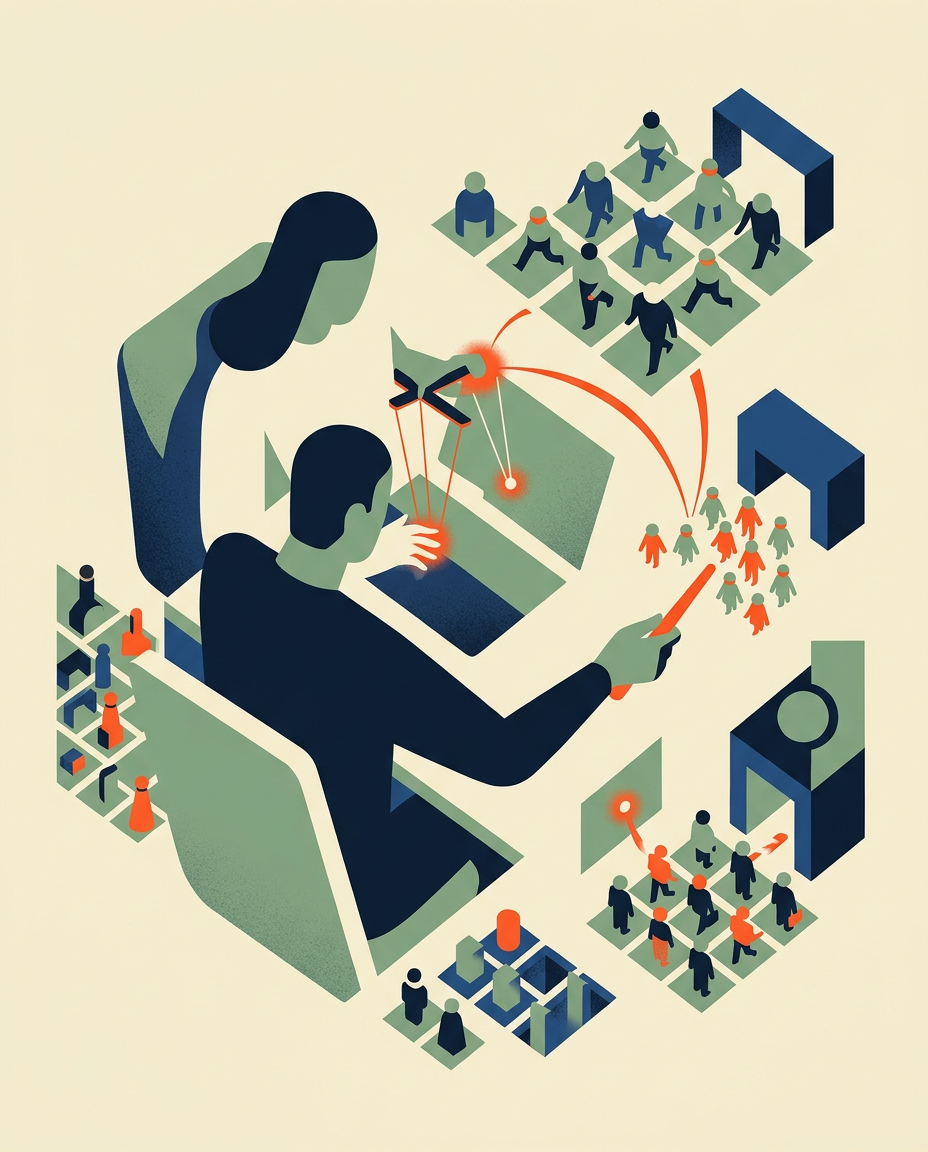
The core of Cherny's approach lies in a conceptual shift away from traditional, syntax-heavy coding toward what developers are likening to a real-time strategy game. By running as many as five AI agents simultaneously, Cherny effectively manages the output of a small engineering team from a single terminal window. Rather than typing out individual functions or debugging line by line, the workflow involves issuing high-level directives and monitoring parallel execution — orchestration rather than construction.
From craftsman to conductor
The analogy to strategy games is not merely rhetorical. In a real-time strategy title, the player does not control each unit's movements at the micro level; instead, the player allocates resources, sets objectives, and intervenes only when the situation demands a course correction. Cherny's workflow mirrors this pattern. Each agent operates semi-autonomously on a discrete task — writing tests, refactoring modules, scaffolding new features — while the human developer monitors progress, resolves conflicts between agents, and ensures coherence across the codebase.
This represents a meaningful departure from the trajectory that coding assistants have followed since GitHub Copilot launched in 2021. The first generation of AI-assisted development tools operated at the level of individual lines or functions, offering suggestions that a developer could accept, reject, or modify. The interaction model was fundamentally reactive: the human wrote, the machine suggested. Cherny's setup inverts that relationship. The machine executes; the human directs.
The distinction matters because it redefines the bottleneck in software production. In conventional development, throughput is constrained by how fast a developer can write, test, and debug code. In an agentic workflow, throughput is constrained by how effectively a developer can decompose problems, allocate them to agents, and integrate the results. The skillset shifts from syntax fluency to systems thinking — from knowing how to write a function to knowing which functions need to exist and how they relate to one another.
The simplicity paradox
One of the more striking aspects of Cherny's disclosure is the apparent simplicity of the setup. There is no proprietary orchestration platform, no elaborate infrastructure layer. The workflow runs from a standard terminal. This accessibility carries strategic implications for Anthropic: if a single engineer can demonstrate the productivity gains of agentic development using only Claude Code and a command line, the barrier to adoption drops considerably.
But simplicity at the interface level does not imply simplicity underneath. The workflow depends on the underlying model's ability to maintain context across long interactions, handle ambiguous instructions, and produce code that integrates cleanly with work generated by other agent instances. These are non-trivial capabilities, and they represent a competitive moat that is difficult to replicate through interface design alone.
The broader question the demonstration raises is whether the developer role is converging toward something that resembles engineering management more than traditional engineering. If the primary task becomes decomposing problems and coordinating autonomous executors, the skills that differentiate strong developers may increasingly overlap with those that differentiate strong technical leads: clarity of specification, architectural judgment, and the ability to maintain coherence across a complex system.
Whether this shift accelerates hiring changes, alters computer science curricula, or simply becomes another tool in an already crowded stack remains an open question. What is less ambiguous is the direction of movement. The terminal Cherny showed is not a prototype of a distant future — it is a working environment, used daily, producing shipping code. The tension now sits between the speed at which agentic workflows can mature and the willingness of organizations to restructure development processes around a fundamentally different model of human-machine collaboration.
With reporting from VentureBeat AI.
Source · VentureBeat AI