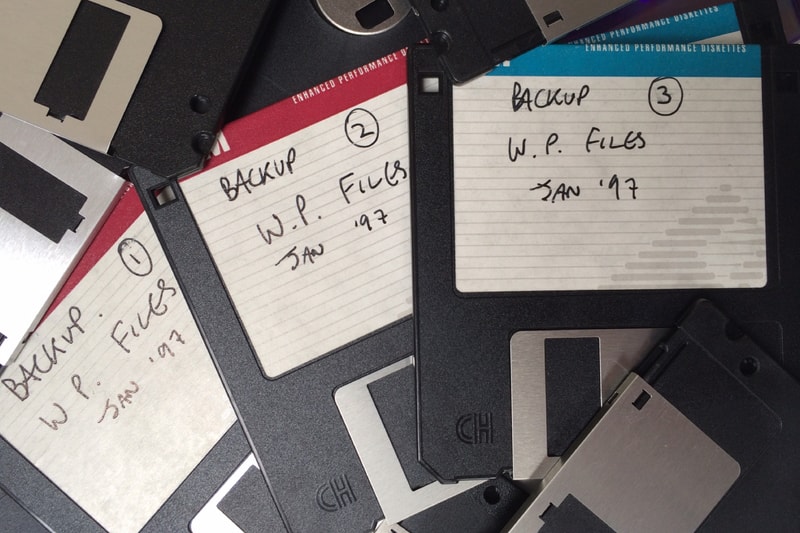
The cabin of a Tesla is designed to feel like a clean break from the mechanical past — a space defined by glass, silence, and over-the-air updates. Yet Ukrainian electronics engineer Oleg Kutkov recently introduced a jarring anachronism to this environment: a 3.5-inch floppy disk drive, a storage medium that entered mass production in the early 1980s and was largely obsolete by the mid-2000s. By connecting the vintage hardware to the glovebox USB port via a converter, Kutkov demonstrated that the so-called car of the future still shares a foundational language with the computing relics of four decades ago.
The integration was surprisingly seamless. The vehicle automatically mounted the drive, recognizing the legacy hardware without the need for custom software modifications. To test the connection, Kutkov loaded a heavily compressed MP3 of Rick Astley's "Never Gonna Give You Up" — the internet's canonical prank payload. The drive's magnetic head could be heard grinding, a tactile, rhythmic sound from a different era of data retrieval, as the infotainment system pulled the file into the present.
The Kernel Beneath the Dashboard
What makes the stunt technically notable, rather than merely amusing, is what it reveals about the software architecture of modern vehicles. Tesla's Media Control Unit runs on the Linux kernel, the open-source operating system core first released by Linus Torvalds in 1991. Linux was designed from its earliest versions to be modular and broadly compatible, supporting an enormous range of hardware through a layered driver architecture. Over three decades of development, the kernel has accumulated drivers for virtually every class of peripheral device ever connected to a computer — including floppy disk controllers.
This is not a quirk. It is a design philosophy. The Linux kernel's approach to hardware abstraction means that any system built on it inherits, by default, compatibility with legacy devices stretching back to the earliest days of personal computing. When Tesla chose Linux as the foundation for its infotainment stack, it gained access to this vast library of device support, whether or not the company ever intended a customer to insert a floppy disk. The kernel does not distinguish between a modern solid-state drive and a magnetic disk formatted in FAT12; both are block devices, and both are handled through the same subsystem.
Kutkov's experiment thus functions as a kind of archaeological probe. It tests not the capability of the floppy drive but the depth of the software layer sitting beneath a consumer product that markets itself on novelty. The result — instant recognition, no configuration required — says more about the maturity of open-source infrastructure than about any particular engineering decision at Tesla.
Open Source as Invisible Infrastructure
The broader pattern here extends well beyond a single automaker. Linux underpins a significant share of the world's embedded systems, from industrial controllers to smart televisions to spacecraft avionics. Android, the dominant mobile operating system, is built on the Linux kernel. So are the majority of cloud servers that handle global internet traffic. In each case, the kernel's backward compatibility and modular driver model serve as a kind of silent contract: hardware that once worked will, in most cases, continue to work.
This persistence carries strategic implications for the automotive industry as vehicles become increasingly software-defined. Automakers that build on open-source foundations inherit decades of accumulated compatibility and community-maintained code, reducing the burden of developing proprietary driver stacks. But they also inherit complexity. The same broad compatibility that allows a floppy disk to mount without friction means the attack surface of a vehicle's software is wider than a bespoke system would present. The tension between openness and security is not new in computing, but it acquires different weight when the computer in question is traveling at highway speed.
Kutkov's Rickroll was, by his own framing, a joke — a playful collision of eras staged for the internet's amusement. But the ease with which it succeeded points to something worth sitting with. The most advanced consumer vehicles on the road today are not built from scratch. They are built on layers of code that stretch back to a time when a 1.44-megabyte disk was a serious storage medium. Whether that continuity is a strength or a vulnerability depends on the context. For now, it is simply a fact — one that a grinding magnetic head made briefly, audibly visible.
With reporting from Hypebeast.
Source · Hypebeast