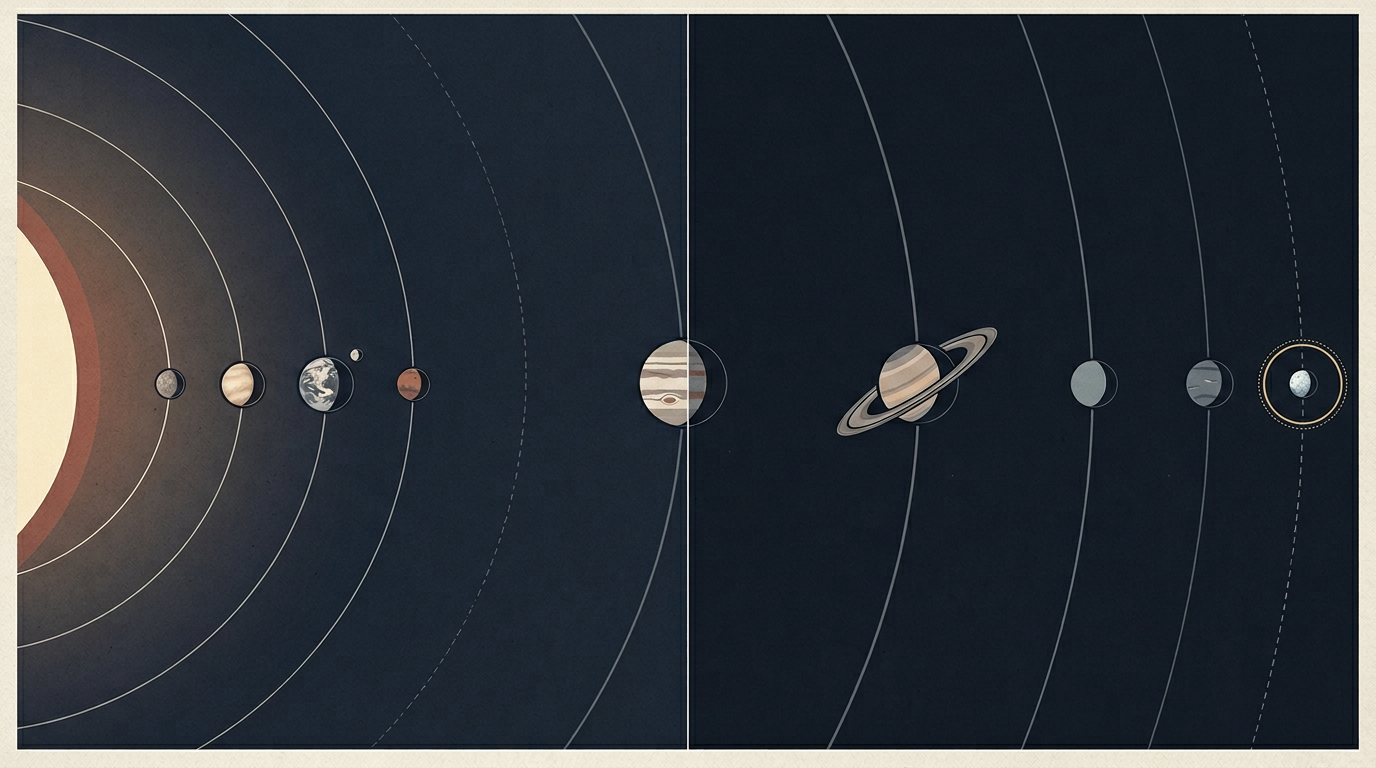
Jared Isaacman, in his capacity as the head of NASA, has recently reignited a long-standing debate regarding the planetary status of Pluto. Discovered less than a century ago, the celestial body was stripped of its status as the ninth planet of our solar system two decades ago by the International Astronomical Union (IAU). Isaacman has suggested that the time may be ripe to revisit this classification, citing both the need to honor the legacy of American discovery and the evolving understanding of the outer reaches of the solar system.
According to reporting from Heise Online, this initiative is not merely an exercise in historical nostalgia but a reflection of how institutional leaders view the intersection of space exploration and public perception. While the scientific community largely settled the matter in 2006, the persistence of the 'Pluto as a planet' narrative suggests that official definitions of space objects are subject to the same pressures of identity and legacy that influence other fields of human inquiry. The following analysis explores how institutional mandates can challenge established scientific consensus.
The Fluidity of Scientific Categorization
Taxonomy in science is often perceived as an objective, immutable framework, yet the history of planetary discovery demonstrates that our definitions are inherently tied to the tools and cultural contexts of their era. When Pluto was first identified in 1930, it was hailed as the long-sought ninth planet, fitting neatly into a narrative of American astronomical achievement. The subsequent decision to reclassify it as a dwarf planet in 2006 was driven by the discovery of other objects in the Kuiper Belt, such as Eris, which forced the IAU to establish more rigorous criteria for what constitutes a planet.
However, the scientific community’s insistence on these criteria often clashes with the public’s emotional attachment to the solar system as it was taught for decades. This tension illustrates a fundamental challenge in scientific communication: the difference between an expert-driven definition and a cultural one. When institutional leaders like Isaacman advocate for a reversal of this classification, they are not necessarily arguing against the underlying data, but rather asserting that the institutional weight of NASA should be used to validate a more inclusive definition of 'planet' that resonates with the public imagination.
Institutional Interests and National Legacy
The push to reclassify Pluto is deeply intertwined with the concept of national legacy in space exploration. For many, Pluto represents a singular point of pride in the history of American astronomy, and its demotion was viewed by some as an erasure of that contribution. By positioning himself as a proponent of Pluto’s restoration, the current NASA head is engaging in a form of institutional signaling that prioritizes the symbolic value of space objects alongside their scientific characteristics. This approach suggests that the agency’s role is not only to catalog the universe but to curate the narrative of human discovery.
This dynamic is not unique to planetary science; it mirrors debates in other fields where institutional mandates conflict with academic consensus. When an agency as powerful as NASA takes a stance on a nomenclature issue, it forces a reconsideration of the power dynamics inherent in scientific governance. If the definition of a planet can be influenced by the desires of a national agency, it raises questions about the independence of scientific classification. The mechanism at play here is the deliberate use of institutional authority to challenge a consensus that was formed through international, rather than national, deliberation.
Implications for Global Space Governance
For the international scientific community, this development poses a challenge to the authority of the IAU as the arbiter of celestial nomenclature. If NASA were to unilaterally or through significant lobbying efforts push for a reclassification, it would create a bifurcated reality where different institutions utilize different definitions. Such a scenario would complicate international cooperation, as standardizing terminology is essential for collaborative missions and data sharing. The implications extend to the commercial sector and private space ventures, which often look to standardized data sets for navigation and mission planning.
Furthermore, the move risks politicizing scientific definitions in a way that could have ripple effects on other areas of space policy. If planetary status is subject to institutional lobbying, other categorical debates—such as the definition of orbital boundaries or the legal status of lunar resources—might also become battlegrounds for national interests. The tension between the desire for a cohesive global scientific standard and the pressure to serve national narratives is a defining feature of the modern era of space exploration, where the stakes of discovery are increasingly tied to geopolitical standing.
The Outlook for Planetary Definitions
It remains uncertain whether this advocacy will result in a formal change of status or if it will remain a symbolic gesture. The scientific community is notoriously resistant to shifting definitions based on external pressure, preferring to rely on empirical evidence and consensus-driven processes. However, the influence of NASA’s leadership should not be underestimated, particularly in how it shapes the public discourse and the educational materials provided to the next generation of researchers. What to watch next is whether other space agencies or international bodies will engage with the proposal or dismiss it as an institutional outlier.
Ultimately, the Pluto debate serves as a reminder that science does not exist in a vacuum. It is a human endeavor influenced by the institutions that fund it, the nations that champion it, and the public that supports it. Whether or not Pluto is eventually reinstated as a planet, the discourse surrounding it demonstrates that the boundaries of our knowledge and our categories are constantly being renegotiated. As the exploration of the outer solar system continues to yield new data, the question of how we define our cosmic neighborhood remains an open and evolving dialogue.
As the scientific community continues to grapple with the complexities of the outer solar system, the question of whether institutional narratives can successfully reshape established scientific taxonomies remains open. The ongoing discourse highlights the necessity of balancing public engagement with the rigor of international scientific governance. Whether this debate leads to a shift in terminology or simply reinforces the existing standards, the conversation itself remains a reflection of our changing relationship with the cosmos.
With reporting from Heise Online
Source · Heise Online