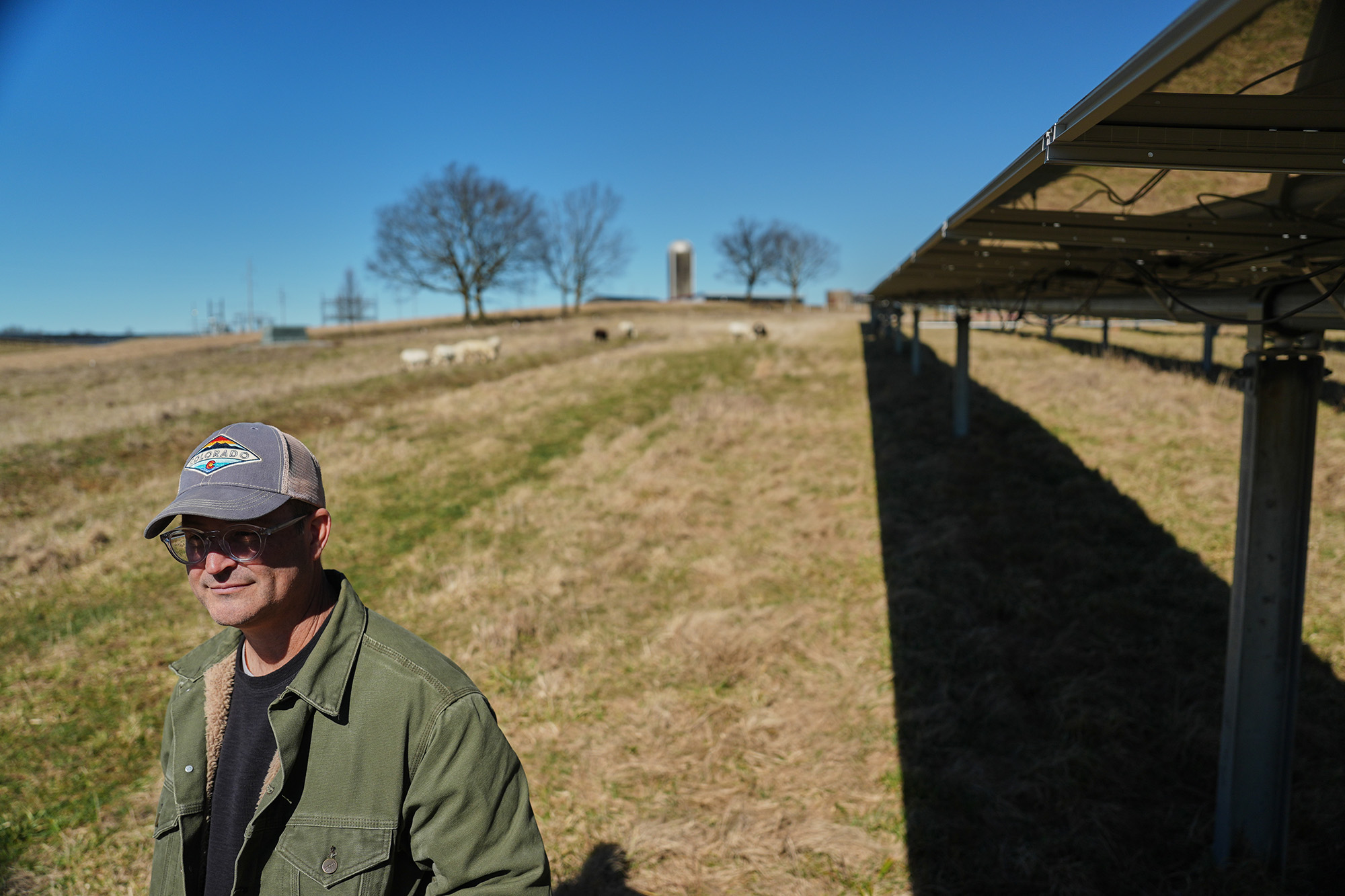
In Lancaster, Kentucky, sheep farmer Daniel Bell had a straightforward problem: a new barn, no nearby power lines, and a business running on margins too thin to absorb volatile utility costs. Rooftop solar offered a practical answer — not as an ideological statement, but as infrastructure. Bell's plan depended on the Rural Energy for America Program (REAP), a U.S. Department of Agriculture initiative that provides grants and loan guarantees to help agricultural producers and rural small businesses invest in renewable energy systems and energy efficiency improvements. For operations like Bell's, REAP funding could cover a significant share of upfront costs, making solar installations financially feasible where they otherwise would not be.
That pathway has now narrowed considerably. The rollback of REAP grants, alongside tightened eligibility and reduced availability of clean energy tax credits, has stalled projects across rural America. For farmers who had structured their capital plans around these incentives, the shift represents more than a policy adjustment — it is a material change in the economics of their operations.
The architecture of rural energy incentives
REAP has existed in various forms since the early 2000s, established under the Farm Bill framework to address a persistent structural challenge: rural producers often face higher energy costs and fewer infrastructure options than their urban or suburban counterparts. The program was designed to lower barriers to entry for technologies like solar panels, wind turbines, anaerobic digesters, and geothermal systems. Paired with federal investment tax credits — which allowed businesses to deduct a percentage of renewable energy installation costs from their tax liability — REAP created a layered incentive structure that made clean energy projects pencil out for operations with limited capital reserves.
The logic was not purely environmental. Energy costs represent a significant and often unpredictable line item for agricultural businesses. Solar installations, once paid off, produce electricity at near-zero marginal cost for decades. For farmers in remote areas without grid access, or those facing rising electricity rates, the calculus was compelling. The grants also stimulated a secondary market: commercial-scale solar leases on agricultural land, which allowed landowners to generate steady income from otherwise fallow acreage while feeding power into the broader grid.
The withdrawal of these programs disrupts both sides of that equation — the farmer seeking to reduce operating costs and the landowner seeking supplemental revenue.
A sector in forced recalibration
The broader context matters. American agriculture has spent the past decade navigating a series of economic pressures: trade disruptions, input cost inflation, labor shortages, and increasingly erratic weather patterns. Against that backdrop, energy independence had emerged as one of the few variables farmers could exert meaningful control over. Solar, in particular, offered a hedge — a fixed asset with predictable output, insulated from commodity price swings and utility rate increases.
Removing the federal incentive layer does not eliminate the underlying demand. Farmers still need power, and in many cases solar remains the most practical option for off-grid or underserved locations. What changes is the timeline and the risk profile. Without grants to offset upfront capital expenditure, projects require longer payback periods and greater tolerance for financial exposure — qualities not easily found in an industry where a single bad season can threaten solvency.
The situation also raises questions about the trajectory of rural economic development more broadly. States with strong agricultural sectors had begun to see renewable energy as a tool for retaining economic activity in communities that face persistent depopulation and declining tax bases. Solar installations created demand for local electricians, engineers, and construction crews. The policy rollback does not merely pause individual farm projects; it slows a nascent supply chain that had begun to take root in regions with few alternative growth engines.
What remains unclear is whether state-level programs or private financing mechanisms will fill the gap left by federal withdrawal, or whether the economics of farm-scale solar will simply revert to a pre-incentive baseline where only the most capitalized operations can participate. The tension between federal energy policy and the practical needs of rural producers is not new, but the current moment sharpens it considerably. The demand for energy independence on American farms has not diminished. The question is whether the financial architecture to support it will be rebuilt, and by whom.
With reporting from Grist.
Source · Grist