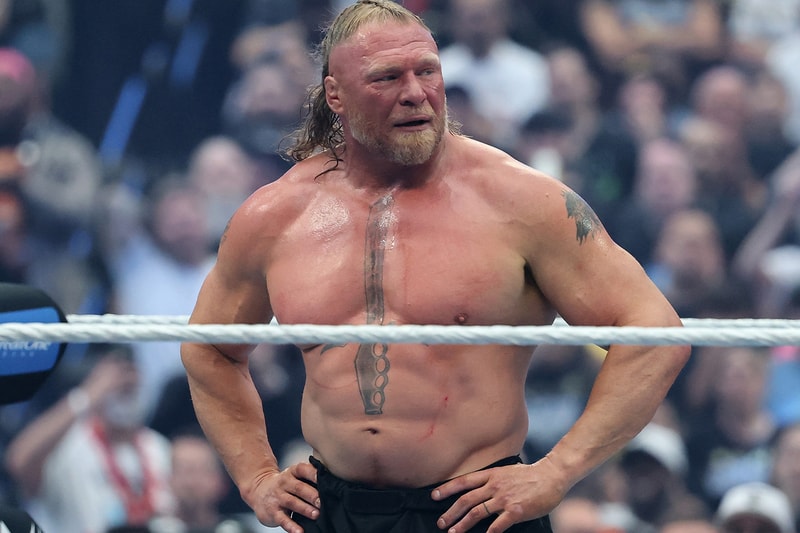
The spectacle of professional wrestling often relies on the perceived permanence of its icons, but at WrestleMania 42, the industry witnessed a rare, definitive closing of a chapter. Following a loss to the ascending Oba Femi, Brock Lesnar—long known as the "Beast Incarnate"—performed the oldest ritual in the business: he left his gloves and boots in the center of the ring. It was a silent acknowledgement that the physical toll of a career defined by raw, overwhelming power had finally reached its conclusion.
What followed was a departure from the carefully maintained stoicism that has characterized Lesnar’s persona for over twenty years. In a moment of uncharacteristic vulnerability, Lesnar embraced his long-time advocate Paul Heyman and took the time to acknowledge the crowd at ringside. For a performer who built a legacy on being a destructive outsider and a mercenary, this public display of sentiment suggested a genuine finality to his tenure in the squared circle.
Lesnar’s exit marks the end of a singular bridge between the hyper-choreographed world of sports entertainment and the visceral reality of mixed martial arts. As a former UFC Heavyweight Champion and a ten-time WWE world title holder, his career represented a unique intersection of legitimate athletic prowess and theatrical narrative. His departure leaves a vacuum in the industry’s hierarchy, signaling a transition toward a new generation of talent.
With reporting from Hypebeast.
Source · Hypebeast


