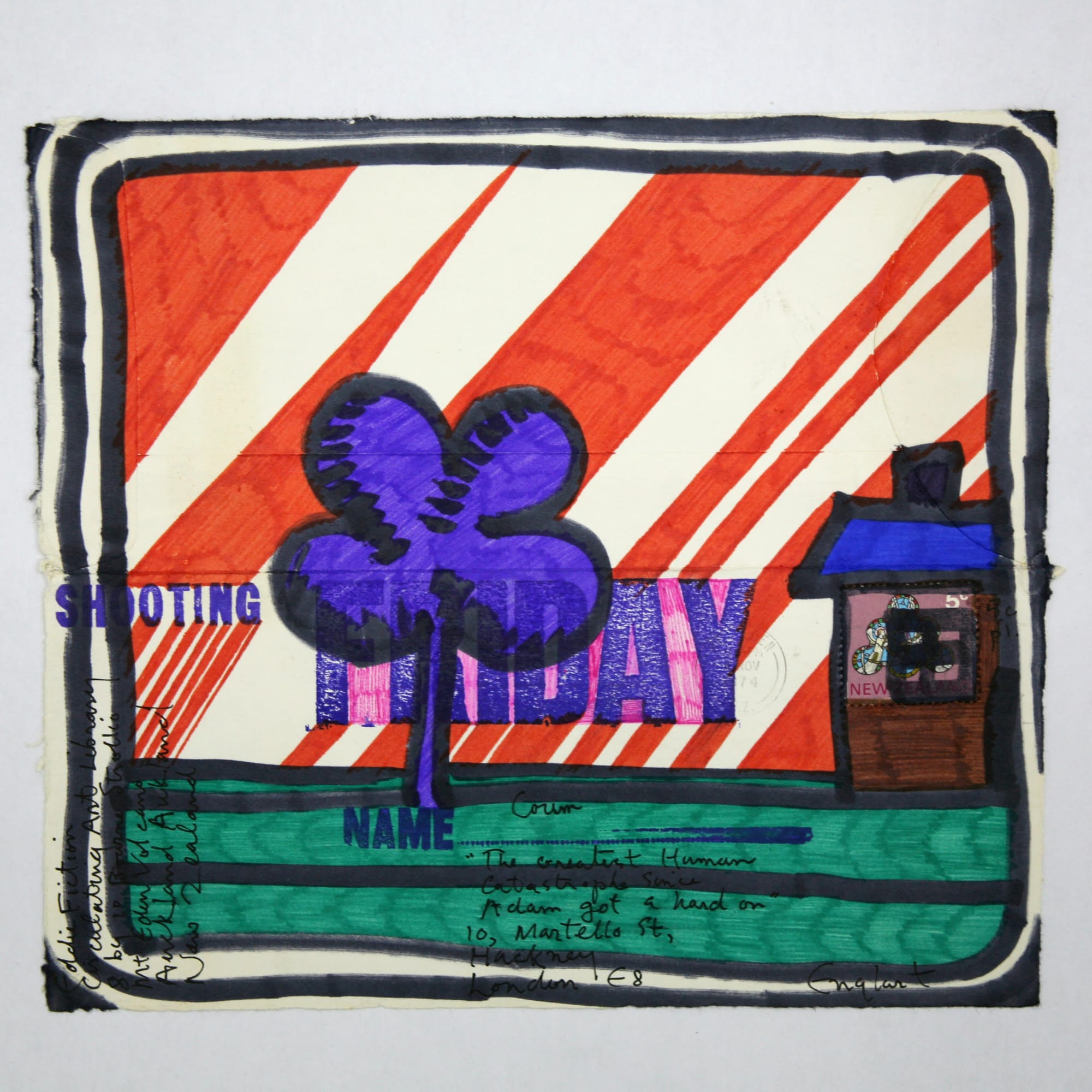
Before the advent of digital forums and encrypted messaging, the postal service served as the primary infrastructure for a decentralized, global underground. In the early 1970s, the Canadian artist collective General Idea leveraged this network through *FILE Magazine*, a periodical that functioned as a clearinghouse for "correspondence art." Among its most prolific and provocative contributors was Genesis Breyer P-Orridge, the late founder of COUM Transmissions and the industrial music pioneers Throbbing Gristle.
A new exhibition at Art Metropole in Toronto, titled after the very space General Idea founded in 1974, surveys P-Orridge’s contributions to this analog network. The collection, on loan from the National Gallery of Canada, includes collages, photographs, and letters that trace the artist’s evolution from a Manchester-born provocateur named Neil Megson into a figure who would spend a lifetime challenging the boundaries of gender, art, and the state.
For P-Orridge, the mail was not merely a delivery system but a medium for subversion that bypassed the gatekeepers of the traditional art market. This intimacy carried inherent risks; in 1975, the artist faced prosecution for sending collages through the mail that juxtaposed images of Queen Elizabeth with soft-core pornography. These "timestamps" of early career experimentation, on view through May 31, offer a window into a period when radical ideas were circulated one envelope at a time, long before the friction of the physical world was smoothed over by the internet.
With reporting from Hyperallergic.
Source · Hyperallergic