The promise of the self-driving car often founders on the mundane. While an autonomous system might navigate a highway with ease, it frequently buckles under the complexity of a construction zone, a malfunctioning traffic light, or the erratic movements of a pedestrian. When these systems freeze, the industry relies on a hidden layer of human intervention: remote operators who step in to guide the vehicle from afar. This practice, often framed as a temporary bridge to full autonomy, is increasingly becoming a permanent, albeit fragile, feature of the landscape.
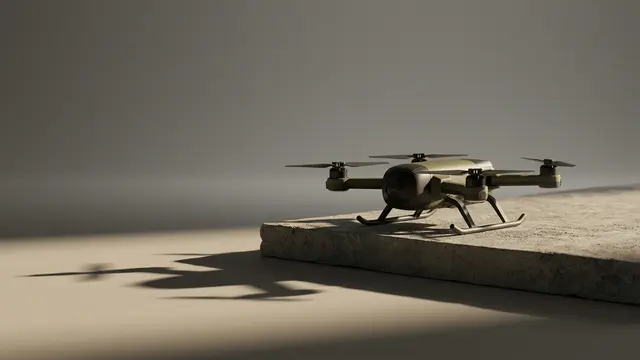
This model of remote supervision is not a novel invention of Silicon Valley. The U.S. military has been grappling with the complexities of unmanned aerial vehicles (UAVs) since the 1980s, discovering early on that the distance between a pilot and their craft introduces a dangerous set of variables. In those formative years, UAV programs were plagued by accidents — not necessarily due to mechanical failure, but because of poorly designed control interfaces, communication latency, and the psychological disconnect of operating a machine from a desk thousands of miles away.
A well-documented failure mode
The military's experience with remote piloting offers a detailed case study in what happens when human factors engineering is treated as an afterthought. Early UAV ground control stations were assembled from off-the-shelf components with little attention to ergonomics or cognitive load. Operators had to manage multiple screens, interpret degraded video feeds, and make split-second decisions under communication delays that could stretch to several seconds. The result was a class of accidents that researchers came to attribute not to the aircraft but to the interface — a distinction that took years and significant losses to formalize.
Over time, the Department of Defense invested heavily in standardizing control station design, mandating minimum training hours, and studying the effects of latency on operator judgment. The core finding was consistent: when a human is separated from the physical environment they are meant to supervise, the quality of their decision-making degrades in predictable ways. Situational awareness narrows. Response times slow. Operators develop misplaced confidence in automation, a phenomenon researchers have long termed "automation complacency," where the human monitor gradually cedes vigilance to the system they are supposed to oversee.
The autonomous vehicle industry now faces a structurally identical problem. A remote operator watching a low-resolution video feed of a car stuck at an ambiguous intersection is subject to the same perceptual limitations that troubled early drone pilots. The physics of latency have not changed. Neither has human cognition.
Cost logic versus safety logic
What makes the current trajectory concerning is the economic incentive structure surrounding remote operations. Reports of autonomous vehicle companies outsourcing remote supervision to overseas call-center-style facilities suggest that the function is being treated as a cost center rather than a safety-critical role. This framing has consequences. It shapes hiring criteria, training depth, interface investment, and the operational tempo expected of each operator.
The military arrived at its current protocols through a costly process of trial and error, driven in part by institutional accountability mechanisms — accident review boards, inspector general reports, congressional oversight — that forced the adoption of better practices. The commercial autonomous vehicle sector operates under a different accountability structure. Regulatory frameworks for remote vehicle operation remain fragmented across jurisdictions, and there is no equivalent of a standardized military accident investigation process that would systematically feed lessons back into interface design.
This gap matters because the failure mode is not dramatic. It is not a spectacular crash caused by a software hallucination. It is the slow erosion of safety margins: an operator who hesitates a half-second too long because the video feed stuttered, a shift pattern that induces fatigue, a training program that teaches button sequences but not situational judgment. These are precisely the failure modes the military spent decades identifying and mitigating.
The autonomous vehicle industry sits at a familiar crossroads. The technology to move vehicles without a driver behind the wheel has advanced considerably, but the human-system interface that catches the technology's failures has not received comparable attention. Whether the sector chooses to absorb the military's institutional knowledge or re-learn those lessons through its own incidents remains an open question — one whose answer will likely be written not in engineering papers but in incident reports.
With reporting from IEEE Spectrum Robotics.
Source · IEEE Spectrum Robotics