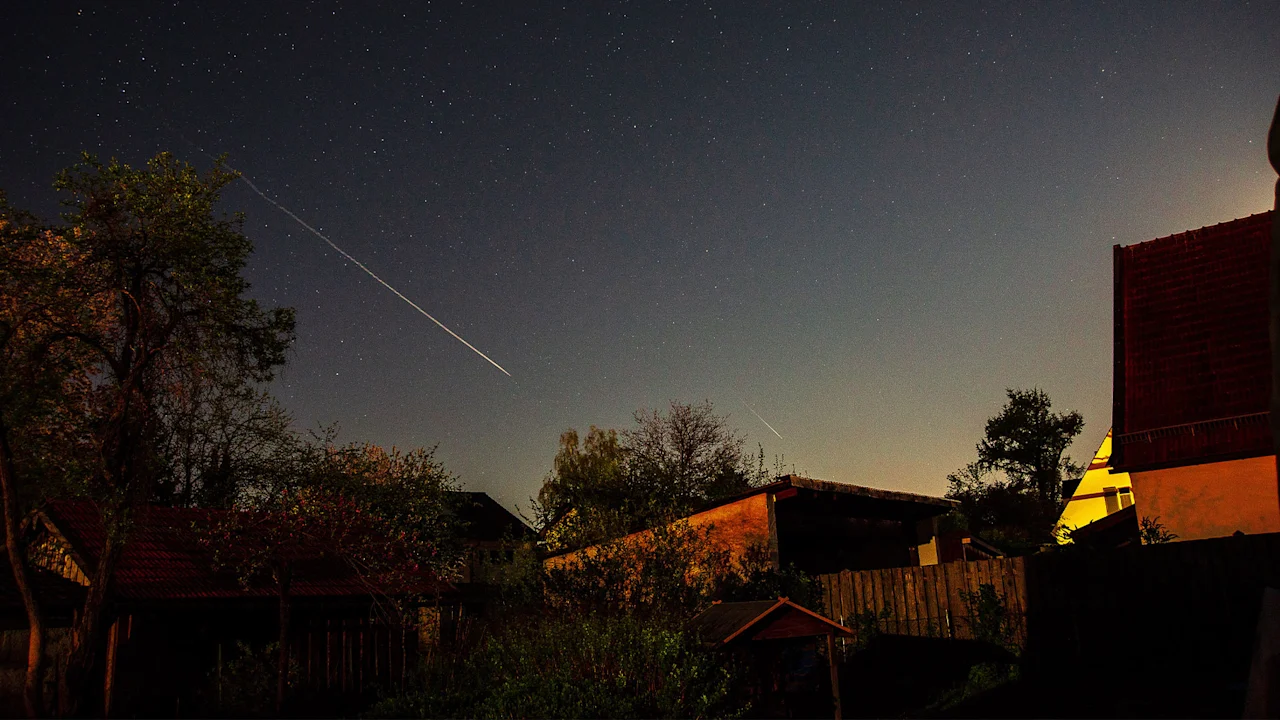
For nearly three millennia, humans have documented the annual arrival of the Lyrids, one of the oldest known meteor showers. This week, the celestial event returns to its peak, offering skywatchers a rare connection to a cycle first recorded in 687 BCE. While the shower typically produces a modest 10 to 20 meteors per hour, its historical significance and occasional "outbursts"—which can see up to 100 streaks per hour—maintain its status as a fixture of the astronomical calendar.
The spectacle is the result of Earth’s orbital intersection with the trail of Comet Thatcher. As our planet moves through this field of "comet crumbs," the debris enters the atmosphere at high speeds, disintegrating into the fiery, colorful streaks commonly known as shooting stars. According to NASA, these dusty trails are left behind every time a comet rounds the sun, creating predictable windows where the debris and our atmosphere inevitably collide.
Visibility will be highest in the Northern Hemisphere during the predawn hours of Wednesday, though the shower begins its peak on Tuesday evening. Astronomers suggest looking toward the constellation Lyra and its brightest star, Vega, which serves as the radiant point. However, seasoned observers recommend looking slightly away from the radiant; this perspective allows for a better view of meteors with longer, more dramatic tails as they burn across the sky.
With reporting from Fast Company.
Source · Fast Company

/s3/static.nrc.nl/wp-content/uploads/2026/04/21084841/210426VER_2033103397_.jpg)