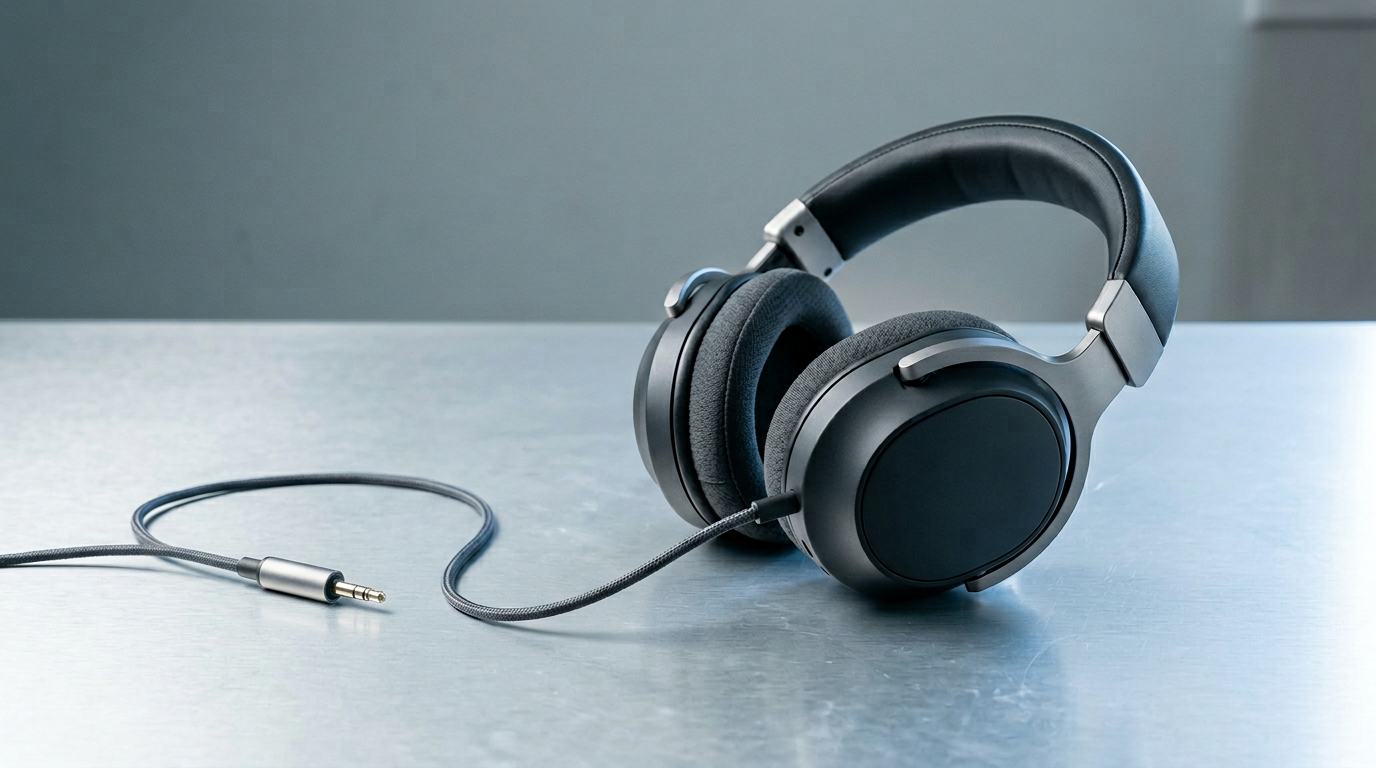
In the hierarchy of gaming peripherals, the headset occupies a unique position. While a mouse or keyboard facilitates input, the headset provides the spatial data necessary for high-level play — the subtle rustle of movement behind a wall, the precise direction of a distant footstep. As the market for these devices matures, the divide between professional-grade equipment and consumer-level hardware is increasingly bridged by a new generation of versatile, accessible options from manufacturers competing aggressively on both price and feature sets.
Current offerings from brands like Redragon and Havit illustrate a broader shift toward multi-platform utility and acoustic refinement at lower price points. The trend is not unique to gaming; the wider consumer audio market has spent the past decade compressing the gap between entry-level and premium hardware, driven by commoditized driver technology and cheaper wireless chipsets. Gaming headsets, once a niche category defined by garish aesthetics and middling sound, have followed the same trajectory.
The Wired Foundation and the Push for Acoustic Depth
The wired headset remains a relevant category for reasons that go beyond nostalgia. A standard 3.5mm analog connection introduces no latency, requires no battery management, and works across virtually every platform — from a PlayStation controller to a laptop's headphone jack. The Redragon Zeus Lite leans into this simplicity, focusing on the fundamentals of the over-ear experience without adding complexity. For a segment of users, particularly those who play on multiple devices without a dedicated docking station, this universality matters more than wireless convenience.
At the same time, manufacturers are pushing acoustic specifications downmarket. The Havit H2002d, for instance, employs 53mm drivers — a diameter more commonly associated with studio monitoring headphones or higher-end audiophile hardware. Larger drivers do not automatically guarantee superior sound, but they generally allow for greater excursion and a fuller low-frequency response. The result is a more full-bodied sound profile that benefits not only gaming but also music and film consumption, reflecting the reality that most users wear their headset for far more than competitive play.
This convergence of gaming and general-purpose audio is worth noting. As headsets become the primary listening device for an increasing share of users — particularly younger demographics who may never own a dedicated pair of hi-fi headphones — the acoustic expectations placed on gaming hardware rise accordingly.
Wireless Maturity and the Democratization of Spatial Audio
The evolution of wireless technology in gaming peripherals has reached a point of stability where latency — once the defining objection of competitive players — is no longer a primary deterrent. Modern 2.4GHz wireless protocols routinely deliver response times comparable to wired connections, a threshold that was difficult to achieve even a few years ago. The Havit Fuxi-H3 represents this maturity, offering a tri-mode connection suite that includes 2.4GHz wireless, Bluetooth, and USB-C. A single device can transition between a high-performance desktop setup and a mobile environment without compromise, reflecting the increasingly fluid way users move between screens and contexts throughout the day.
For those seeking deeper immersion, the integration of virtual 7.1 surround sound in models like the Redragon Zeus Pro signals the democratization of spatial audio. By simulating a multi-speaker environment through software processing within a closed-back chassis, these headsets aim to deliver a more cinematic experience without requiring dedicated sound cards or external DACs. Virtual surround remains a contested technology among audio purists — the simulation can introduce artifacts and rarely matches a true multi-driver setup — but for the majority of consumers, the perceptual improvement over standard stereo is meaningful enough to justify the feature.
The broader pattern is clear: specifications and connection options that defined premium tiers three or four years ago are migrating rapidly into budget and mid-range hardware. What remains less certain is whether this compression of the feature gap will push premium manufacturers toward genuinely new capabilities — such as head-tracked spatial audio or adaptive noise cancellation tuned to in-game events — or simply erode their pricing power. The answer likely depends on whether the next wave of innovation comes from audio engineering or from software integration with game engines themselves, two forces that have historically developed on separate tracks but now appear to be converging.
With reporting from Olhar Digital.
Source · Olhar Digital