The initial phase of the artificial intelligence boom was characterized by a singular focus on compute. Nvidia’s ascent—a rally exceeding 1,000% that propelled its valuation past Alphabet—served as the primary barometer for the industry’s appetite for silicon. However, as the architecture of generative AI matures, the investment narrative is shifting from the processors themselves to the high-performance storage systems required to sustain them.
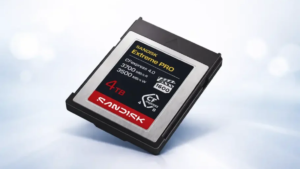
This transition is manifesting in extraordinary market movements within the storage and memory sectors. While Nvidia remains the dominant force in the data center, legacy hardware entities and their associated brands are beginning to outpace the chipmaker's percentage gains. SanDisk, long a staple of consumer and enterprise storage, has emerged as a focal point of this trend, with recent market activity showing a surge nearing 3,000% over the last twelve months as the demand for rapid data access scales.
The logic behind this rotation is structural. An AI model’s performance is inextricably linked to its data pipeline; without high-speed storage, the most advanced GPUs face significant bottlenecks. As the industry moves from the initial training of massive models to the "inference" phase—where these models are put to work in real-time—the hardware stack's efficiency becomes paramount. The current volatility in storage stocks suggests that the market is now pricing in a future where data management is just as lucrative as data processing.
With reporting from NeoFeed.
Source · NeoFeed