The closure of the Strait of Hormuz — the narrow waterway through which a significant share of the world's seaborne oil passes — has sent tremors through global energy markets. But in China, the crisis triggered by escalating conflict around Iran is being framed less as a disruption and more as a vindication. State-affiliated media outlets have seized on the moment to reinforce a narrative that has been building for years: that the country's aggressive investment in renewable energy infrastructure is not merely an environmental project, but a matter of national survival.
While Western commentary has often credited China's expanding low-carbon capacity with buffering the economy against fossil-fuel price shocks, the internal Chinese discourse is more layered. For Beijing, the transition to what official language calls "new energy" — a broad category encompassing solar, wind, battery storage, and electric vehicles — is increasingly positioned as a pillar of national security on par with military readiness or food self-sufficiency.
Reframing renewables as strategic infrastructure
State-affiliated outlets, including the People's Daily and Global Times, have used the intensifying Middle Eastern conflict to underscore the fragility of global supply chains. Commentators in these publications argue that building "localized" clean-energy capacity is a "strategic necessity," a phrase that deliberately echoes the language of defense policy rather than climate diplomacy. By reducing reliance on vulnerable maritime chokepoints for oil and gas imports, the argument goes, China can insulate its industrial base from the volatility of Middle Eastern geopolitics.
This framing represents a notable rhetorical shift. For much of the past decade, China's public-facing energy transition narrative was calibrated for an international audience: carbon neutrality pledges, cooperation at COP summits, and the language of shared global responsibility. The Iran crisis coverage suggests a parallel, domestically oriented narrative has gained prominence — one in which decarbonization is valued not for its planetary benefits but for its contribution to autarky. The distinction matters. A climate-motivated transition and a security-motivated transition may arrive at similar infrastructure outcomes, but they imply different policy priorities, different timelines, and different tolerances for cost.
The Strait of Hormuz has long occupied a central place in energy security thinking. Its potential closure has been a scenario in strategic planning circles for decades, and China's dependence on Middle Eastern crude — transported through that very corridor — has been a recognized vulnerability. That this vulnerability is now being invoked to justify faster renewable deployment suggests Beijing sees an opportunity to align public sentiment with industrial policy goals that were already in motion.
The coal question persists
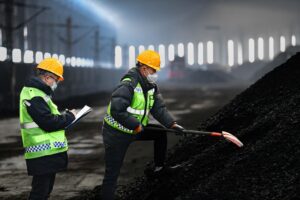
Yet the green push does not signal an immediate abandonment of traditional power sources. Even as outlets like China Youth Daily call for accelerated renewable development to mitigate supply chain risks, the broader state narrative continues to emphasize the stabilizing role of the domestic coal industry. China remains the world's largest coal producer and consumer, and its policymakers have consistently treated coal as a backstop — the energy source of last resort that keeps the grid stable when intermittent renewables or disrupted imports fall short.
In the eyes of Chinese energy planners, security remains a dual-track endeavor: building a future of clean technology while shoring up the legacy systems that ensure continuity during a global storm. This duality creates a tension that outside observers sometimes flatten into a simple contradiction. It is more accurately understood as a sequencing problem. The question is not whether China will move away from coal, but how long the transition bridge needs to be — and whether a crisis like the current one accelerates or delays the crossing.
The Iran energy crisis, then, functions as a stress test not only for global oil markets but for competing narratives about what energy transitions are for. In the West, the dominant frame remains climate mitigation. In Beijing, the frame is shifting toward resilience and strategic autonomy. Whether those two motivations can coexist — or whether the security logic ultimately subordinates climate ambition to industrial pragmatism — is a tension that the current crisis sharpens but does not resolve.
With reporting from Carbon Brief.
Source · Carbon Brief