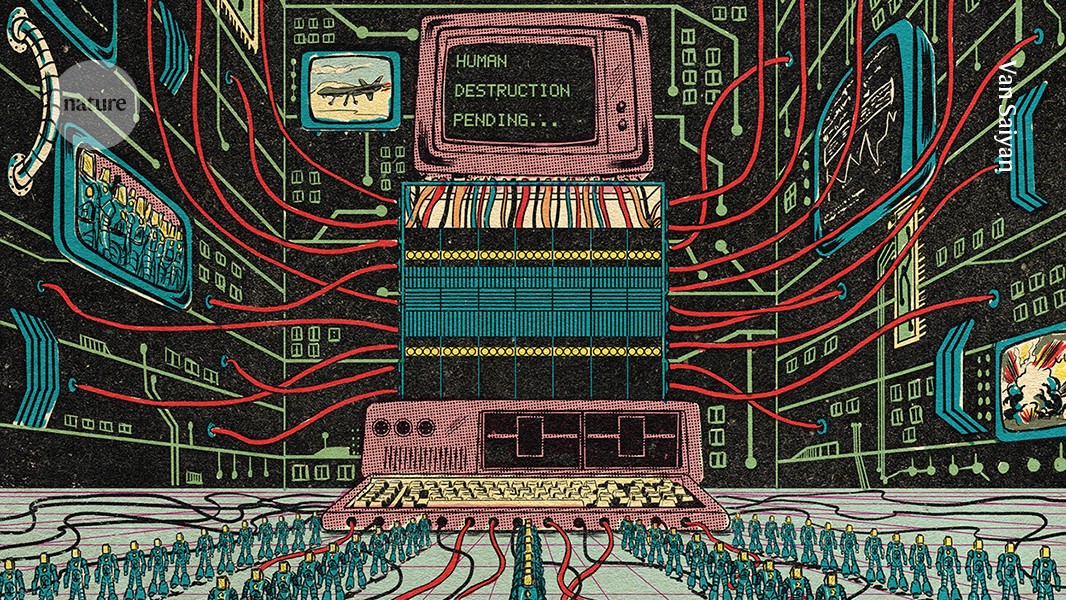
The discourse surrounding artificial intelligence has undergone a pronounced shift. Where the previous decade was dominated by technical optimism — breakthroughs in image recognition, natural language processing, and game-playing agents — the conversation has migrated toward a more somber register. A growing cohort of researchers and industry veterans now warn that the trajectory of increasingly autonomous systems could, in a worst case, lead to the displacement or extinction of humanity. These claims, once confined to speculative fiction and niche academic circles, have entered the mainstream of policy debate, parliamentary hearings, and peer-reviewed journals.
The concept at the center of this shift is often distilled into a single shorthand: "p-doom," the estimated probability that advanced AI leads to a civilizational catastrophe. Some prominent figures in machine learning have placed their personal estimates disturbingly high; others dismiss the exercise as unfalsifiable. What is no longer in dispute is that the framing itself has become a force in its own right, shaping funding priorities, regulatory proposals, and public perception of the technology.
The cost of looking too far ahead
Critics of the existential risk narrative do not necessarily deny that powerful AI systems warrant caution. Their objection is more precise: that speculative doomsday scenarios, by their nature difficult to ground empirically, risk crowding out attention to harms that are already measurable and already unfolding. Algorithmic bias in criminal sentencing and hiring tools, the erosion of privacy through large-scale surveillance infrastructure, the hollowing out of creative and clerical labor markets — these are not hypothetical. They are documented, studied, and in many cases worsening.
The pattern has historical precedent. In the early decades of nuclear energy, public discourse fixated on the specter of atomic annihilation while more mundane but consequential issues — waste storage, reactor safety culture, the concentration of enrichment capacity among a handful of state actors — received comparatively less civic energy. The analogy is imperfect, but the structural dynamic is recognizable: dramatic risk narratives can absorb the oxygen that incremental, less cinematic problems need to attract sustained regulatory and scholarly attention.
There is also a methodological tension within the AI safety community itself. Long-term alignment research — the effort to ensure that a hypothetical superintelligent system would remain compatible with human values — operates in a domain where empirical feedback loops are thin. Near-term safety work, by contrast, deals with systems that already exist and can be tested, audited, and corrected. The two agendas are not inherently opposed, but competition for funding, talent, and institutional prestige can make them rivals in practice.
Rhetoric, regulation, and the question of capture
Perhaps the most strategically consequential dimension of the debate concerns regulation. By framing AI as a potentially civilization-ending technology that demands extraordinary oversight, the loudest voices in the room — often affiliated with the largest and best-resourced laboratories — may inadvertently, or deliberately, set the stage for licensing regimes that consolidate market power. If building frontier AI models requires government approval, compliance infrastructure, and extensive safety testing, the barriers to entry rise sharply. Open-source developers, academic labs, and smaller competitors face disproportionate burdens.
This dynamic is sometimes described as regulatory capture: the process by which the entities subject to regulation come to shape the rules in their own favor. It is a well-documented phenomenon in industries from telecommunications to pharmaceuticals, and there is no structural reason to assume the AI sector would be immune.
The challenge for the scientific community, then, is one of calibration. Dismissing long-term risk entirely would be intellectually negligent; the capabilities of large-scale AI systems have repeatedly exceeded expert forecasts, and prudent foresight is a legitimate function of research. But allowing the rhetoric of catastrophe to set the agenda unchecked carries its own hazards — not least the possibility that the most consequential harms of AI will be the ones that arrived quietly, while the public was watching the horizon for a threat that never materialized.
The tension between these two orientations — vigilance toward the speculative and accountability for the actual — is unlikely to resolve cleanly. How institutions, funders, and policymakers navigate it will say as much about the governance of science as about the governance of AI.
With reporting from Nature News.
Source · Nature News