The fragile ceasefire between the United States and Iran has collapsed, returning the Strait of Hormuz — the narrow waterway through which roughly a fifth of the world's daily oil supply transits — to active conflict. Following reports of projectile strikes and small-boat attacks on commercial shipping, the Pentagon announced an expansion of its naval interdiction mandate. The new rules of engagement authorize U.S. forces to board and seize any Iranian-flagged vessel or ship providing material support to Tehran, including so-called "dark fleet" tankers used to circumvent international sanctions.
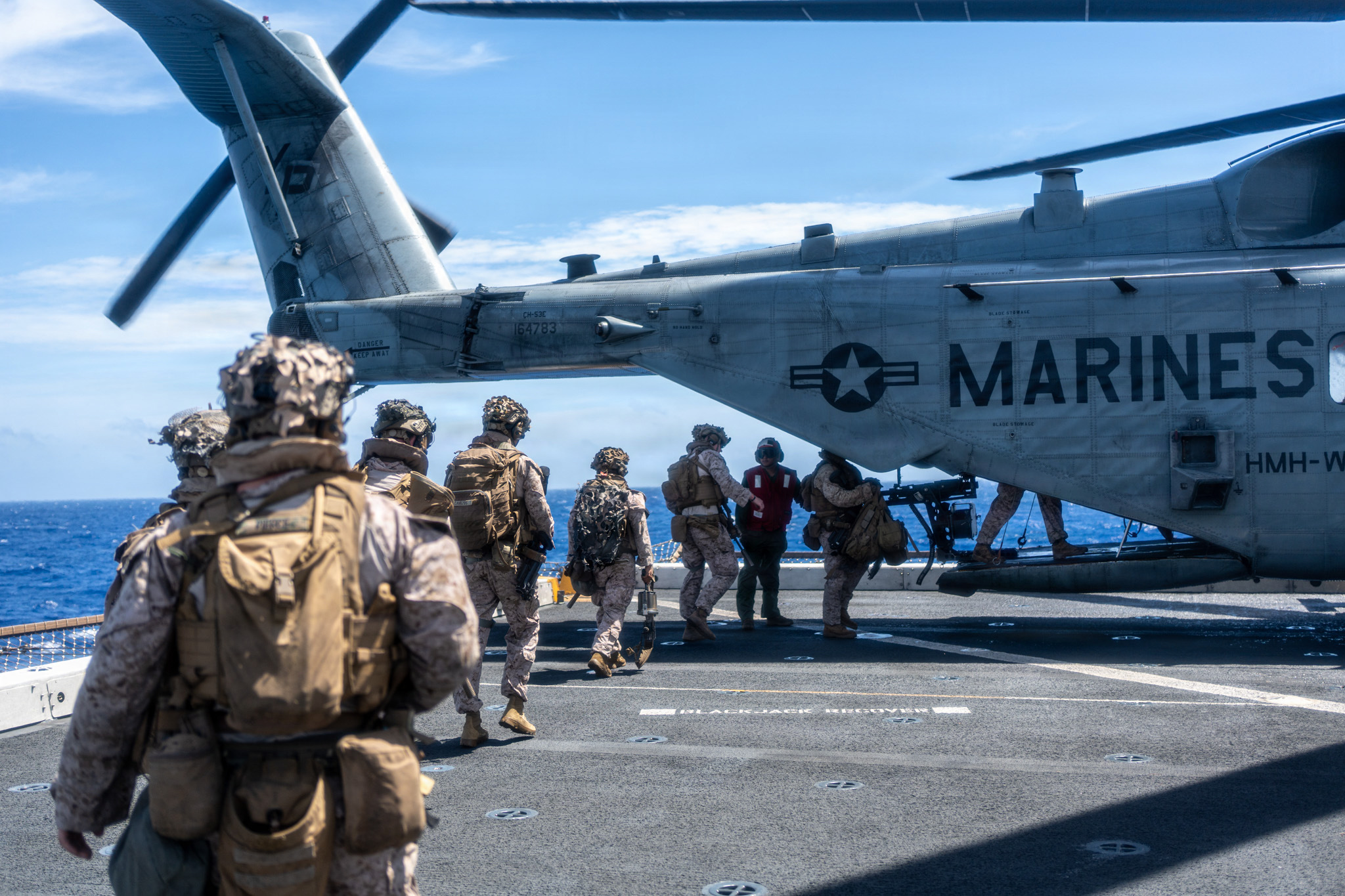
The U.S. military is now preparing Marine boarding parties to interdict Iran-linked tankers in international waters, a significant escalation from the earlier posture of escorting allied commercial vessels through the strait. Iran, for its part, maintains that the waterway will remain closed to traffic until Washington lifts what Tehran characterizes as a naval blockade.
The strategic weight of Hormuz
The Strait of Hormuz has long occupied a singular position in global energy security. At its narrowest point, the channel spans roughly 33 kilometers, with shipping lanes even tighter. For decades, Iran has treated its proximity to this chokepoint as asymmetric leverage against militarily superior adversaries — a doctrine sometimes described as "access denial" in naval strategy literature. The Islamic Revolutionary Guard Corps Navy has maintained a fleet of fast-attack craft, anti-ship missiles, and naval mines specifically designed to threaten transit through the strait.
Previous episodes of tension in the waterway — the so-called Tanker War of the 1980s during the Iran-Iraq conflict, the 2019 attacks on commercial vessels near the Gulf of Oman — demonstrated how quickly localized maritime incidents can ripple through global commodity markets. In each case, the mere perception of disrupted supply drove oil prices sharply upward and forced insurers to reprice risk for the entire Persian Gulf corridor. The current escalation carries a similar structural risk, compounded by the fact that the confrontation now involves direct U.S.-Iran military contact rather than proxy provocations.
The concept of the "dark fleet" adds a layer of complexity. These are aging tankers, often with obscured ownership structures and disabled transponders, used by sanctioned states — Iran, Russia, Venezuela among them — to move crude oil outside the visibility of Western enforcement mechanisms. Targeting these vessels represents a shift from passive sanctions enforcement to active maritime interdiction, a distinction with significant legal and diplomatic implications under international maritime law.
Interdiction as escalation
Boarding foreign-flagged vessels in international waters is among the most assertive actions a navy can take short of direct combat. The legal basis for such operations typically rests on United Nations Security Council resolutions, flag-state consent, or claims of self-defense — each of which carries its own constraints. The Pentagon's expanded mandate suggests Washington believes the current threat environment justifies a broad interpretation of its authority, though the precise legal framework underpinning the new rules of engagement has not been made public.
The operational risks are considerable. Boarding operations against potentially hostile crews on large tankers are inherently dangerous, and any incident — a firefight, a sinking, casualties among foreign nationals — could accelerate the conflict beyond the maritime domain. Iran's stated position that the strait will remain closed until the blockade is lifted leaves little diplomatic space for de-escalation. The longer interdiction operations continue, the more they risk becoming the new status quo rather than a temporary measure.
For energy markets and the global shipping industry, the calculus is straightforward but unforgiving: sustained disruption to Hormuz transit forces importers to seek alternative supply routes, drives up freight and insurance costs, and introduces a geopolitical risk premium into oil pricing that persists well beyond any eventual resolution. Gulf states that depend on the strait for their own exports face a parallel dilemma, caught between alliance commitments and economic self-interest.
The tension now sits between two incompatible positions — an American interdiction regime that treats the strait as an enforcement zone and an Iranian posture that treats the same waters as contested sovereign space. How long that tension holds without a further escalation, and whether any diplomatic channel remains viable, are questions without clear answers.
With reporting from Fortune.
Source · Fortune