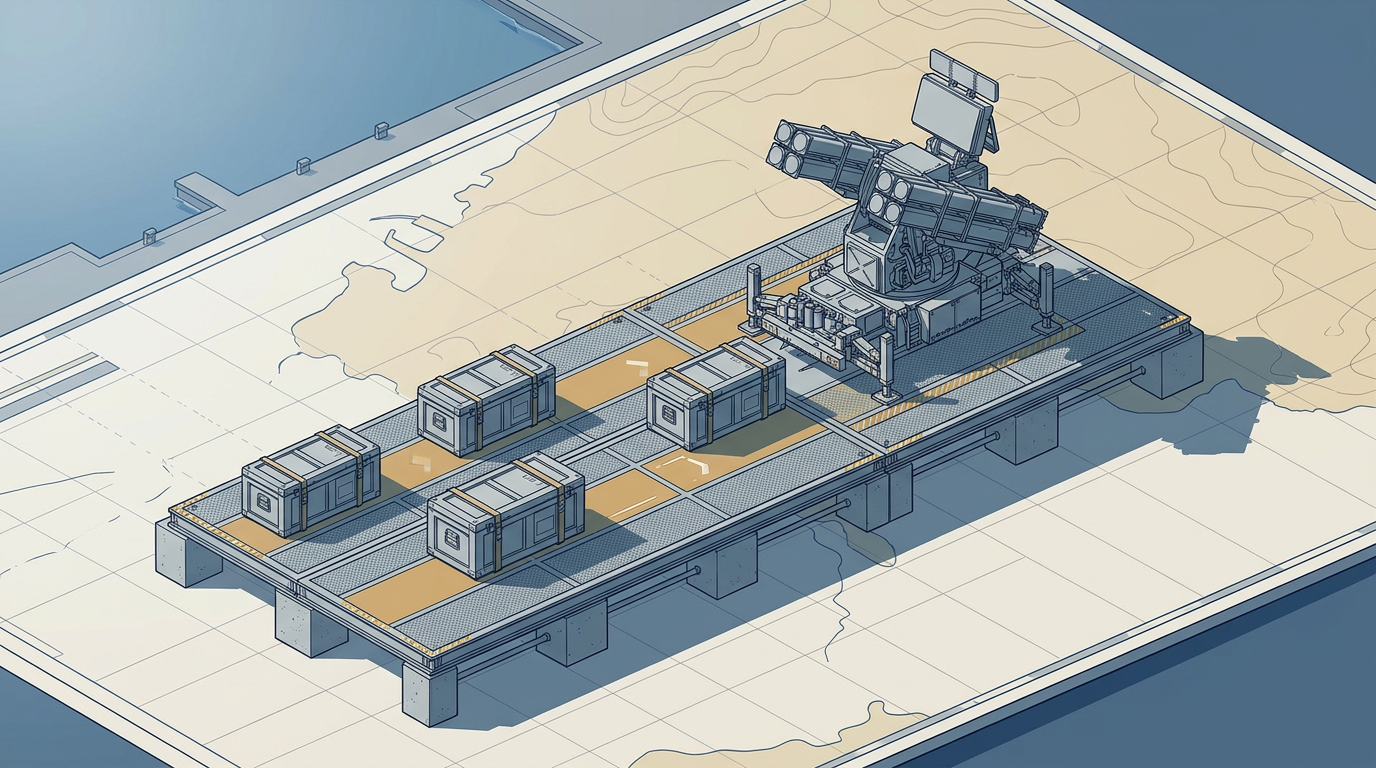
Ukraine is reportedly considering lifting its wartime ban on arms exports later this year, a move that is already drawing the attention of international buyers. Gulf countries, facing persistent regional security threats from Iran, are emerging as potential early customers for Ukrainian air-defense technology at scale, according to reports from C4ISRNET. The prospective policy shift would mark a significant evolution for Kyiv, transitioning its rapidly innovating defense industrial base from a strictly domestic supplier to a participant in the global arms market.
This potential opening of Ukraine's defense sector arrives amid a broader period of geopolitical and economic recalibration. The Gulf's interest in enhanced air defense coincides with severe regional instability, underscored by the recent closure of the Strait of Hormuz and subsequent energy market interventions. Simultaneously, Western security architectures are undergoing their own structural reviews, with ongoing discussions regarding the need to update NATO governance policies to better address contemporary threats. The underlying dynamic suggests that Ukraine’s defense export ambitions are inextricably linked to a wider realignment of global security and energy frameworks.
The commercialization of battle-tested defense systems
Since the escalation of the conflict, Ukraine’s domestic defense industry has been forced into a state of rapid, high-stakes innovation. The country has developed and refined various asymmetric and conventional capabilities, particularly in drone warfare and air-defense systems, under the intense pressure of daily combat. Lifting the export ban would allow Kyiv to monetize these battle-tested technologies, generating crucial capital to reinvest into its own military-industrial complex while reducing its absolute reliance on foreign financial assistance.
For Gulf nations, the appeal of Ukrainian hardware is clear. These states are actively seeking to fortify their airspace against Iranian missile and drone capabilities, which share technical lineage with the systems currently deployed against Ukraine. By acquiring Ukrainian air-defense technology, Gulf buyers would gain access to systems specifically calibrated to counter the exact threat profiles they face regionally. This dynamic points to a pragmatic alignment of interests: Ukraine requires revenue and industrial scale, while Gulf states require proven, adaptable defense solutions outside of traditional Western procurement bottlenecks.
Intersecting pressures across energy and alliance structures
The strategic calculus driving the Gulf's interest in new air-defense systems is deeply intertwined with the region's volatile security and economic environment. The recent closure of the Strait of Hormuz—a critical maritime chokepoint for global energy supplies—has heightened threat perceptions across the Arabian Peninsula. In response to the resulting market disruptions, OPEC+, the consortium of major oil-producing nations that coordinates global supply, is reportedly set to agree on its third oil output quota hike since the strait's closure. This economic maneuvering highlights the fragility of the region's security architecture and the urgent need for robust defensive capabilities to protect critical infrastructure.
Meanwhile, the broader international security apparatus that supports Ukraine is also facing structural pressures. NATO, the Western military alliance central to coordinating defense assistance for Kyiv, is currently navigating calls to update its governance policies, according to SpaceNews. As the alliance adapts to a protracted conflict in Eastern Europe and emerging threats in other theaters, modernizing its internal frameworks has become a priority. The intersection of these developments—Ukraine's potential entry into the arms export market, OPEC+'s supply adjustments, and NATO's governance reviews—illustrates a complex web of dependencies where regional security crises immediately trigger global economic and institutional responses.
The potential lifting of Ukraine's arms-export ban suggests a maturation of its wartime defense industry, positioning the country as a future supplier in the global security market. As Gulf nations look to Kyiv for battle-tested air defense, and international institutions adjust to cascading regional pressures, the structural ties between Eastern European defense production and Middle Eastern security will remain a critical dynamic to monitor.
With reporting from C4ISRNET, Business of Fashion, SpaceNews.
Source · C4ISRNET