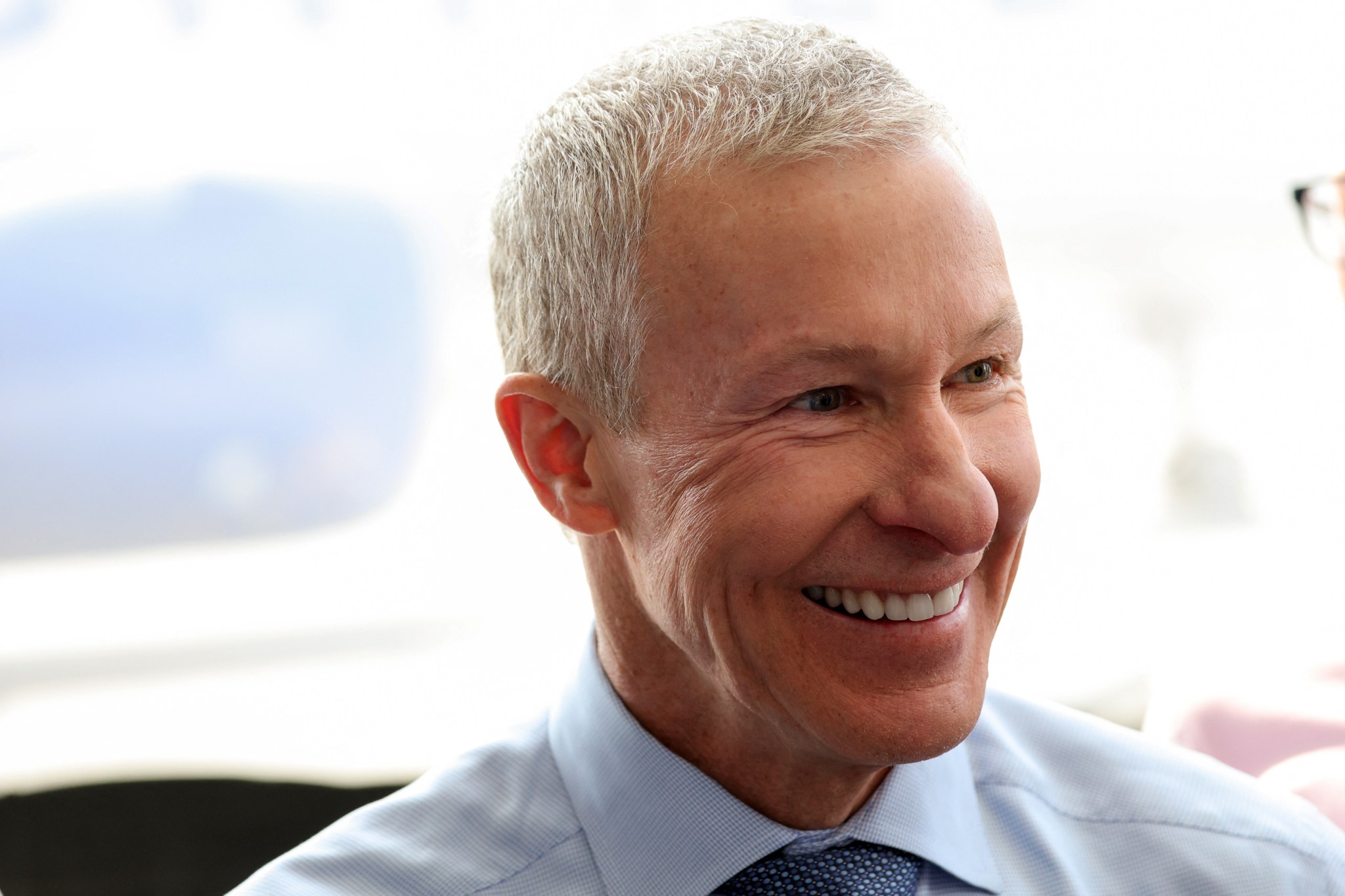
United Airlines CEO Scott Kirby has signaled interest in acquiring American Airlines, a move that, if realized, would represent the most significant consolidation in U.S. commercial aviation in over a decade. The proposal, reported by Fortune, would combine two of the country's three legacy network carriers and reshape competitive dynamics across domestic and international routes. American Airlines has stated it is not interested in merger discussions, but Kirby's track record suggests the overture is unlikely to be his last.
The potential deal marks Kirby's third major attempt to redraw the map of the U.S. airline industry. His career has been defined by a willingness to pursue transformative mergers — most notably the 2005 combination of America West Airlines and US Airways, and the subsequent merger of US Airways with American Airlines in 2013, which created the world's largest airline at the time. In each case, Kirby played a central strategic role. A United-American combination would follow the same playbook: absorb a weakened rival to build scale, reduce redundancy, and strengthen pricing power.
Old colleagues, new dynamics
One of the more notable dimensions of the reported pursuit is the personal history between the two airlines' leadership teams. Kirby and American Airlines CEO Robert Isom worked together at US Airways as part of what industry observers once called a "dream team" of airline executives. That shared experience could, in theory, ease the cultural and operational frictions that typically plague airline mergers. But shared history does not guarantee alignment. Isom now leads a separate organization with its own shareholders, labor agreements, and strategic direction. American's public rejection of merger talks suggests that whatever rapport exists between the two executives has not translated into institutional willingness to negotiate.
American Airlines has faced a turbulent stretch in recent years, including strategic missteps in its distribution and corporate sales approach that drew criticism from business travel buyers and travel management companies. The airline has worked to reverse course, but the episode underscored vulnerabilities that a potential acquirer might view as leverage. United, by contrast, has pursued an aggressive growth strategy under Kirby, expanding its premium cabin offerings and investing heavily in fleet modernization. The divergence in trajectory between the two carriers provides part of the strategic logic for a deal — at least from United's perspective.
The regulatory question
Any merger of this scale would face intense regulatory scrutiny. The U.S. airline industry has consolidated dramatically since deregulation in 1978, moving from dozens of major carriers to essentially four — American, United, Delta, and Southwest — that control the vast majority of domestic capacity. A combination of United and American would reduce that number to three, raising immediate questions about fare competition, route overlap, and the impact on smaller markets served by both carriers.
The current regulatory environment adds another layer of uncertainty. U.S. antitrust enforcement in the airline sector has swung between permissiveness and skepticism depending on the administration in power. The 2013 US Airways-American merger was approved by the Department of Justice after a settlement that required divestitures at key airports, but the political and economic context has shifted considerably since then. Whether regulators would permit further consolidation among the remaining legacy carriers is an open question — one that would likely generate significant debate among lawmakers, labor unions, and consumer advocacy groups.
Labor integration presents its own challenges. Airline mergers require the combination of seniority lists across pilot, flight attendant, and ground crew unions — a process that has historically produced years of contentious negotiation. Both United and American operate under complex collective bargaining agreements, and any deal would need to secure at least tacit cooperation from organized labor to proceed smoothly.
Kirby's career suggests he is comfortable operating in exactly this kind of contested terrain. Whether American's board and shareholders eventually see strategic merit in a combination — or whether competitive and financial pressures make the status quo untenable — may matter more than any single executive's ambition. The forces pulling toward consolidation in capital-intensive, margin-thin industries rarely disappear. They simply wait for the next opening.
With reporting from Fortune.
Source · Fortune