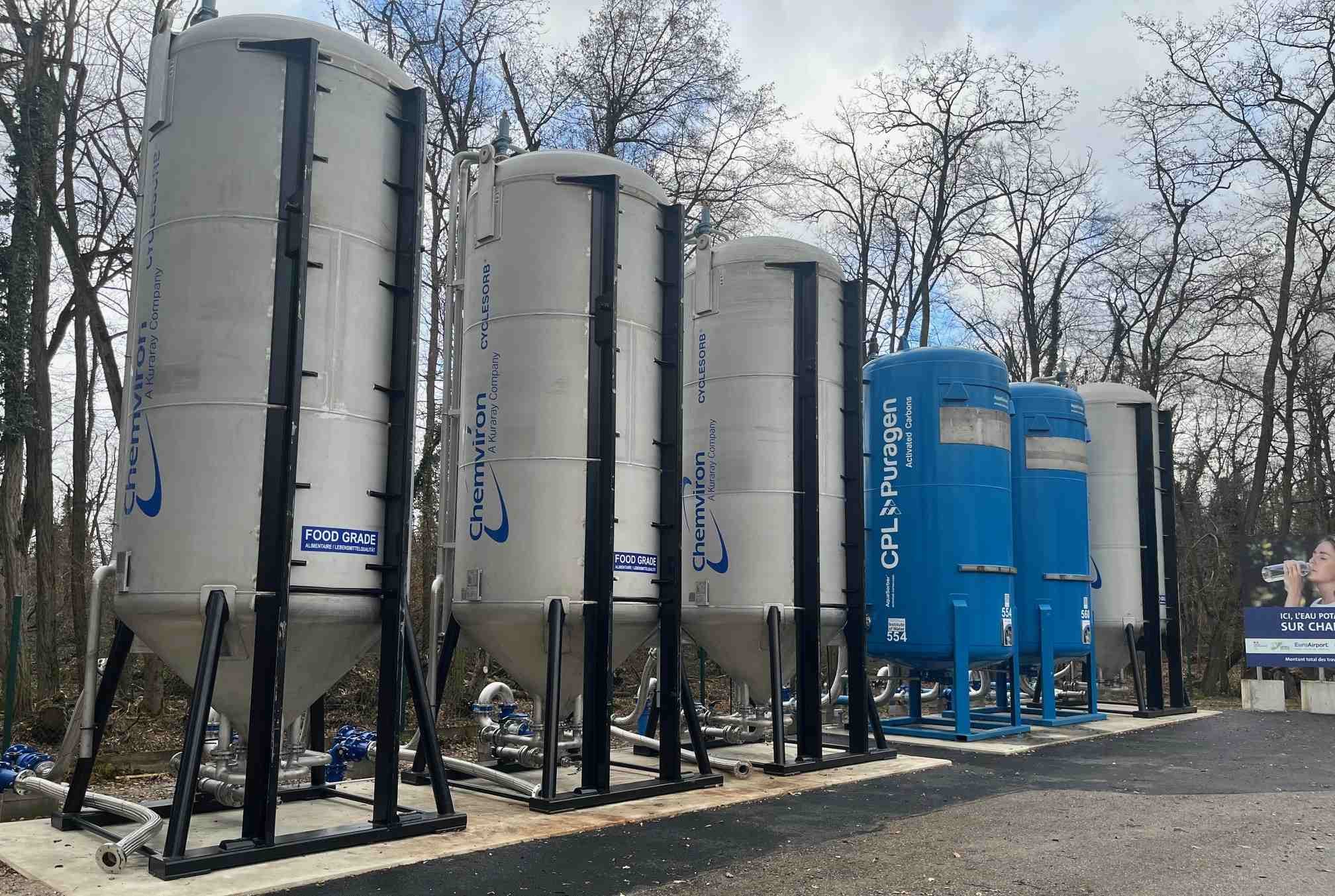
The industrial town of Saint-Louis, nestled in the Haut-Rhin region of France, has become a testing ground for the logistical challenges of large-scale chemical remediation. Since mid-December, environmental services giant Veolia has operated what it describes as its largest mobile treatment unit to address the persistent presence of per- and polyfluoroalkyl substances (PFAS) in the local water supply.
The deployment follows a period of significant disruption for the region. In April, authorities were forced to impose drinking water restrictions across 11 municipalities in the Saint-Louis agglomeration after PFAS levels—often referred to as "forever chemicals" due to their inability to break down in the environment—exceeded safety thresholds. The new infrastructure utilizes activated carbon, a proven method for trapping these synthetic compounds before they reach the tap.
While the mobile nature of the units suggests a tactical response, the scale of the operation underscores the permanence of the PFAS problem. As industrial legacies continue to collide with modern environmental standards, the ability to rapidly deploy high-capacity filtration systems is becoming a core requirement for urban resilience and public health infrastructure.
With reporting from Usine Nouvelle.
Source · Usine Nouvelle