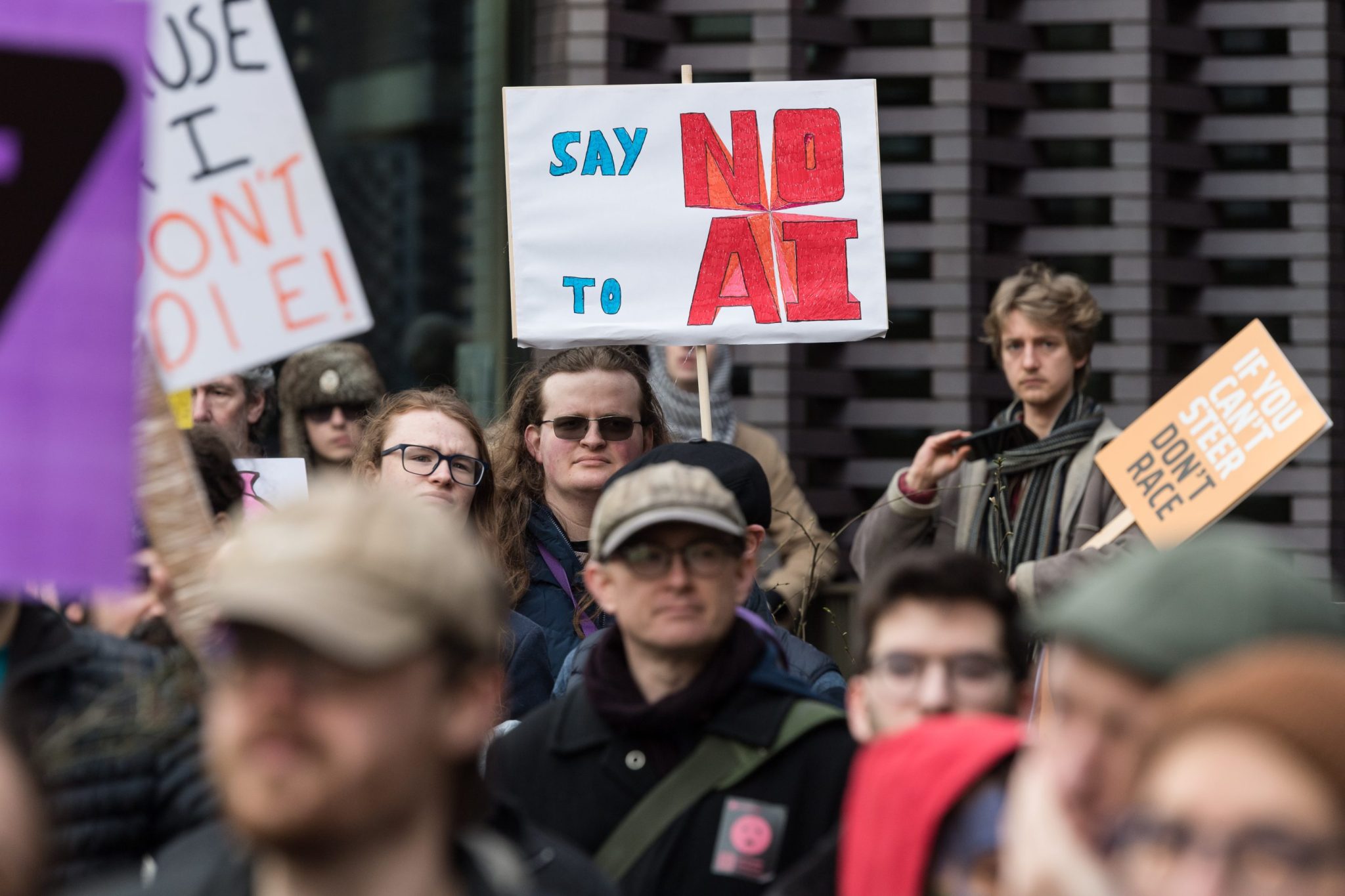
A series of physical attacks targeting OpenAI CEO Sam Altman's property has brought into sharp relief a strain of anti-AI sentiment that is no longer confined to online forums or protest placards. Daniel Moreno-Gama, a 20-year-old, was arrested after allegedly throwing a Molotov cocktail at Altman's residence and later attempting to break into OpenAI's headquarters. Days later, a separate shooting incident occurred near the same property. The episodes, though carried out by individuals on the ideological fringe, sit atop a broader and more diffuse wave of public unease about the trajectory of artificial intelligence.
From anxiety to aggression
Opposition to transformative technologies is not new. The Luddite uprisings of early-nineteenth-century England saw textile workers destroy mechanized looms they believed would eliminate their livelihoods. More recently, the rollout of genetically modified organisms in the late 1990s triggered acts of sabotage against research facilities across Europe. What distinguishes the current moment is the speed at which AI capabilities have advanced and the breadth of the anxieties they provoke. Concerns range from near-term labor displacement — white-collar roles in legal research, copywriting, and software development are already being restructured — to longer-horizon fears about autonomous weapons systems and the possibility, however contested among researchers, of existential risk from superintelligent machines.
The alleged motivations behind the attacks on Altman's property appear rooted in the more extreme end of that spectrum: a conviction that unchecked AI development poses a threat to human survival. Online communities organized around "AI safety" and "AI alignment" have grown rapidly over the past several years, and while the vast majority of participants advocate for policy reform and technical safeguards, a militant fringe has begun to frame direct action as morally justified. The transition from rhetorical alarm to physical violence marks a qualitative shift that the AI industry, law enforcement, and policymakers will need to reckon with.
The industry's exposure
For AI companies, the incidents raise practical questions about executive security and corporate risk management, but also strategic ones about public legitimacy. OpenAI, which began as a nonprofit research lab before restructuring to attract billions in commercial investment, has occupied an unusually visible position in public debates about AI governance. Its CEO has become, fairly or not, a symbolic figure — a stand-in for an entire industry's ambitions and perceived recklessness. That kind of personalization makes targeted hostility more likely.
The broader technology sector has faced public backlash before. Protests against Silicon Valley shuttle buses in San Francisco during the mid-2010s channeled resentment over housing costs and inequality. Opposition to facial recognition technology led several cities to impose bans. But those movements operated largely within conventional political channels. The appearance of arson and gunfire directed at an individual executive suggests that at least some opponents have concluded those channels are insufficient — or too slow.
Governments, meanwhile, face a dual challenge. Regulating AI development to address legitimate public concerns — job displacement, environmental costs of data-center energy consumption, military applications — could help drain the reservoir of frustration that feeds radicalization. But heavy-handed regulation risks pushing innovation offshore without reducing the underlying risks. The European Union's AI Act and ongoing legislative efforts in the United States represent attempts to find that balance, though neither framework was designed with violent extremism as a primary input.
The tension at the center of this episode is structural. The companies building the most powerful AI systems argue that continued development, paired with safety research, is the surest path to beneficial outcomes. A growing segment of the public — and now a violent few — view that same development as an unacceptable gamble. Whether the political system can mediate between those positions before the conflict escalates further is a question that the attacks on Altman's property have made considerably more urgent.
With reporting from Fortune.
Source · Fortune