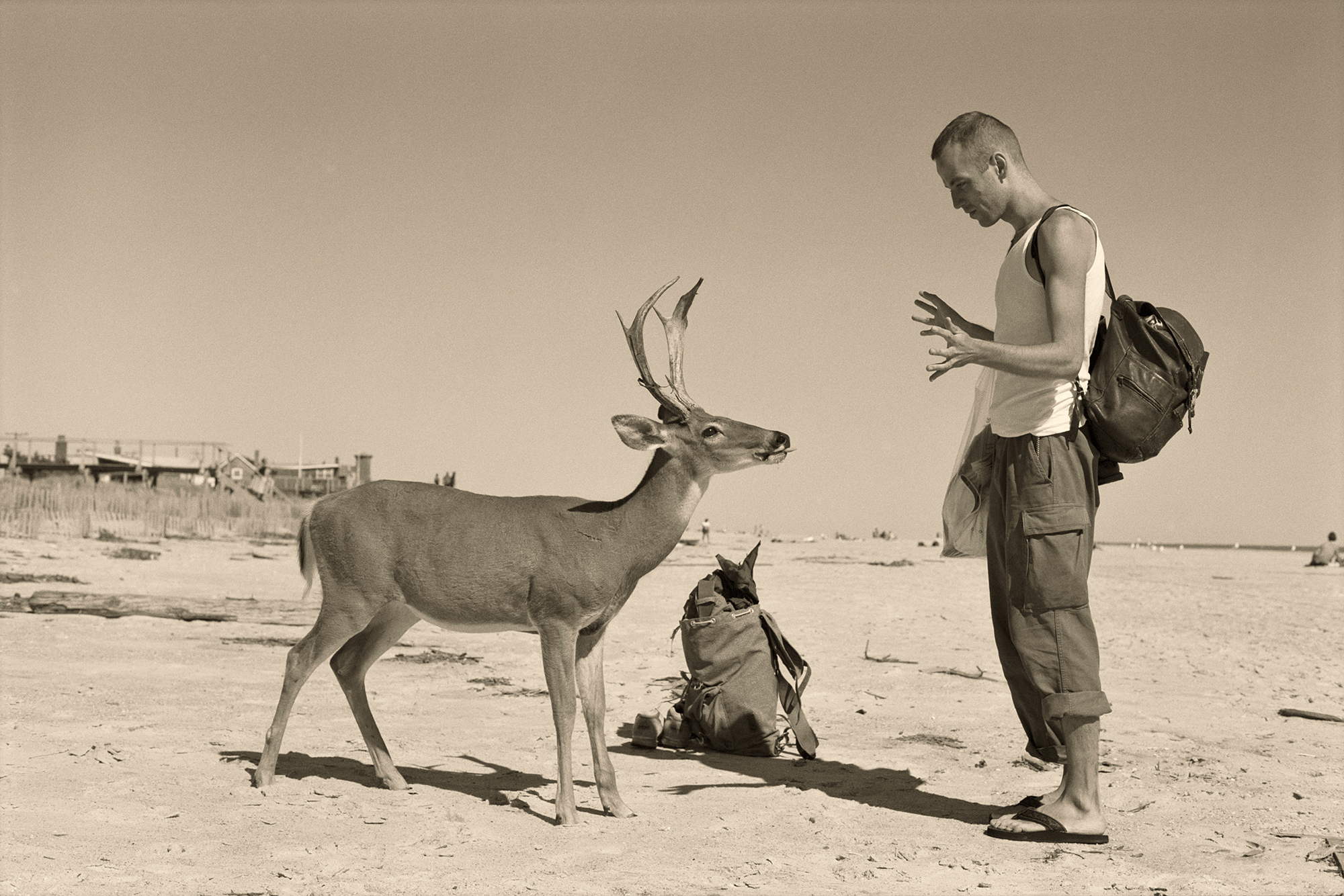
Wolfgang Tillmans has spent decades dismantling the hierarchy between the ordinary and the extraordinary. His photography, characterized by a democratic gaze and a quiet, matter-of-fact intensity, has moved seamlessly from the sweat-slicked floors of subcultural clubs to the high-concept halls of the Tate Modern and MoMA. While his work often engages with broad sociopolitical themes, it is frequently rooted in the specificities of place—a sensitivity that found a new, enduring anchor on Fire Island.
Though Tillmans first captured the island’s ethereal intersection of human life and the wild in his 1995 photograph *Deer Hirsch*, he did not return in earnest until 2015. What began as a last-minute invitation to the Pines evolved into a decade-long residency that has fundamentally reshaped his practice. For Tillmans, the island is less a retreat than a site of active observation, where the community’s social fabric and the environment’s raw nature demand a different kind of presence.
This period of immersion has yielded more than just new visual studies; it has catalyzed a revival of his musical output and a deeper, more tactile engagement with the natural world. As he reflects on this chapter for the forthcoming book *Fire Island Art: 100 Years*, Tillmans suggests that the island offers a rare form of freedom—one that allows an artist of his stature to return to the fundamental curiosities that first defined his career.
With reporting from Aperture.
Source · Aperture