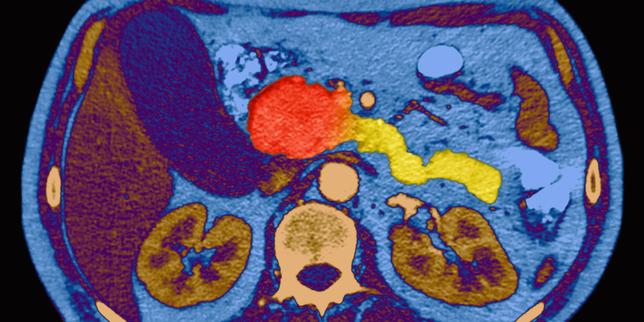
Pancreatic cancer has long remained one of oncology’s most formidable challenges. Often asymptomatic until it reaches an advanced stage, the disease typically carries a grim prognosis, as the tumors are notoriously resistant to conventional treatments. For decades, standard chemotherapy has offered only marginal extensions of life, making any significant clinical gain a matter of intense interest.
Results from a recent trial involving an innovative drug candidate suggest a potential shift in that trajectory. The study focused on patients with metastatic pancreatic cancer—those whose disease has already spread to other organs and for whom treatment options are most limited. In this group, the new molecule demonstrated the ability to double life expectancy compared to the control group receiving standard chemotherapy.
In the context of such an aggressive malignancy, where progress is usually measured in small increments, a doubling of survival time is considered an unprecedented milestone. While the molecule is still moving through the clinical pipeline, the data marks a departure from the historical inertia of pancreatic cancer research. It suggests that even the most intractable tumors may eventually yield to a new generation of targeted molecular interventions.
With reporting from Le Monde Sciences.
Source · Le Monde Sciences