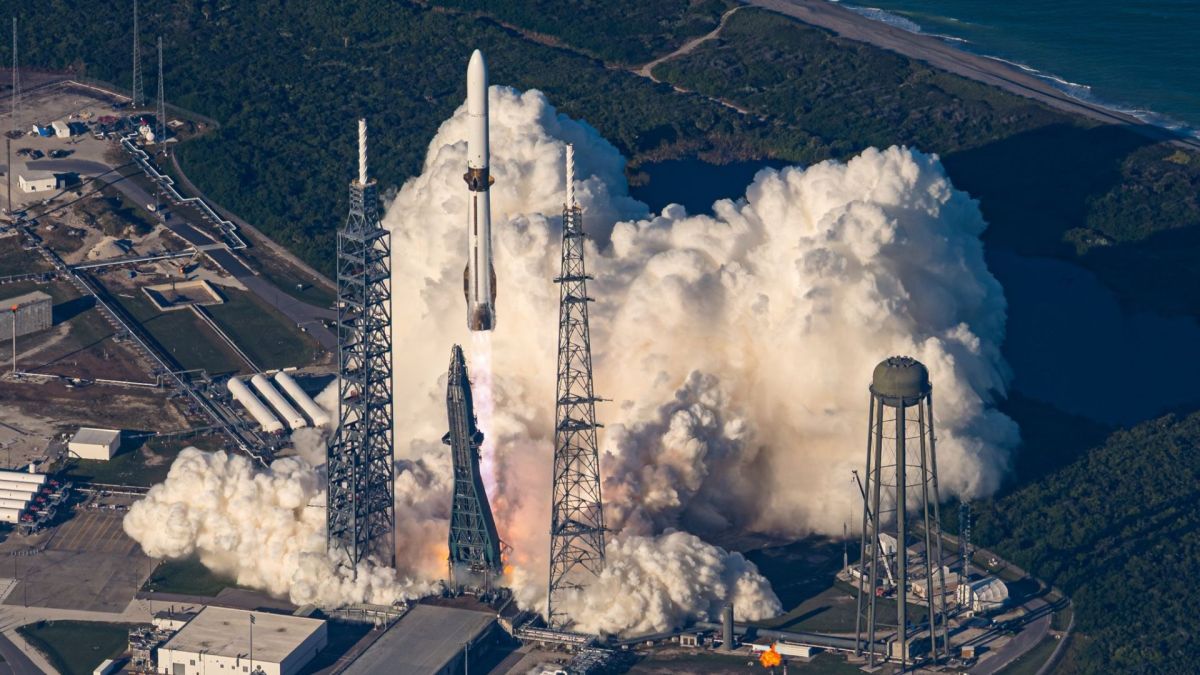
Blue Origin’s long-anticipated heavy-lift rocket, New Glenn, experienced a debut that was as much a technical milestone as it was a cautionary tale. On Sunday, the vehicle’s massive first stage successfully performed a controlled return to Earth, demonstrating the reusable architecture Jeff Bezos’s firm has spent years refining. However, the triumph was short-lived: a failure in the second stage ultimately doomed the mission, preventing the payload from reaching its intended orbit.
The anomaly has drawn immediate scrutiny from U.S. regulatory bodies. The Federal Aviation Administration (FAA) has opened a formal investigation into the incident, a standard but rigorous procedure that effectively grounds the New Glenn fleet until the root cause is identified and remediated. For a company aiming to provide a viable alternative to SpaceX’s dominance in the heavy-launch market, the delay is a significant strategic hurdle.
While the successful recovery of the first stage proves Blue Origin’s hardware can handle the stresses of atmospheric reentry, the second-stage failure highlights the persistent "all-or-nothing" nature of orbital rocketry. Engineering a vehicle of this scale requires every system to perform flawlessly in sequence; a single lapse in the upper stage is enough to negate the most graceful of landings.
With reporting from Numerama.
Source · Numerama