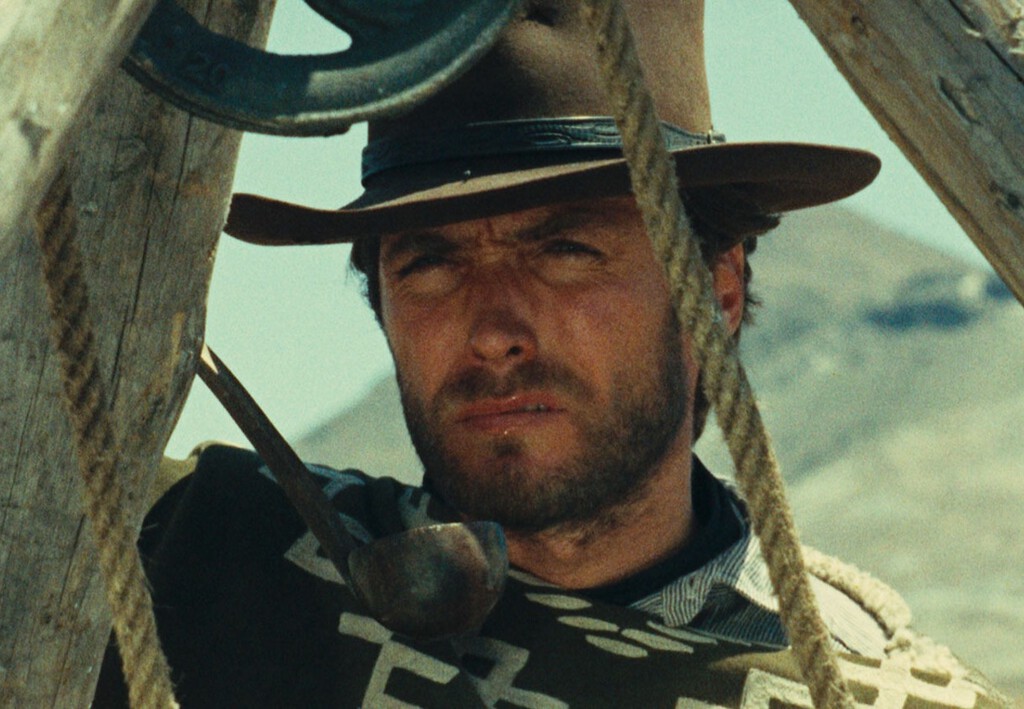
In 1964, Clint Eastwood arrived in Almería, Spain, to film what he predicted would be a "total failure." At thirty-four, he was a television actor with few film prospects, lured across the Atlantic by a $15,000 paycheck and a script for a low-budget co-production titled *A Fistful of Dollars*. The set was a study in logistical improvisation: the director, Sergio Leone, and the cast often spoke entirely different languages; a crane was procured through the intervention of a local bishop; and a tree was reportedly stolen to complete a scene. The production was so precarious that both Leone and composer Ennio Morricone used Americanized pseudonyms in the credits to mask the film's European origins.
Yet, the chaos of the production masked a shrewd economic reality. The Franco regime had positioned Spain as a premier destination for foreign filmmakers, offering a combination of drastically lower labor costs and a landscape that served as a perfect, sun-scorched surrogate for the American West. For the dictatorship, these "Spaghetti Westerns" were more than just revenue streams; they were tools of soft power, using the presence of international stars to burnish the country's image abroad while providing employment to the impoverished rural south.
The result was a cinematic language that Eastwood later recalled as being defined by an unexpected stillness. While the production was noisy and disorganized, the film itself introduced a sparse, visual-heavy style that relied on long silences and extreme close-ups. This aesthetic transformation didn't just launch Eastwood’s career; it redefined the Western genre, turning the dusty plains of Almería into a permanent fixture of the global imagination.
With reporting from Xataka.
Source · Xataka